


You used to lift. You used to run. You used to walk into a gym and feel like you belonged there. Then life happened — an injury, a job change, a kid, a pandemic, a slow drift — and the gym became something other people did. Now you want back in, and you are not 25 anymore. The question that matters is not can you come back. The answer to that is yes, almost always. The real question is how you come back without getting hurt in the first six weeks and quitting again.
At PEAKFIT Studio in Arden, we work with this exact person every week. The lapsed lifter. The former runner. The mom who used to play college soccer. They all walk in with the same instinct, which is to pick up where they left off. That instinct is wrong, and it is the single biggest reason returners get injured.
What detraining actually does to your body
The science here is unforgiving but not hopeless. Within two to four weeks of stopping training, your strength holds reasonably well — you lose maybe five to ten percent. Muscle mass takes longer to drop, somewhere around six to eight weeks before noticeable atrophy. But cardiovascular conditioning falls off fast. VO2 max can drop seven percent in just twelve days of detraining and twenty percent within two months.
The trickier piece, especially after 40, is connective tissue. Muscles strengthen in weeks. Tendons and ligaments take months. This is the gap that hurts returners. Your muscles remember enough to lift a meaningful weight long before your tendons are ready to handle the load. You feel strong, you load up, and your Achilles or your patellar tendon writes the check your training history cannot cash.
The first 14 days are about waking up, not pushing
If you have been away from training for more than three months, the first two weeks should feel almost too easy. You are not trying to get fit in this window. You are trying to remind your nervous system how to move, re-establish range of motion, and give your tendons a soft on-ramp.
What that looks like in practice:
- Two or three full-body sessions per week, never back to back
- One set per exercise, eight to twelve reps, weights you could do for twenty
- Compound movements only: squat pattern, hinge pattern, push, pull, carry
- Ten to fifteen minutes of easy zone two cardio after lifting
- If you can hold a conversation, you are doing it right
Weeks 3 to 6: rebuild the engine
This is when most returners go wrong. You feel decent, the weights feel light, and you start chasing the numbers you remember. Resist. Add a second set before you add weight. Add a third set before you add intensity. Your strength curve is going to rise faster than your tendon capacity for at least eight weeks, and the gap is where injuries live.
The principle to anchor to is two weeks of consistency before any progression. If you have squatted 95 pounds for two solid weeks with zero soreness or joint complaints, you can bump to 105. If you missed a session or felt anything tweak, you hold.
Recovery is part of the program, not a reward
The single biggest difference between training in your 20s and training in your 40s and beyond is recovery cost. The same workout costs more, and the cost compounds. After 40, sleep is no longer a nice-to-have. Seven hours minimum. Protein intake matters more — aim for roughly 0.8 grams per pound of bodyweight daily to support tissue repair. And you need actual rest days, not just non-training days.
This is where modalities like our infrared sauna and red light therapy earn their keep. Heat acclimation improves recovery between sessions, and red light has solid evidence for reducing muscle soreness and supporting connective tissue repair — exactly the bottleneck for returners.
The smartest return is one you do not do alone
The reason most returning lifters get hurt is not the program. It is the form. You used to squat heavy. Your body remembers the pattern but not the cues. The bar drifts forward. The knees cave. The lower back picks up the slack. Six weeks in, something is angry.
A trainer’s job in the first six weeks is not to push you. It is to filter what you are doing wrong before it becomes an injury. If you are coming back after a long break, do not buy a program. Buy three to six sessions of one-on-one coaching, get your patterns re-grooved, then run with what you learn.
A realistic timeline
Here is what comeback looks like when you do it right:
- Weeks 1–2: Wake up the nervous system. Light loads, full body, low volume.
- Weeks 3–6: Build base. Same lifts, slowly add sets and reps before weight.
- Weeks 7–12: Progressive overload begins. Tendons are catching up.
- Months 4–6: You are back to where you were — and probably moving better.
Six months sounds long until you remember the alternative is another injury and another year off. The boring path is the fast path.
If you are ready to come back and want it done right the first time, book an intro at PEAKFIT. We will build the on-ramp around your history, your goals, and the body you have today — not the one you had ten years ago.





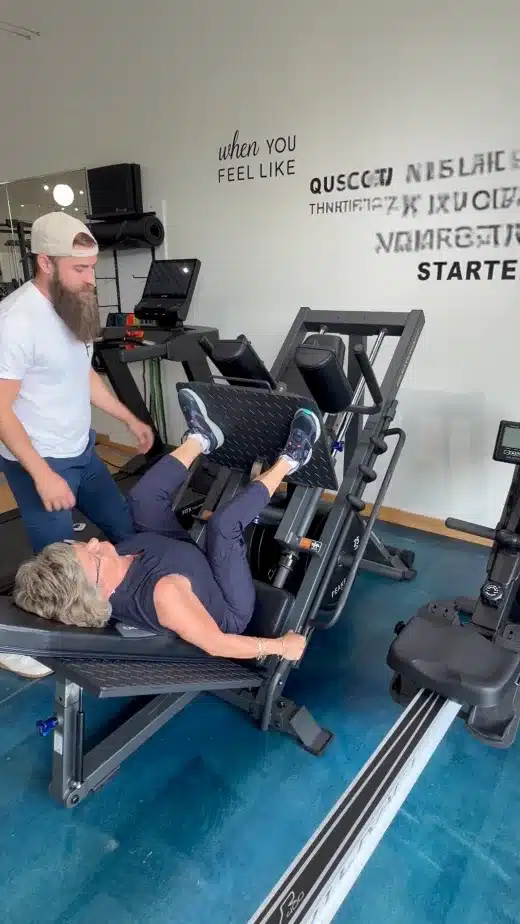


Marilyn’s Story: At 82, She Joined PEAKFIT to Lift Her Own Carry-On
Arden’s Only Private Personal Training Studio for Adults 40+ Marilyn had a very specific goal when she walked into PEAKFIT
Antioxidants and Exercise: Why Adults Over 40 Need More (and Where to Get Them)
Arden’s Only Private Personal Training Studio for Adults 40+ Every time you exercise, your body produces free radicals — unstable
Asheville Mountain Lifestyle Fitness That Supports Your Adventures
Key Takeaways Living an active mountain lifestyle in Asheville means your fitness needs to keep up with you, not the