
The Memorial Day Reset: How to Start Strength Training After 50
You are at the Memorial Day cookout. You bend down to pick up the grandkid and something in your lower back reminds you that your body has not felt this way for very long. You straighten up. You make the decision you have been putting off. Summer is here. You are going to get strong again.
That moment, the one between bending down and straightening back up, is the moment this post is written for. It is not a resolution moment. It is a recommitment moment. And if you are reading this somewhere between 50 and 75 years old, wondering if it is actually possible to feel strong again, the short answer is yes. Your body is capable of more than you think. The longer answer, the one with the specifics on how to actually start, is what the rest of this post is about.
Why Memorial Day Is a Natural Reset Point
Memorial Day carries weight. It is a day of remembrance, and it earns that reverence. It is also, practically speaking, the seam in the calendar where the year turns. School winds down. Daylight stretches past eight. Porches come back into use. The pace of life shifts.
That shift is why Memorial Day works as a starting line in a way January almost never does. January asks you to overhaul your life in the darkest, coldest part of the year. Memorial Day asks something different. It asks you to step into a season your body already wants to move through.
There is something else worth naming here. Memorial Day is about time. It is about people who ran out of it, and the people who loved them. If you are in your 50s, 60s, or 70s and you have been putting off the decision to take your physical capacity seriously, you already know what this next line is going to say. The time to begin is before you wish you had. This is not a piece about fear. It is a piece about acting now, while acting now is still the easiest version of the decision you will ever get to make.
It is never too late. That is true. It is also true that earlier is easier than later, and this weekend is earlier than next weekend.
What “Strength Training” Actually Means After 50
Before we get into how to start, let’s clear up what we are starting. Strength training after 50 does not mean doing what you did at 30 with lighter weights. It does not mean high-intensity circuits that leave you wrecked for three days. It does not mean chasing a number on a scale.
Strength training, done correctly after 50, means rebuilding the fundamental movement patterns your body is organized around, loading them progressively over time, and recovering well enough between sessions that your body can actually adapt. That is it. When it is done right, you move without pain, you carry groceries up the stairs without thinking about it, you get out of a low chair without using your hands, and you pick up the grandkid without that twinge in the lower back.
That is the whole point. The rest is just programming.
The Five Principles of Starting Strength Training After 50
These are the principles we build every new client’s first 12 weeks around at Peakfit Studio. They are not tricks. They are the non-negotiables that separate a program that works from a program that gets abandoned in six weeks.
1. Start with an Assessment, Not a Program
Most people begin by picking a program. They find a plan online, they buy a set of dumbbells, and they start on Monday. Two weeks later something hurts, they do not know why, and the whole thing stops.
The correct first move is an assessment. How do your ankles move. How do your hips move. What is your resting posture. Where is the old injury you are still compensating for. What is your current body composition. How does your balance test out. What movements provoke discomfort and what movements are safe to load today.
Every client who walks into our Arden studio starts with a free consultation and an InBody body composition scan. Alexander Zierhut, our lead trainer and a BS in Exercise Science from FAU, runs that first session. The point of the first session is not to work you out. The point is to know what we are working with so the next 12 weeks are built on something real instead of guesswork.
2. Prioritize the Foundational Movements
There are five movement patterns the human body is built to do well. Squat. Hinge. Push. Pull. Carry.
Squat is sitting down and standing up. Hinge is picking something up off the floor. Push is putting something away on a high shelf. Pull is opening a heavy door, or rowing a kayak. Carry is walking with groceries. Every activity of daily living is some combination of those five patterns.
Rebuilding strength after 50 means rebuilding those five patterns first, then loading them. Not machines that isolate one muscle. Not a random collection of exercises a trainer saw on Instagram. The five patterns, done well, loaded progressively, for the rest of your life. That is the entire strategy.
3. Train Slower Than You Think You Should
This is the one almost everyone gets wrong. The instinct, especially for returning exercisers who used to be fit, is to go hard. Prove to yourself that you still have it. Pick up the heavy thing the first week.
Do not do this. The tissue quality in a 55-year-old body is not the tissue quality of a 30-year-old body. Your tendons, joints, and connective tissue need a slower loading curve than your muscles and your ego do. Muscles can handle more than tendons can in week one. If you listen to your muscles, you will get hurt. If you listen to a coach who understands the difference, you will not.
Slower in the first month is faster over the first year. This is meaningful work, and meaningful work respects the timeline.
4. Recovery Matters As Much As the Work
A training session is a stimulus. The adaptation, the part where you actually get stronger, happens between sessions. Sleep, protein intake, hydration, stress management, and time between sessions are not optional accessories to the program. They are the program.
For most adults over 50, three training sessions per week is the sweet spot. Not two, not five. Three, with real recovery in between. This is why our most popular package is the 3x per week small group option. It is not a marketing decision. It is a physiology decision.
5. Progress Is Measured Monthly, Not Weekly
If you step on a scale Monday, and again Friday, and use the difference to evaluate how your training is going, you will quit before July. Body composition does not move that fast. Strength gains do not present on a weekly timeline after 50. They present on a monthly one.
We measure progress at Peakfit on a 90-day cycle. InBody scans at day 0, day 45, and day 90. Strength benchmarks across foundational movements at the same intervals. Subjective markers, the ones that actually change your life, tracked by conversation: how you feel getting out of bed, whether your lower back talks to you when you bend down, how your sleep is, how your energy holds through the afternoon.
Real people, real results, measured in cycles that match how the body actually changes.
The Three Mistakes Most People Make When Restarting
After watching hundreds of adults over 50 come through our studio, three patterns show up over and over in the people who tried on their own and stopped. If you avoid these three, your odds of staying with it for a year go up dramatically.
Mistake 1: Doing Too Much Too Soon
Week one enthusiasm is the number one reason week six never arrives. The person who goes from zero to five days a week in their first month is the person who is injured by week seven. The person who goes from zero to three well-structured days and holds that for 12 weeks is the person who is still training in month 18.
More is not better. Better is better.
Mistake 2: Skipping the Form Check
Nobody who lifted weights in college needs a form check, right. Wrong. The body you are training today is not the body you trained at 22. Movement patterns that worked then, compensated then, and hid the early signs of dysfunction then are the exact patterns that cause injury now.
Every new client at Peakfit, regardless of prior experience, walks through foundational movement screening before any load goes on a bar. Former athletes sometimes find this the hardest part, because it asks them to let go of the body they used to have and meet the body they have now. That meeting is where real progress starts.
Mistake 3: Training Without a Plan
A workout is not a program. A program is a 12-week sequence where each session connects to the one before it and the one after it. Most people who restart after 50 are doing workouts, not programs. They show up, they do something, they go home. Six weeks later there is no measurable progress because there was no plan to progress against.
A plan is the difference between exercise and training. Exercise passes the time. Training produces a stronger body.
What the First 90 Days Actually Looks Like at Peakfit
Here is the concrete version. If you walk into our studio at 100 Julian Ln Suite 120 in Arden next week and sign up for our 3x per week small group program, this is what the next 90 days looks like.
Weeks 1 through 4: Foundation and Pattern. Every session focuses on establishing clean versions of the five movement patterns at bodyweight or very light load. You will learn what a proper hip hinge feels like. You will re-learn to squat from a position that respects your ankle and hip mobility, not one borrowed from a powerlifting magazine. You will do a lot of single-leg work, a lot of core stability work, and a lot of carries. You will not feel destroyed after sessions. You will feel like you worked, and like you could come back in 48 hours. That is the point.
Weeks 5 through 8: Loaded Strength Introduction. Once the patterns are clean, load goes on. This is where dumbbells, kettlebells, and barbells enter the program. Loads are conservative. Progressions are planned. You will begin to feel noticeably stronger in the second half of this block. You will also notice things outside the studio starting to feel easier. Carrying a full laundry basket up the stairs. Getting in and out of the car. Playing on the floor with the grandkid and getting back up without a production.
Weeks 9 through 12: Strength Progression with Measurable Output. By this block, you have a base. Now we build. Loads increase. Movement complexity increases. A second InBody scan around day 45 has already shown you the early composition shift. The day 90 scan closes the first cycle with measurable data: muscle gained, body fat change, phase angle (a clinical marker of cellular health that tends to improve as you get stronger), and a written set of strength benchmarks against your day 0 numbers.
That is the first 90 days. It is not glamorous. It is systematic. Systematic is what works.
Why Now Is Genuinely the Right Time
Summer is the best training window for most adults over 50, and it has nothing to do with how you look in shorts. Here is what it actually has to do with.
Daylight. You wake up in daylight and you go to bed after sunset. That extended daylight supports better sleep architecture, better circadian rhythm, better recovery. Everything the program depends on is easier to execute in May, June, July, and August than in January.
Natural movement. Summer pulls you outside. Walks after dinner. Yard work. Time in the garden. A hike up to Craggy Gardens or a walk around Beaver Lake. All of that is unstructured work that complements the structured work you are doing in the studio. Winter buries that. Summer gives it to you for free.
Outdoor activity that strength supports. A 65-year-old who starts strength training Memorial Day weekend and trains consistently through Labor Day shows up to fall with a different body than the one they had at the cookout. That body hikes the Parkway without knee pain. That body plays pickleball without worrying about the next day. That body gets down on the floor and back up without thinking about it. Strength training is the infrastructure that makes every other summer activity better. You do not train to look like summer. You train so summer can be what it is supposed to be.
For the deeper version of why strength is the unlock for every other piece of physical wellness after 40, read our companion piece on the three things that matter most for getting stronger after 40.
How Peakfit Is Structured for This Exact Moment
Peakfit Studio is Arden’s Only Private Personal Training Studio for Adults 40+. That is not a positioning line we invented for a brochure. That is a literal description of who walks through the door, how the space is built, and how the programming works.
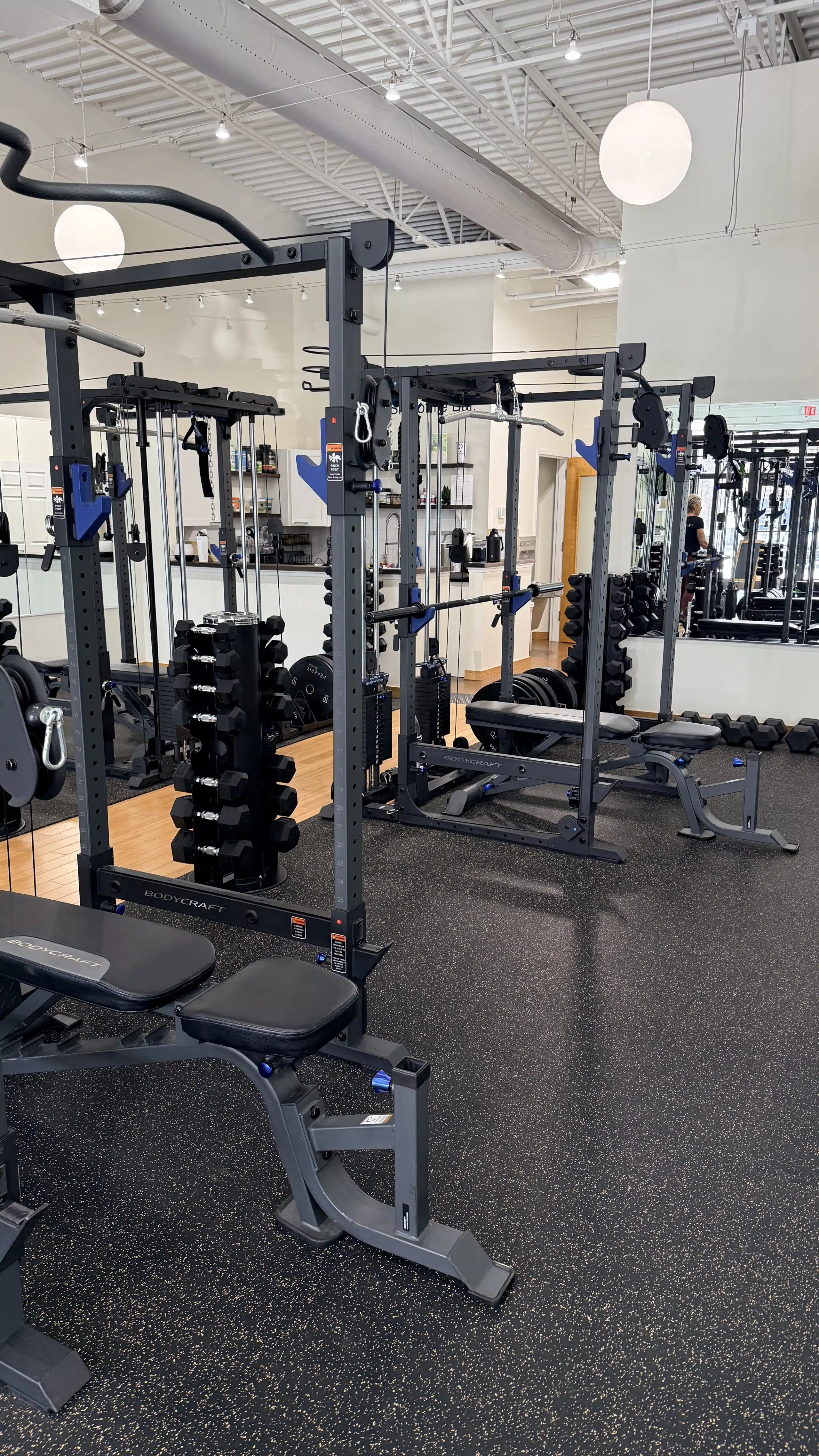
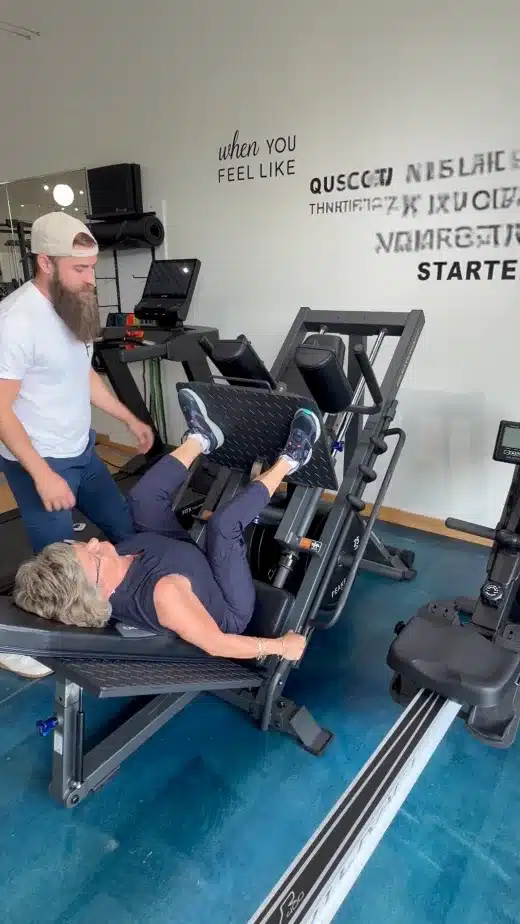
Private means the studio is not open to the public. No walk-ins, no day passes, no 22-year-olds trying to impress each other at the squat rack. Small group means a maximum of six clients per session across three training stations, which means Alex or one of the supporting trainers is never more than a few feet from you while you are under load. Personal means every program is built for the person, not pulled off a shelf.
The programs come in three tiers. The GOOD option, at $349 per month, includes 2x per week small group personal training and is the right entry point for someone rebuilding their base who can add walks or other movement on off days. The BETTER option, at $479 per month, includes 3x per week small group personal training and is where most of our clients live because three sessions per week is the sweet spot for strength adaptation after 50. The BEST option, at $1,197 per month, is full one-on-one private training for clients who want the most direct path. All three include a free consultation and an InBody body composition scan to start.
See the full program options here.
The Decision
You do not need a new year to decide this. You do not need a birthday. You do not need to wait until you feel ready, because the feeling of being ready does not arrive until after you have already started.
You need the moment you already had. The one where you bent down and felt something you did not used to feel. The one where you straightened up and decided.
If you live in the Arden or south Asheville area, and you are somewhere between 50 and 75, and you want to be stronger in September than you are this weekend, the next step is a free consultation with Alex. Body composition scan, movement screen, a real conversation about where you are and where you want to be. No pricing pressure on that first visit. Just a starting line.
Memorial Day is a day of remembrance. It is also a seam in the calendar where the year turns. The people you remember this weekend would tell you, if they could, to use the time you have. Physically, mentally, and emotionally, the body you build over the next 90 days will carry everything else you do for the next 30 years.
Book Your Free Strength Starter Session. Start your summer strong. Claim your free consultation here.
Peakfit Studio is located at 100 Julian Ln Suite 120, Arden, NC 28704. You can reach us at (828) 620-7020.
Recent Posts







Categories
Related Articles
Marilyn’s Story: At 82, She Joined PEAKFIT to Lift Her Own Carry-On
Arden’s Only Private Personal Training Studio for Adults 40+ Marilyn had a very specific goal when she walked into PEAKFIT
Antioxidants and Exercise: Why Adults Over 40 Need More (and Where to Get Them)
Arden’s Only Private Personal Training Studio for Adults 40+ Every time you exercise, your body produces free radicals — unstable
Asheville Mountain Lifestyle Fitness That Supports Your Adventures
Key Takeaways Living an active mountain lifestyle in Asheville means your fitness needs to keep up with you, not the
Ready to Start Your Fitness Journey?
Join thousands of others who’ve transformed their lives at PeakFit Studio. Take the first step today with our personalized fitness assessment.