
Key Takeaways
Downhill hiking puts two to three times more force on your knees than climbing does. Building specific strength in your quads, glutes, and posterior chain changes that equation entirely. The right program prepares your joints and muscles to absorb impact rather than transfer it to cartilage and connective tissue.
- Eccentric quad strength is the single most important factor in safe, confident descents.
- Hip stability and glute activation protect knees from caving inward on uneven terrain.
- Ankle mobility work reduces the compensations that travel up the kinetic chain.
- A structured program delivers results in six to eight weeks with two to three sessions per week.
- Adults over 40 respond especially well to resistance training that targets these patterns early.
Why Downhill Hiking Hurts More Than the Climb
Most hikers feel fine on the way up. The descent is where knees ache, quads burn, and ankles roll. Strength training for hiking downhill addresses the biomechanical reality: your muscles must brake your body weight against gravity with every single step down. Research published in the Journal of Experimental Biology found that descending activates the quadriceps at roughly 2.5 times the load of level walking. Without trained muscles capable of controlling that load eccentrically, the force transfers directly into the knee joint. Over time, that adds up to pain, inflammation, and avoidance of the trails you love. The good news is that this is a training problem, not an aging problem. The right joint-friendly strength training makes descents feel controlled and even enjoyable again, regardless of whether you are 45 or 70.
The Muscle Groups That Actually Matter on the Way Down
Three primary areas need deliberate attention in any program built around descending strength.
Quadriceps: Your Braking System
When you step down a rocky switchback, your quads fire eccentrically, meaning they lengthen under load to slow your descent. This is fundamentally different from the concentric contraction most gym machines train. Wall sits, slow-tempo squats, and step-downs with a three to five second lowering phase teach the quads to absorb force rather than simply produce it. Dr. Reed Ferber, director of the Running Injury Clinic at the University of Calgary, notes that “eccentric quadriceps training is the most direct intervention for reducing patellofemoral stress during downhill locomotion.” That is the kind of science that should guide a program, not generic leg day routines. For more information on exercise science and biomechanics, see the National Institutes of Health.
Glutes and Hip Stabilizers
Weak glutes allow the knee to drift inward on uneven surfaces, a pattern called valgus collapse. On a flat gym floor it looks minor. On a rooted, wet trail with a 30-pound pack, it is how knees get injured. Single-leg deadlifts, lateral band walks, and Bulgarian split squats directly address hip stability in the planes of motion that trail terrain demands. Understanding what corrective exercise is and why your trainer should assess you first helps identify the specific movement gaps driving these patterns before they become injuries.
Ankles and Calves
Limited ankle dorsiflexion forces compensations at the knee and hip. Calf raises done through full range of motion, combined with banded ankle circles, restore the mobility your joints need to move fluidly across rocks and roots. Research on joint health and mobility is available through OSHA ergonomics resources and occupational health guidelines.

Building a Downhill-Specific Strength Program
A well-structured program for hikers in Western North Carolina follows a simple three-phase framework over six to eight weeks.
Phase one focuses on movement quality. Box step-downs, goblet squats with a pause at the bottom, and single-leg balance work train the nervous system to stabilize before adding significant load. This phase matters especially for adults returning from knee surgery or a long break from training. Skipping it shortchanges your results. Adults who have stepped away from consistent exercise will find guidance on training after a long break and how to come back without getting hurt directly relevant to navigating this phase safely.
Phase two adds progressive load. Slow-tempo Bulgarian split squats, Romanian deadlifts, and loaded step-downs build the eccentric strength that translates directly to trail confidence. Sets of eight to twelve reps with controlled four-second lowering phases produce measurable results within three to four weeks.
Phase three introduces power and reactivity. Controlled step jumps and lateral bounds prepare muscles to respond quickly to unpredictable terrain. This is where strength becomes agility, and where hikers notice the biggest shift in how descents feel.
For a deeper look at how this fits into a broader adventure-ready fitness plan, the hiking training Asheville resource offers program specifics tailored to local trail demands.
What Adults Over 40 Need to Know About This Training
Adults over 40 face a specific challenge: muscle protein synthesis slows, joint cartilage has accumulated wear, and recovery takes longer. None of that means strength training is less effective. It means the program design has to be smarter.
Dr. Stuart Phillips, a professor of kinesiology at McMaster University and a leading researcher in muscle aging, states that “resistance training two to three times per week produces meaningful strength gains in adults across the age spectrum, including those in their sixties and seventies.” The key difference for this population is respecting recovery windows and starting with movement quality before intensity. Research on how often you should work out after 50 confirms that two to three focused sessions per week hits the sweet spot for building functional strength without outpacing recovery. For evidence-based information on aging and physical activity, consult the National Institutes of Health.
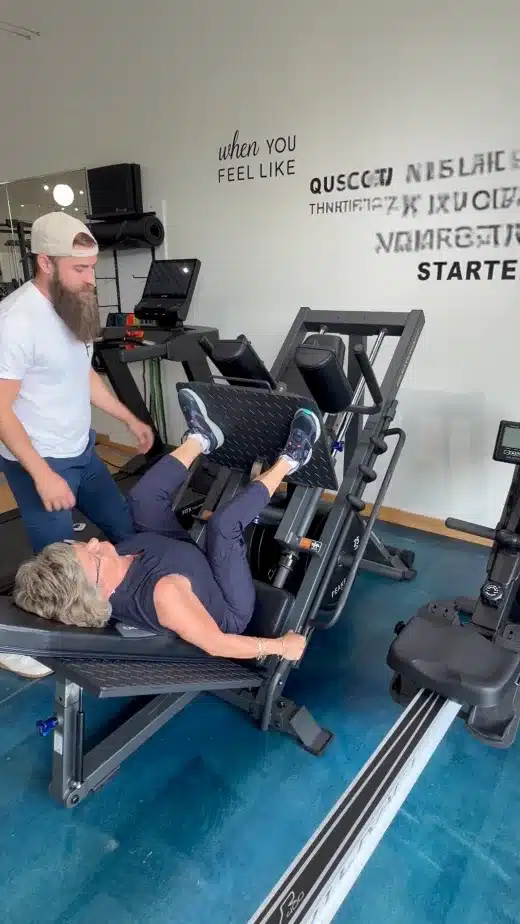
People navigating post-surgical recovery or chronic knee discomfort benefit enormously from a coach who can modify movements without abandoning the training effect. A wall sit or a leg press on the right angle can replicate the eccentric quad demand without loading a joint that is not ready for full range yet. Personalization is not a luxury in this context. It is what makes the program safe and effective at the same time.
Adults in Arden and surrounding WNC communities who want to connect fitness directly to their outdoor lifestyle can find that framework within Asheville’s Mountain Lifestyle: Fitness That Supports Your Adventures.
Frequently Asked Questions
How long does it take to see results from strength training for hiking downhill?
Most people notice a meaningful difference in knee comfort and leg control within six to eight weeks of consistent training, two to three times per week. The nervous system adapts faster than muscle tissue does, so early gains come from better motor control. Structural muscle strength accumulates steadily after that, provided the program progressively challenges you.
Is this type of training safe if I have had knee surgery?
In most cases, yes, provided your surgeon or physical therapist has cleared you for resistance training. The program should begin with low-impact movements like leg presses, wall sits, and step-downs before progressing to free-weight patterns. For guidance on post-surgical exercise rehabilitation, consult resources from the Centers for Disease Control and Prevention. Working with a coach who understands post-surgical timelines helps you build strength without aggravating healing tissue.
Can I do this training at home without a gym?
Many of the foundational movements require nothing more than a step, a resistance band, and body weight. A slow-tempo single-leg squat on a stair edge delivers significant eccentric quad stimulus. That said, having a qualified coach guide your form and progression accelerates results and reduces injury risk considerably, especially in the first four to six weeks.
What if my knees already hurt on descents?
Pain during downhill hiking is a signal worth taking seriously. It often reflects insufficient eccentric quad strength or hip stability rather than irreversible joint damage. Starting a structured program early, before pain becomes chronic, changes the trajectory significantly. A coach can assess your movement patterns and identify the specific gaps driving your symptoms. For information on joint health and injury prevention, see Wikipedia’s overview of knee anatomy and function.
How does this differ from general leg day at a standard gym?
Standard gym leg training emphasizes concentric strength, pressing weight up. Hiking descents demand eccentric control, absorbing force on the way down. Most leg press and squat machine programs do not train this specifically. A downhill-focused program flips the emphasis, using slow lowering phases and step-down patterns that directly replicate the demands of mountain terrain. Understanding why the best personal trainers in Asheville work in small studios rather than commercial gyms helps explain why this kind of specific, individualized programming is eas







Hiking Training in Asheville That Builds Real Trail Strength
Key Takeaways Hiking training in Asheville means preparing your body for steep elevation gains, uneven terrain, and multi-hour demands before
Marilyn’s Story: At 82, She Joined PEAKFIT to Lift Her Own Carry-On
Arden’s Only Private Personal Training Studio for Adults 40+ Marilyn had a very specific goal when she walked into PEAKFIT
Antioxidants and Exercise: Why Adults Over 40 Need More (and Where to Get Them)
Arden’s Only Private Personal Training Studio for Adults 40+ Every time you exercise, your body produces free radicals — unstable