
You’ve probably seen collagen supplements everywhere — in protein powders, beauty products, and health food stores. But most of the marketing around collagen focuses on skin and hair. For adults over 50 who are serious about staying strong, mobile, and active, the real story is what collagen does for your muscles, joints, and recovery — and why your body’s ability to produce it has been declining for years.
What Is Collagen and Why Does It Matter After 50?
Collagen is the most abundant protein in the human body. It’s the structural scaffolding that holds your connective tissue together — your tendons, ligaments, cartilage, bones, and skin all depend on it. Think of it as the glue that keeps your body’s moving parts working smoothly.
Here’s the problem: collagen production naturally declines by approximately 1% per year starting in your late 20s. By the time you’re 50, you’ve lost roughly 20–25% of your peak collagen production capacity. By 60, that number climbs higher. This isn’t a minor inconvenience — it’s one of the primary reasons joints ache, recovery slows, and muscle mass becomes harder to maintain as we age.
The good news: you can support your body’s collagen production through targeted nutrition, smart supplementation, and the right kind of exercise.
What Collagen Actually Does for Your Body
Joint Health and Mobility
Cartilage — the cushioning tissue between your joints — is made almost entirely of collagen. As collagen production declines, cartilage thins and becomes less resilient. This is a major contributor to the joint stiffness and discomfort that many adults over 50 experience, particularly in the knees, hips, and shoulders.
Research suggests that collagen supplementation can help maintain cartilage integrity, reduce joint pain during exercise, and support overall joint mobility. For adults who are strength training — which is exactly what you should be doing after 50 — healthy joints aren’t optional. They’re the foundation everything else is built on.
Muscle Recovery and Retention
Collagen plays a direct role in muscle recovery. The connective tissue surrounding your muscle fibers (the fascia) is collagen-rich, and when you train, that tissue undergoes micro-damage that needs to repair. Adequate collagen supports faster, more complete recovery between sessions.
There’s also an important relationship between collagen and muscle protein synthesis. While collagen isn’t a complete protein on its own (it lacks tryptophan), it provides glycine, proline, and hydroxyproline — amino acids that are critical for connective tissue repair and that most people don’t get enough of from standard protein sources.
Bone Density
Bone is approximately 30% collagen by weight. The collagen matrix in bone provides the flexible framework that minerals like calcium and phosphorus attach to — giving bone both its strength and its ability to absorb impact without fracturing. Declining collagen is one reason bone density decreases with age, particularly in postmenopausal women.
Strength training combined with adequate collagen intake is one of the most evidence-supported strategies for maintaining bone density after 50.
Skin and Structural Integrity
While this isn’t the primary focus for our members, it’s worth noting: the same collagen that supports your joints and muscles also maintains skin elasticity and wound healing capacity. The benefits of supporting collagen production are systemic — they show up everywhere.
How to Support Collagen Production After 50
Nutrition First
Your body synthesizes collagen from amino acids — primarily glycine, proline, and hydroxyproline — combined with Vitamin C, which is essential for the enzymatic process that produces collagen. Without adequate Vitamin C, your body cannot complete collagen synthesis regardless of how much protein you eat.
Top food sources that support collagen production:
- Bone broth — one of the richest natural sources of collagen peptides and glycine
- Citrus fruits, bell peppers, and berries — high in Vitamin C to drive collagen synthesis
- Leafy greens — contain chlorophyll, which may support collagen production
- Eggs — provide proline and glycine, key collagen precursors
- Fish and shellfish — marine collagen is highly bioavailable
- Garlic — contains sulfur, which helps prevent collagen breakdown
At PEAKFIT’s juice bar, we build our smoothies and fresh juices around ingredients that support recovery and collagen production — including antioxidant-rich fruits, leafy greens, and protein sources that complement your training.
Collagen Supplementation
Hydrolyzed collagen peptides (also called collagen hydrolysate) are the most bioavailable supplemental form. Studies suggest that 10–15 grams per day, taken with Vitamin C, can meaningfully support joint health and recovery in active adults over 50.
Timing matters: some research suggests taking collagen 30–60 minutes before exercise may enhance its uptake into connective tissue during the post-workout repair window.
The Exercise Connection
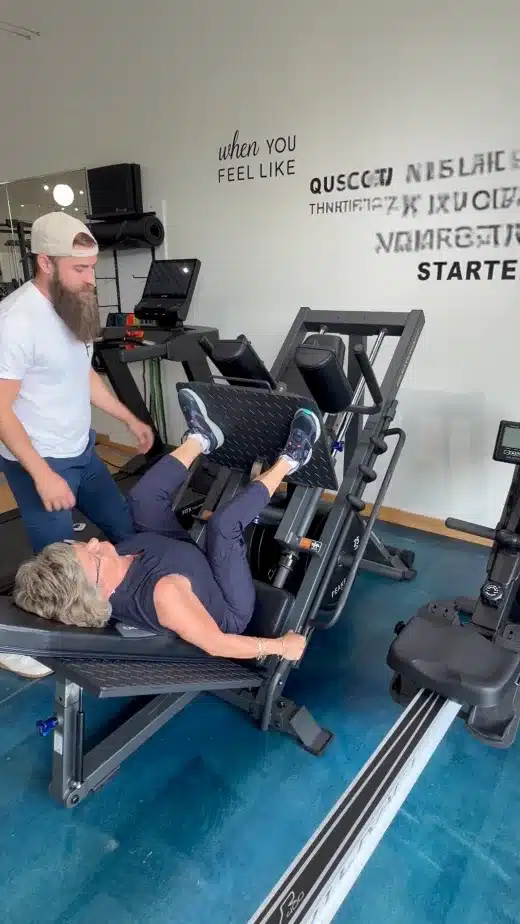
This is where it all comes together. Mechanical loading — the stress placed on connective tissue during strength training — actually stimulates collagen synthesis. Your body responds to the demand by producing more collagen to reinforce the tissue being stressed.
This is one of the reasons progressive strength training is so powerful for adults over 50. It’s not just building muscle — it’s rebuilding the connective tissue infrastructure that keeps your joints healthy, your bones dense, and your body resilient for decades to come.
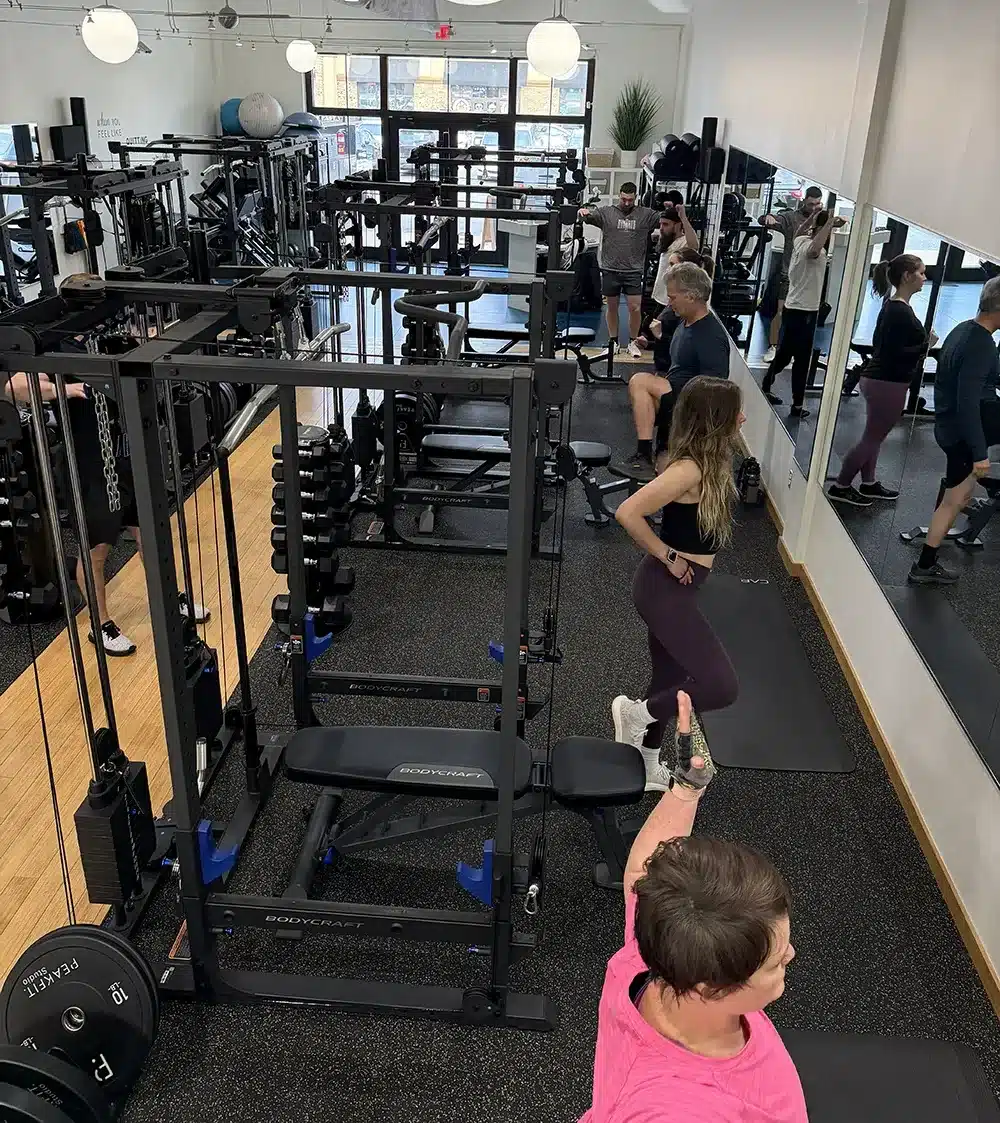
At PEAKFIT, every program is periodized in three phases — activation, execution, and recovery — specifically designed to create the right mechanical stimulus for connective tissue adaptation without overloading joints that may already be managing wear and tear.
What to Avoid: Collagen Destroyers
Supporting collagen production is only half the equation. Several common habits actively accelerate collagen breakdown:
- Excess sugar — glycation (sugar binding to proteins) damages collagen fibers and reduces their elasticity
- Smoking — directly inhibits collagen synthesis and accelerates breakdown
- Chronic stress and poor sleep — elevated cortisol degrades collagen; recovery is when collagen synthesis peaks
- Excessive sun exposure — UV radiation breaks down collagen in skin and connective tissue
- Processed foods and inflammatory oils — drive systemic inflammation that degrades connective tissue
At PEAKFIT, we address all of these through the 360 Approach — our holistic framework that integrates sleep and stress mastery, nutrition optimization, and progressive movement. Because the best collagen strategy isn’t just a supplement. It’s a lifestyle.
The Bottom Line
If you’re over 50 and serious about staying strong, mobile, and active, collagen isn’t a beauty trend — it’s a structural necessity. Supporting your body’s collagen production through smart nutrition, targeted supplementation, and progressive strength training is one of the highest-leverage things you can do for your long-term health.
At PEAKFIT Studio in Arden, NC, we build every program around the specific needs of adults 40 and older — including the nutritional and recovery strategies that make training sustainable for decades, not just months.
Ready to build a program that works with your body, not against it?
PEAKFIT Studio — 100 Julian Ln, Suite 120, Arden, NC 28704 | (828) 620-7020 | hello@peakfit.studio