

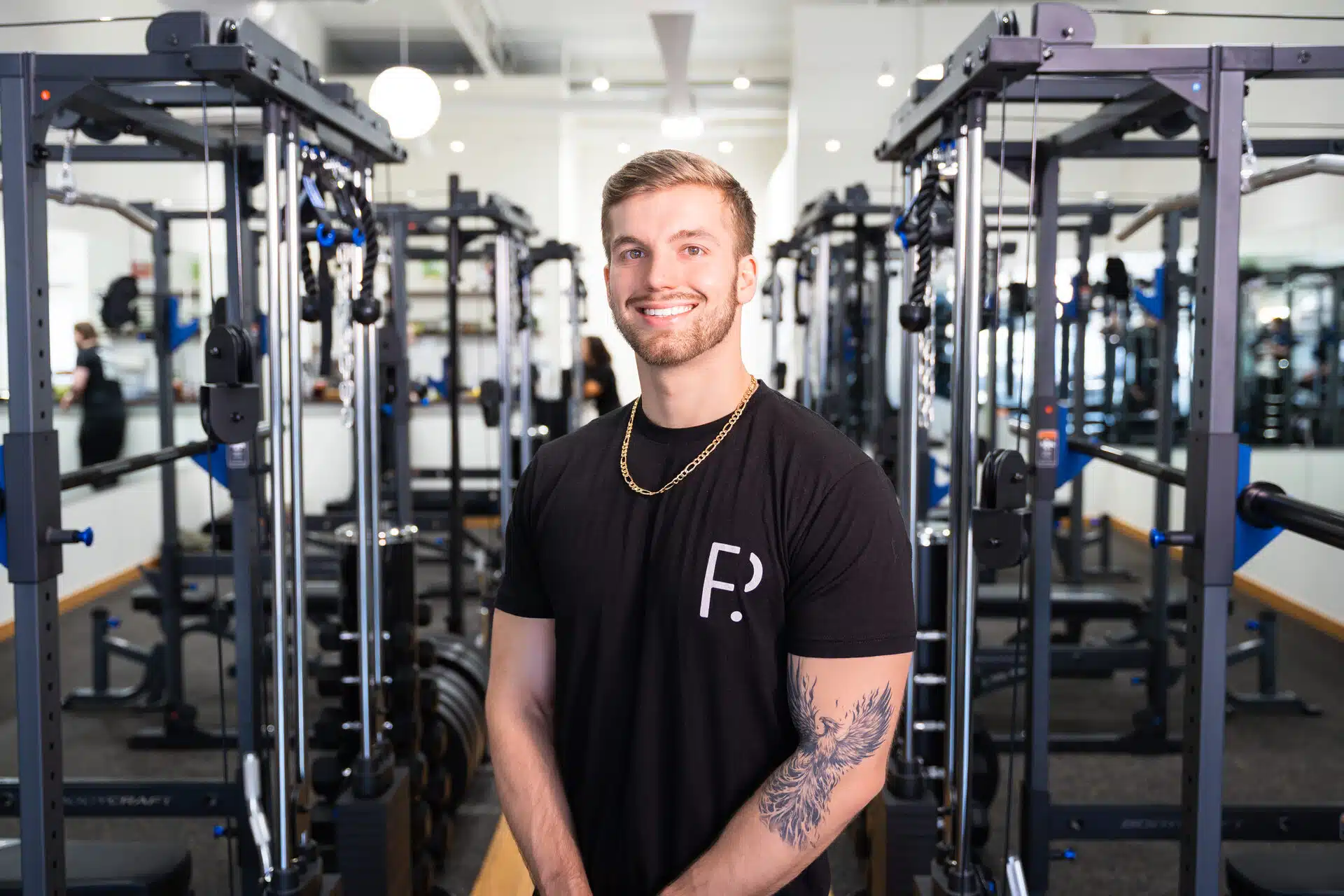
TL;DR: The most common doubt about small group training is “how can one coach give me real attention with other people in the room?” The answer is a deliberate system: a small roster, an assessment for every member, and a session built around shared movement patterns with individualized variables — load, range of motion, tempo, rest, and progressions. Two people do the same exercise at the same time at completely different challenge levels, and nobody waits on anybody. Here’s exactly how a good coach pulls that off.
What This Guide Covers
- It starts with an assessment
- The five variables a coach adjusts per person
- How the session actually flows
- Why the roster stays small
- How your plan progresses over time
- FAQ
People picture small group training as either a class in disguise (everyone doing the identical thing) or chaos (a coach sprinting between people doing six different workouts). Neither is right. A well-run small group is a quietly sophisticated system that lets a coach individualize for several people at once without anyone standing around. Once you see the mechanics, the “but how does it actually work?” question answers itself.
It Starts With an Assessment
Personalization isn’t improvised in the moment — it’s set up before you ever touch a barbell. Every member starts with a movement assessment, a goals conversation, and usually an InBody scan for a real baseline. That tells the coach where you’re mobile, where you’re restricted, what you’re training for, and what to avoid. By the time you walk into a session, the coach already knows that your overhead position is limited or that your left knee needs a wider stance. That prep is what makes real-time individualization possible. It’s the foundation we describe in the beginner’s guide to your first small group session.
Section summary: Individualization is built on an upfront assessment, so the coach already knows your body before the session starts.
The Five Variables a Coach Adjusts Per Person
Here’s the engine of it. The whole group might be doing a hinge, a squat, a push, and a pull — but each person’s version is dialed in along five levers:
- Load: One member deadlifts 185 lbs; another uses a 25-lb kettlebell. Same pattern, right challenge.
- Range of motion: Squat to a box, to parallel, or full depth depending on mobility and history.
- Tempo: Slowing the lowering phase makes a lighter weight brutally effective and protects joints.
- Rest: A deconditioned member gets longer rest; a trained one gets less to keep intensity up.
- Regression or progression: A push-up becomes an incline push-up or a deficit push-up — same movement, scaled to the person.
Because everyone is on the same pattern, the coach can watch the whole room and still make individual calls. That’s the structural trick that makes small group the sweet spot between a class and one-on-one.
Section summary: A coach keeps everyone on shared patterns while individualizing load, range, tempo, rest, and progression for each person.
How the Session Actually Flows
A typical session moves through a shared warm-up tailored with individual mobility tweaks, a strength block on common patterns with per-person loading, and a conditioning finisher scaled to each member. Because the structure is shared, transitions are smooth and nobody waits — while you’re working your set, the coach is cueing someone else, then circling back to adjust your depth or add weight. The energy of training alongside others stays intact; the individual coaching never drops.
Section summary: Shared structure keeps the session flowing while the coach rotates attention, so you get group energy and individual cueing at once.
Why the Roster Stays Small
This only works if the group is genuinely small. There’s a hard ceiling on how many people one coach can individualize for while keeping eyes on form. Keep it tight — typically a handful of people — and every member gets real attention. Push it toward franchise-class size and it collapses back into a class. The small roster isn’t a marketing detail; it’s the thing that makes the whole model function, and it’s a big part of what sets a good studio apart.
Section summary: A small roster is non-negotiable — it’s the constraint that lets one coach truly individualize for everyone.
How Your Plan Progresses Over Time
Personalization isn’t only about today’s session — it’s about your trajectory. A good coach tracks your loads and progress and deliberately advances your program over weeks and months, the same way a private trainer would. You re-test (often with a follow-up InBody scan), the coach updates your targets, and the challenge keeps pace with your gains. That ongoing progression is what turns a series of good workouts into measurable change, and it’s one of the benefits solo workouts can’t match. National guidance recommends two strength sessions weekly (Physical Activity Guidelines for Americans); a small group makes those two sessions both individualized and sustainable.
Section summary: Your coach tracks and progresses your plan over time, so individualization compounds into measurable results.
Frequently Asked Questions
How can a coach really watch my form with other people there?
Because everyone is on the same movement pattern, the coach can scan the whole group and step in individually. The small roster keeps that manageable, so your reps still get watched and corrected.
Won’t I just get a generic workout like a class?
No. The pattern may be shared, but your load, range of motion, tempo, rest, and progressions are set for you based on your assessment and goals.
What if I have an injury or limitation?
That’s exactly what the upfront assessment captures. The coach programs around it — modifying movements and ranges so you train safely rather than aggravating the issue.
How is my progress tracked?
Coaches track your loads and key lifts and typically re-test with InBody scans, then advance your targets so the challenge keeps pace with your gains.
How small is the group?
Small enough that one coach can individualize for everyone and keep eyes on form — typically a handful of people, not a packed class.
See How It Works for You.
Book a consultation at PEAKFIT Studio in Arden, NC. We’ll assess your movement, set your baseline, and show you exactly how your plan fits into a small group.
Key Takeaways:
- Individualization starts with an upfront movement assessment and goals.
- Coaches keep shared movement patterns but tune load, range, tempo, rest, and progressions per person.
- A small roster is what makes real individual attention possible.
- Your plan is tracked and progressed over time, turning good workouts into measurable results.

Functional Strength Training Asheville Adults Trust After 40
Key Takeaways Functional strength training focuses on movements that carry over directly into daily life, making it especially valuable for
Training With Your Spouse in Semi Private Personal Training
Key Takeaways Semi private personal training can work well for couples, but it requires honest conversations about pacing, goals, and
Best Personal Trainers for Women Over 50 in Asheville
Key Takeaways Women over 50 searching for a personal trainer in Asheville need more than a generic workout plan. The