
Key Takeaways
Yardwork and gardening demand real physical effort. Targeted exercises for yardwork and gardening prepare your body for digging, lifting, bending, and hauling so you finish the season feeling strong rather than sidelined by back pain, sore knees, or a stiff neck.
- Gardening involves full-body movement patterns that benefit from intentional strength and mobility preparation.
- Hip hinge mechanics, core stability, and shoulder endurance are the three pillars most gardeners neglect.
- Short, consistent training sessions before and during garden season reduce injury risk significantly.
- Adults over 40 recover more slowly from repetitive strain, making preparation more important than ever.
- A qualified coach can identify your specific weak links and build a program around them.
Why Gardening Is Harder on Your Body Than It Looks
Gardening and yardwork place real physical demands on the body. Digging, raking, kneeling, carrying bags of mulch, pruning overhead branches, and pushing a mower all require coordinated strength, flexibility, and endurance. Many adults in Arden and the surrounding WNC communities treat gardening as light activity, then wonder why their lower back seizes up after two hours of planting. The truth is that these tasks involve awkward positions held for long periods, repeated loading of one side of the body, and transitions from the ground that challenge joints and muscles that may not be adequately prepared. Functional fitness for real-life tasks is exactly the kind of training that closes that gap. You can learn more about that approach at functional exercises for everyday activities, which outlines the principles that apply directly to outdoor work like gardening.
The Movement Patterns Gardening Actually Requires
Before building a training plan, it helps to break down what gardening actually asks your body to do. There are four primary movement patterns at play. For additional context on exercise physiology and movement science, refer to the National Institutes of Health, which provides evidence-based research on physical activity and musculoskeletal health.
Hinging at the hips
Every time you reach toward the ground to pull a weed or set a plant, you are performing a hip hinge. If your hamstrings are tight and your glutes are weak, your lower back compensates and absorbs load it was never designed to handle. Romanian deadlifts and kettlebell deadlifts train this pattern directly, teaching the body to load the posterior chain instead of the spine.
Carrying and hauling
Bags of soil, wheelbarrows, and flats of plants all require grip strength and shoulder stability. Farmer’s carries, single-arm carries, and loaded suitcase carries build the capacity to transport weight without drifting into poor posture or holding your breath.
Kneeling and getting up from the ground
Transitions between standing, kneeling, and crouching require hip mobility and single-leg strength. Step-ups, reverse lunges, and half-kneeling exercises keep those transitions safe and controlled. Adults managing joint-friendly strength training over 40 will find these movement patterns form a practical foundation for staying active through every season.
Overhead reaching and pruning
Trimming hedges or pulling on branches stresses the shoulder girdle, rotator cuff, and upper back. Banded shoulder rotations, face pulls, and lightweight overhead pressing improve endurance and protect the joint. Adults who also spend time hiking or carrying gear will recognize a similar demand profile, and the training principles for lifting overhead safely apply here as well.
A Practical Training Program for Garden Season
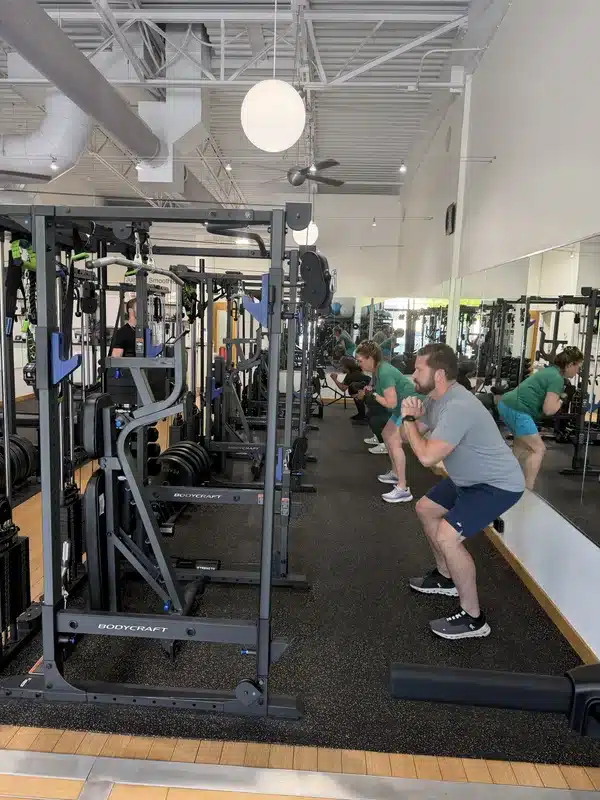
Consistency over a four-to-eight week period before peak garden season makes a measurable difference. The sessions do not need to be long. Three to four sessions per week, each around thirty to forty-five minutes, is enough to build a protective baseline. “The biggest mistake I see active adults make is going from nothing to five hours of weekend yardwork in April,” says Dr. Lisa Folden, licensed physical therapist and author of Healthy Made Easy. “The body needs progressive exposure to the demands of that activity, not just the activity itself.” A balanced program would include two days of strength-focused work covering hip hinges, loaded carries, and single-leg movements, plus one day of mobility and stability work targeting the thoracic spine, hips, and shoulders. Core training is not about crunches. Planks, Pallof presses, and dead bugs build the anti-rotation and anti-extension stability that protects the lumbar spine during asymmetrical tasks like raking or digging. “People over fifty have decreased collagen synthesis and longer inflammatory cycles,” notes Brad Schoenfeld, Ph.D., certified strength and conditioning specialist and professor of exercise science. “That doesn’t mean they can’t do hard physical work. It means the warm-up and preparation stages carry more weight in their overall success.” Adults returning to training after time away can find practical guidance on how to return to training after a long break safely before jumping into a full garden-season program. For evidence-based guidance on exercise programming, OSHA provides ergonomic resources that apply to physical work and injury prevention.
Mobility Work That Makes a Measurable Difference
Strength alone is not sufficient preparation for garden season. The body also needs adequate range of motion to move safely through the positions that yardwork demands. Thoracic spine rotation is particularly important. When the mid-back is stiff, the lower back and neck pick up the slack during twisting motions like raking leaves or turning to grab a tool. A simple thread-the-needle stretch performed daily can restore meaningful rotation in just a few weeks. Hip flexor length matters just as much. Gardeners spend long stretches in a forward-flexed posture, which shortens the hip flexors over time and tilts the pelvis into extension when standing. A ninety-ninety hip stretch or a low lunge with a posterior pelvic tilt directly addresses that pattern. Ankle dorsiflexion is often overlooked but affects everything from squatting depth to balance during uneven ground traversal. Calf stretches against a wall and ankle circles improve mobility that carries over to both gardening and outdoor activity. Adults who enjoy Asheville’s mountain lifestyle will find that the same preparation supporting garden work also supports hiking and trail time, as explored in the fitness for mountain adventures resource. For comprehensive information on musculoskeletal health and mobility, Wikipedia’s article on physical fitness provides foundational context on exercise science principles.
Recovering Well Between Garden Sessions
Recovery is where the gains from preparation actually show up. For adults over 40, the period between activity sessions deserves as much attention as the sessions themselves. Light walking after a long day of yardwork keeps circulation moving and reduces stiffness. Spending five to ten minutes on static stretching for the hip flexors, hamstrings, and shoulders after gardening helps reset the tissue length and reduce next-day soreness. Hydration is practical and often underestimated. Working outside in WNC spring and summer heat increases sweat loss, which directly affects muscle recovery and coordination. “Dehydration of as little as two percent of body weight can impair muscle strength and cognitive function,” notes the American Council on Exercise in its hydration guidelines. Sleep quality, protein intake adequate to support muscle repair, and brief walking breaks during long garden days all contribute to how the body bounces back. These habits are not complicated, but they compound meaningfully over a full season of outdoor work.
Frequently Asked Questions
What are the most important exercises for yardwork and gardening?
Hip hinges like Romanian deadlifts, loaded carries, single-leg movements like lunges, and shoulder stability work form the foundation. These exercises train the exact patterns that digging, hauling, kneeling, and overhead reaching require. Adding daily mobility work for the thoracic spine and hips reduces the chance of strain during long garden sessions.
How far in advance should I start training before garden season?
Four to eight weeks of consistent preparation is enough to build a meaningful protective base. Starting sooner is always fine, and even two to three weeks of focused training is better than none. The goal is progressive exposure to the movement demands before the volume of garden work spikes in spring.
Can I train for yardwork if I have lower back pain?
Many adults with chronic or intermittent lower back pain can and do train safely with appropriate guidance. The key is identifying whether the pain is structural, positional, or related to movement habits. A qualified coach or physical therapist can assess your specific situation and program around it rather than defaulting to avoidance. Understanding what corrective exercise involves and why assessment matters is a useful starting point for anyone dealing with persistent discomfort. For clinical guidance on pain management and exercise, the CDC offers resources on injury prevention and physical activity.
How does age affect how I should prepare for gardening?
Recovery and collagen synthesis slow with age, making warm-up and mobility work increasingly valuable. Adults over 50 benefit from longer preparation phases and more consistent mobility work, but the fundamental movement patterns remain the same. Progressive training with adequate recovery time remains the most effective approach across all age groups.


How to Get Up Off the Floor Easier at Any Age
Key Takeaways Getting up off the floor becomes harder with age because of declining leg strength, hip mobility, and balance,
Exercises to Climb Stairs Easier at Any Age or Fitness Level
Key Takeaways Climbing stairs gets harder when the muscles that support that movement lose strength and coordination. Specific exercises targeting
Functional Exercises for Everyday Activities That Actually Work
Key Takeaways Functional exercises for everyday activities train your body to move the way real life actually demands. Instead of