You walk into the gym you just paid for, and within ninety seconds you already know it was a mistake. The music is too loud, the guy at the squat rack is half your age and on his third TikTok of the set, and the bench you wanted to use is set at a height that would wreck your shoulder if you actually used it the way the diagram shows.
You sign up anyway. You tell yourself you’ll figure it out. You go twice in the first week, once in the second, and by week four the membership becomes another monthly charge you keep meaning to cancel. This is not a story about willpower. It is a story about a mismatch — between who the room was built for, and who you actually are.
If you are an adult over 40 in the Asheville area, that mismatch is almost certainly what has been getting in your way. Not your discipline. Not your age. The room.
The Asheville gym landscape, honestly
Drive a ten-mile radius from downtown and you will hit Planet Fitness, the YMCA, Onelife Fitness, an Orangetheory or two, a couple of F45 studios, and a small CrossFit box tucked into a warehouse. Each one is a legitimate business, and each one is calibrated for a specific kind of person.
That person is between 22 and 38. They recover quickly. They have probably been training in some form since high school. They want intensity, music, social energy, and a check-in app that tracks their streak. The whole experience — the floor layout, the equipment defaults, the class programming, the playlist, the average age of the instructor on the schedule — is engineered around that profile.
There is nothing wrong with engineering a gym for that person. They exist in real numbers and they spend money. The problem is what happens when a 56-year-old woman who has not lifted a weight since her thirties walks into the same room. The defaults that work for the 28-year-old actively work against her.
The cable machine is set for someone six inches taller. The barbell on the rack is loaded with the warmup plates from the last guy who used it, which is more than she should be pressing today. The instructor on the floor is 24 and has never coached a body that has been pregnant, had a knee replacement, or spent twenty years at a desk. The music is loud enough that if she did want to ask a question, she would have to shout it.
She does not shout it. She does the elliptical for twenty minutes and goes home.
What “calibrated for the 20-to-40 crowd” actually looks like
It is rarely one obvious thing. It is a stack of small things that add up to a room that does not fit you.
- Equipment defaults. Standard bench heights, machine seat positions, cable attachment heights. All preset for an average that is not you.
- Programming defaults. Group classes built around high heart rate, high impact, and low recovery between sets. Great for a 30-year-old. Brutal for a 60-year-old who needs more time between efforts to do the work safely.
- Instructor profile. Most coaches at big-box gyms are early-career — credentialed, but not necessarily trained for adult bodies, joint history, or hormonal shifts. They coach what they were taught, which was almost certainly designed around a younger client.
- Atmosphere. Loud music, dim lighting, mirrors everywhere, people on their phones between sets. It signals one thing: this is a place to perform, not a place to learn.
- Membership model. Drop in any time, do whatever you want, no one is watching. Which sounds like freedom and functions like abandonment if you genuinely do not know what to do.
None of that is a moral failing of the gym. It is just a product decision. And the product was not built for you.
What an adult over 40 actually needs
Here is what changes once you cross 40, and especially once you cross 50 or 60. Recovery slows down. Connective tissue gets less forgiving. Bone density becomes a real concern, particularly for women in and after menopause. Balance and coordination need to be trained on purpose, not assumed. Old injuries that healed twenty years ago start showing up again as compensations and pain.
Training a body in that condition is a different skill than training a 25-year-old. It can absolutely be done — and the results when it is done right are extraordinary. People in their sixties and seventies routinely gain back muscle mass they lost decades ago. But it takes:
- A private or semi-private setting where you can ask questions without performing for a room.
- Programming that respects recovery — the right number of sessions per week, the right rest between sets, the right balance of strength and mobility.
- Instructors trained for adult bodies — people who know how to scale a movement around a bad shoulder, a cranky knee, a fused vertebra.
- Real measurement beyond the scale — body composition, muscle mass, balance, strength benchmarks that tell you what is actually changing inside your body.
- Recovery built into the offering, not sold as a separate add-on you have to figure out later.
That is a different product than what a big-box gym sells. It has to be.
What to look for when you evaluate any gym in Asheville
You can usually tell whether a space is built for you within one visit. Look for these things:
- Who is in the room during the hours you would actually train? Walk in at 10 a.m. on a Tuesday. If everyone is 25 and wearing AirPods, that is your answer.
- What does the equipment look like? Stations set up for varied heights, attachments that are easy to swap, no broken machines pushed against the wall, free space to move.
- Do trainers ask about your history before they suggest anything? A good coach asks about surgeries, current pain, what you used to do for movement, and what your doctor has said. A bad coach hands you a generic plan.
- Is recovery part of the offering or sold separately? Sauna, mobility, soft tissue work, smart nutrition — if those are bolted on as expensive upgrades, the gym is treating recovery as an afterthought.
- Can you talk? If you have to shout to ask a question, the room is not set up for adult learners.
If most of those answers feel off, you are not the problem. The room is.
Why “this is not a gym” is more than a slogan
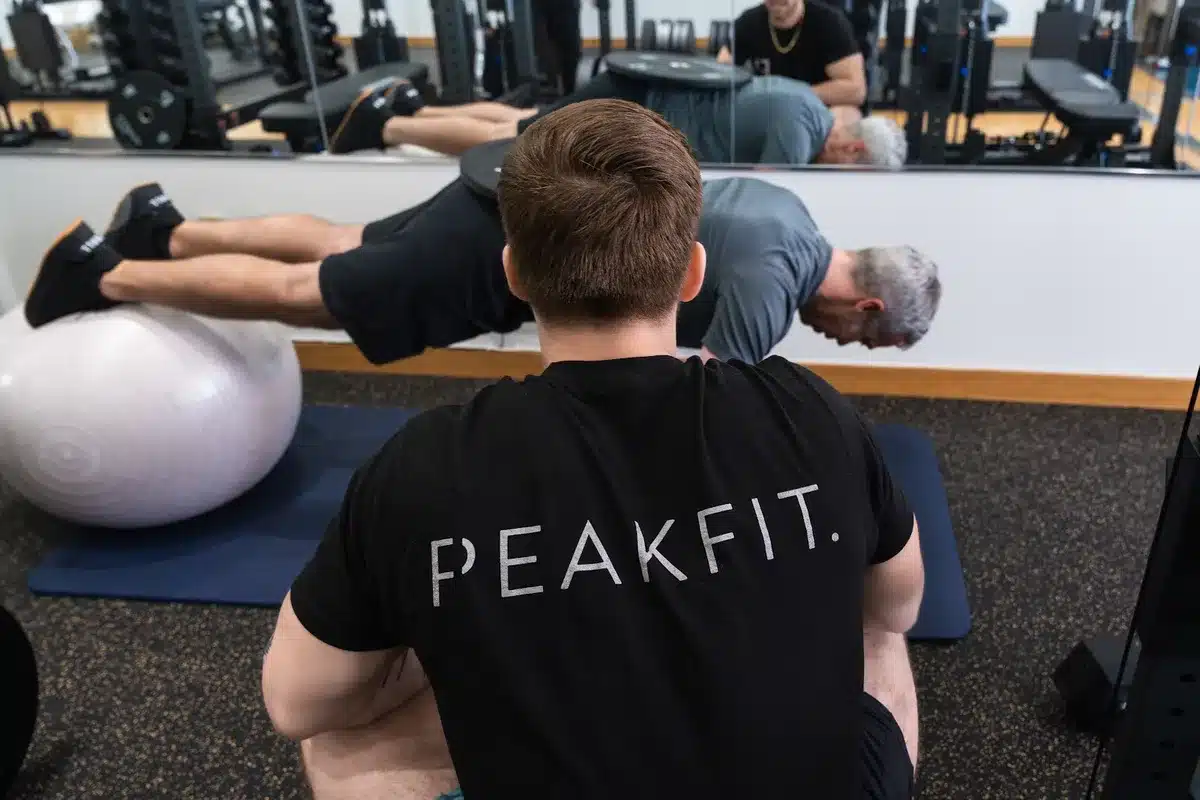
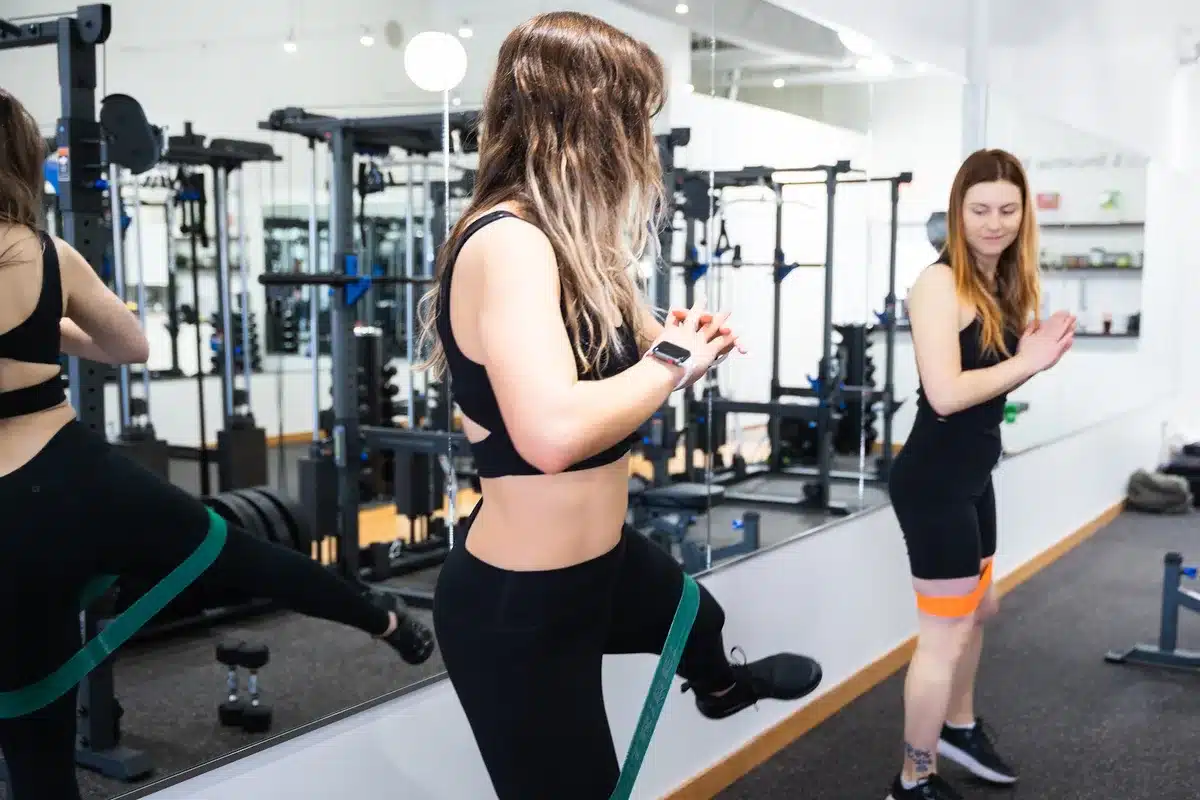
There is a category of fitness space that is built the opposite way. Private personal training studios — sometimes called small group personal training, or semi-private training — flip every default we just listed. The equipment is shared between a small number of people who are working with a trainer at the same time. The room is quieter. The programming is written for the specific people in it. The instructor is not running a class for thirty people; they are coaching three or four at a time.
That model is not better for everyone. If you already know exactly what to do, have the discipline to walk into a big-box gym alone and execute, and just want a place to do your work, a Planet Fitness membership for $15 a month is the right answer. There is no shame in that.
But for most adults coming back to training after a break — especially after 40 — the private studio model exists because the big-box model has never solved their problem. You need someone watching your form. You need programming that does not assume you have been lifting for ten years. You need a room where you can ask the question that has been bugging you about your left hip without feeling like you are slowing the class down.
Where Peakfit fits in this
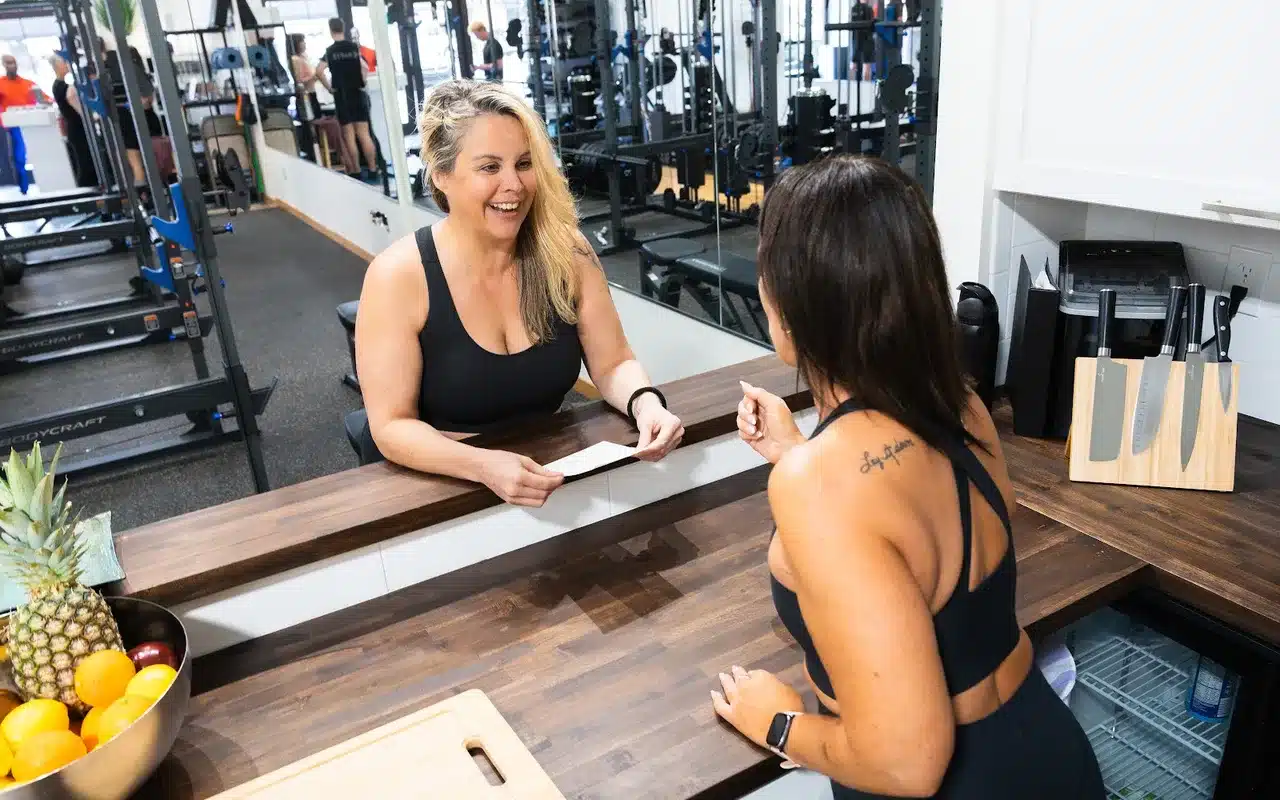
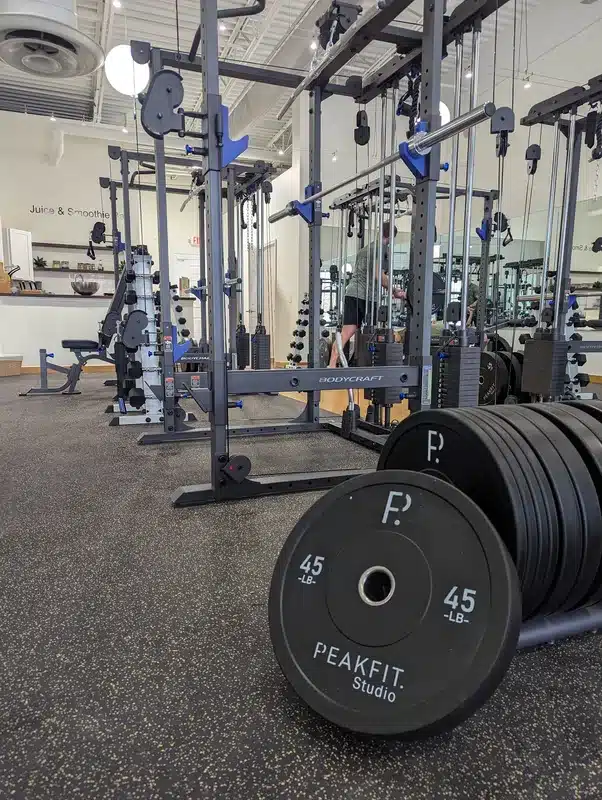
Peakfit Studio is in Arden, about fifteen minutes south of downtown Asheville. It is a private personal training studio built specifically for adults 40 to 80. Not “also serves” — built for. There is no open gym floor, no drop-in membership, no class of thirty.
Training runs on a pod-based small group model — up to six people across three stations per session, with Alex Zierhut, Franklin, and Ariel coaching the room. Every member gets an InBody scan to measure body composition, not just bodyweight. Infrared sauna and red light therapy are on site so recovery is part of the room, not a separate errand. There is a juice and smoothie bar by the door for the post-workout recovery piece. Programming is written around adult bodies, joint history, and the reality that recovery matters as much as the lift itself.
You can read more about how the training side works on the Asheville Personal Trainer hub, and the recovery side is covered in detail on the juice bar piece.
The honest takeaway
The right gym for an adult over 40 should feel like a space designed for who you actually are, not who marketing says you should be. If you walk into a fitness space and your first feeling is “I do not belong here,” trust that. The room is telling you the truth. There is probably a different room that fits.
The easiest way to find out if Peakfit is that room for you is to come in for a free consultation. It is sixty minutes — a private studio tour, an InBody body composition scan, a one-on-one conversation about what you actually want from your next thirty years, and a fresh smoothie from the juice bar on the way out. No pitch. No pressure. Just a clear answer to whether this space is built for you.
Book your free consultation here.