

Key Takeaways
Grip and core strength for older adults are two of the most reliable physical markers of long-term health and independence. Declining grip and core function raise fall risk, slow recovery from injury, and limit daily activity. The good news is that both respond well to structured, progressive training at any age, with results often appearing within six to eight weeks.
- Grip strength predicts cardiovascular health, bone density, and all-cause mortality in adults over 50, according to research published in the British Medical Journal.
- Core stability is about more than abdominal appearance. It supports the spine, pelvis, and hip function during every movement you make.
- Training both grip and core together produces faster functional gains than isolating either quality alone.
- Adults over 60 can safely improve both with low-impact, progressive exercise when supervised by a qualified trainer.
- Consistency and load progression matter far more than intensity or novelty in any program designed for this population.
Why Grip and Core Strength Matter More After 40
Grip and core strength for older adults are not aesthetic goals. They are direct measures of the body’s capacity to function without assistance. After age 40, grip strength tends to decline at roughly one to three percent per year without deliberate training, according to data from the American College of Sports Medicine. Core stability follows a similar trajectory, especially after extended periods of inactivity, desk work, or recovery from surgery. Together, weak grip and poor core control are among the leading contributors to fall-related injuries in adults over 65. Falls are the leading cause of injury death in that age group, according to the Centers for Disease Control and Prevention. Working on both qualities is not about looking athletic. It is about staying upright, carrying groceries, getting up off the floor, and protecting yourself when the ground is uneven. These are the kinds of goals that genuinely change daily life.
The Science Behind Grip Strength and Longevity
Grip strength has emerged as one of the most reliable biomarkers in aging research. A large-scale study published in The Lancet tracked over 140,000 adults across 17 countries and found that a decrease in grip strength was a stronger predictor of cardiovascular mortality than systolic blood pressure. That result has been replicated in multiple populations since. The mechanism is not fully understood, but researchers believe grip strength reflects overall skeletal muscle mass and nervous system efficiency, both of which decline with age and inactivity. “Grip strength is essentially a window into the overall state of musculoskeletal health,” says Dr. Darryl Leong, a cardiologist and lead researcher on the Lancet grip strength study. “It’s a simple measure that carries a lot of information about what’s happening systemically.” This is why a well-designed program for adults over 50 includes grip-specific work rather than treating hand and forearm strength as an afterthought.
Core Stability: Function Over Appearance
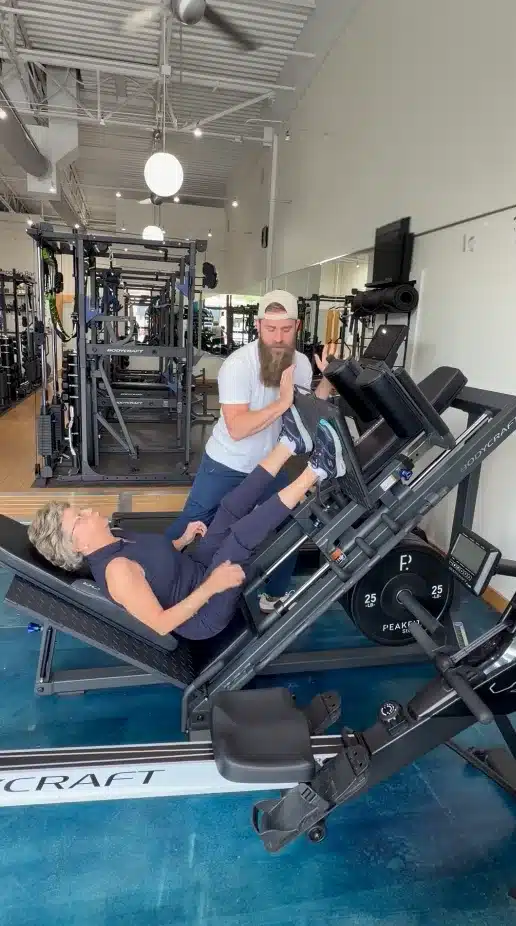
The core is not a single muscle. It is a system of muscles surrounding the spine and pelvis, including the transverse abdominis, multifidus, obliques, and pelvic floor. These muscles work together to stabilize the trunk during movement, protect the lumbar spine, and transfer force between the upper and lower body. When core stability is poor, the body compensates. The lower back overworks. The hips lose their ability to hinge correctly. Shoulders round forward to find balance. These compensation patterns accumulate over years and often result in chronic pain or movement limitations that feel permanent but are actually trainable. “The core is the foundation of every movement,” says Dr. Stuart McGill, professor emeritus of spine biomechanics at the University of Waterloo. “Without adequate core stiffness at the right moments, the limbs lose their power and the spine absorbs forces it was never designed to handle alone.” For adults over 40 recovering from back surgery, hip replacement, or extended bed rest, rebuilding core stability is often the first and most critical step in returning to confident, independent movement, and working through functional movement patterns designed for adults over 40 addresses exactly this progression in a supervised setting.
Training Methods That Produce Real Results
Effective grip and core training for older adults does not require complex equipment or high-intensity circuits. It requires the right exercises, applied consistently, with appropriate progression. For grip strength, research supports dead hangs, farmer carries, plate pinches, and towel pull exercises. These load the forearm flexors and extensors, strengthen the tendons of the hand, and improve neural drive to the smaller muscles of the wrist. For core stability, the most evidence-backed movements for this population include the dead bug, bird dog, pallof press, plank variations, and hip hinge patterns like the Romanian deadlift at modest loads. These exercises build stability without placing excessive compression on the lumbar spine, and they align closely with the functional exercises for everyday activities that translate directly to how people move at home and at work. “Older adults often come in assuming they cannot do meaningful strength work,” says Dr. Brad Schoenfeld, an exercise scientist and professor at Lehman College. “But the research consistently shows that skeletal muscle adapts to resistance at any age. The key is individualized programming and appropriate load selection.” Peak Fit Studio structures programs around this principle, using body composition data and movement assessments to identify where each person actually needs work before designing a session. Adults in the Arden and South Asheville area who are rebuilding after injury or surgery may also find value in reading about personal training options specifically for women over 50 or strength training programs designed for men over 50.
Sample Scenario: A 64-Year-Old Returning to Exercise
Sample Scenario: A 64-year-old with no recent training history and mild lower back pain visits a trainer for the first time. An initial movement screen reveals limited hip hinge ability and significantly below-average grip strength for his age and sex. A twelve-week program begins with three sessions per week, each forty-five minutes. Weeks one through four focus on dead bugs, bird dogs, and bodyweight hip hinges paired with farmer carry progressions using light kettlebells. By week eight, the client is performing loaded Romanian deadlifts at moderate weight, hanging from a bar for sets of twenty seconds, and reporting noticeably less discomfort during daily tasks. This progression mirrors what happens when joint-friendly strength training principles are applied consistently over time. This is not unusual. It is the expected outcome when programming is appropriate and progressive.
Frequently Asked Questions
How often should older adults train grip and core strength?
Two to three sessions per week is sufficient for most adults over 50 who are new to structured training. Each session should include at least one grip-focused movement and one core stability exercise. Rest days between sessions allow adequate muscle recovery. Within six to eight weeks of consistent training, measurable improvements in both qualities are typical for most people in this age range.
Is grip and core training safe after back surgery or hip replacement?
It can be, but timing and exercise selection are critical. Most surgeons clear patients for low-load core stability work within eight to twelve weeks of a procedure, depending on the surgery type and individual healing. A trainer with experience in post-rehabilitation populations should work alongside guidance from the treating physician to select movements that avoid excessive spinal compression or hip impingement during early recovery.
What is a normal grip strength for adults over 60?
Reference values vary by age and sex. Research published in the National Institutes of Health research databases suggests that healthy men over 60 typically measure between 32 and 38 kilograms of grip force using a dynamometer, while women in the same age range typically measure between 19 and 24 kilograms. Values below those thresholds correlate with increased risk of disability, hospitalization, and all-cause mortality in aging populations.
Can grip and core strength improve without going to a gym?
Yes, to a degree. Body weight movements like planks, bird dogs, and wall sits improve core stability without equipment. Hand squeezers and resistance bands provide basic grip training. However, research consistently shows that progressive external loading produces larger and faster gains than body weight alone.


Functional Fitness vs Aesthetic Training: What Adults 40+ Need
Key Takeaways Functional fitness trains your body to move well and feel strong in daily life, while aesthetic training focuses
Functional Strength Training Asheville Adults Trust After 40
Key Takeaways Functional strength training focuses on movements that carry over directly into daily life, making it especially valuable for
Training With Your Spouse in Semi Private Personal Training
Key Takeaways Semi private personal training can work well for couples, but it requires honest conversations about pacing, goals, and