

TL;DR: For adults over 50, the bike vs treadmill for joint health decision comes down to this: exercise bikes are gentler on arthritic or post-surgery joints, while treadmills support bone density and functional movement. The right choice depends on your joint health, bone density concerns, and which machine you will actually use consistently.
Bike vs Treadmill for Joint Health: The Short Answer
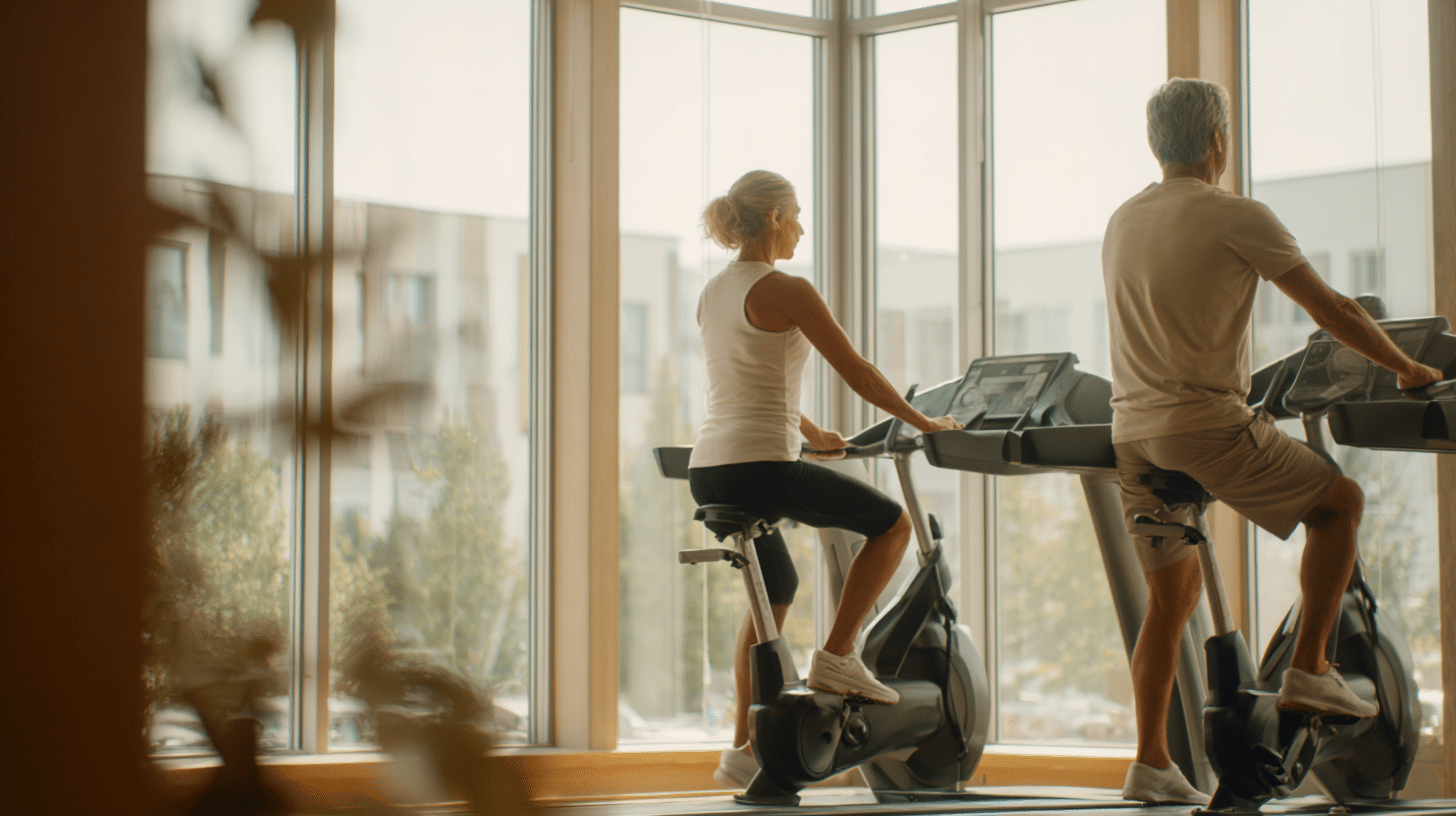
Neither machine is universally better for adults over 50. When you are weighing the bike vs treadmill for joint health, the exercise bike protects joints and suits people managing arthritis, recovering from surgery, or returning after a long break. The treadmill builds bone density and trains the walking patterns you rely on every day. Both deliver real cardiovascular benefits when used consistently.
The CDC recommends at least 150 minutes of moderate-intensity aerobic activity per week for adults over 50. The right machine is the one that helps you hit that target without injuring yourself or dreading every session. Understanding how often you should work out after 50 is a useful starting point before you choose equipment.
At Peak Fit Studio in Arden, we work with adults across South Asheville, Fletcher, Hendersonville, Mills River, Fairview, Skyland, Biltmore Forest, and surrounding WNC communities who face exactly this question. The answer is rarely the same for two people, and that is the point.
What Is More Effective: Treadmill or Exercise Bike?
For cardiovascular health, both machines are equally effective when intensity and duration are matched. Treadmills have an edge for bone density because walking and jogging are weight-bearing activities. Exercise bikes have an edge for joint protection because your body weight is supported by the seat. The machine you use regularly and intensely enough to challenge your heart is the more effective one for you personally.
A high-intensity session on an exercise bike can match or exceed the calorie burn of a moderate treadmill walk. Conversely, a brisk incline walk on a treadmill can outperform a low-resistance cycling session. Effectiveness is determined by effort, not equipment brand or type.
For adults in the Arden and South Asheville area who have been away from exercise for a while, read about training after a long break before pushing either machine hard. Starting too fast on either is one of the most common ways adults over 50 end up sidelined before they build any real momentum.
One more thing worth noting: the bike vs treadmill for joint health question is not just about which one hurts less. It is about which one supports your long-term movement quality. The best cardio machine is the one that keeps you consistent across months, not just days.
Stationary Bike vs Treadmill: Side-by-Side Comparison
When comparing a stationary bike vs treadmill for adults over 50, the differences are meaningful but not dramatic. An exercise bike is better if you have joint pain, are post-surgery, or need low-impact cardio. A treadmill is better if bone density, balance, and functional walking strength are your priorities. For most healthy adults over 50 without significant joint problems, a treadmill edges out a bike because it trains movements you actually use in daily life.
That said, the gap between them is small when both are used correctly. Many adults in the Arden, South Asheville, and western North Carolina area find that rotating between both pieces of equipment across the week gives them the joint protection of the bike on harder training days and the bone-building benefit of the treadmill on others. This ties directly into why rest days are non-negotiable after 45 and how you structure recovery matters as much as the workout itself.
| Factor | Exercise Bike | Treadmill |
|---|---|---|
| Joint impact | Very low. Seated, non-weight-bearing | Low to moderate. Cushioned deck reduces impact vs pavement |
| Bone density benefit | Minimal. Not weight-bearing | High. Walking and jogging are weight-bearing |
| Balance training | Minimal. Seat provides full support | Moderate. Requires upright posture and coordination |
| Functional movement carry-over | Moderate. Leg strength transfers to daily tasks | High. Directly trains walking patterns used every day |
| Best for post-surgery recovery | Yes, especially recumbent style | Only once cleared by your care team |
| Back support option | Yes, recumbent bikes offer full back support | No. Requires upright posture throughout |
| Space and noise at home | Compact, quiet | Larger footprint, more noise |
| Calorie burn potential | High at higher resistance and speed | High, especially with incline |
| Fall risk | Very low | Low to moderate depending on speed |
Treadmill vs Stationary Bike for Seniors: What the Research Shows
For seniors, a stationary bike is generally the safer starting point because it removes fall risk and reduces joint loading. A treadmill offers superior benefits for bone health and balance when it can be used safely. Age alone does not determine which machine is right. Your current health, balance, and goals matter more than your birthday.
The National Institute of Arthritis and Musculoskeletal Diseases notes that weight-bearing exercises like walking help slow bone loss and may support new bone tissue formation. This makes treadmill walking particularly valuable for older women who are post-menopausal and managing osteopenia or osteoporosis concerns.
For seniors dealing with balance issues, the stationary bike eliminates fall risk entirely while still building leg strength and cardiovascular fitness. Once strength and confidence improve, many people transition to treadmill walking with handrail support. A coach familiar with personal training at 60 can build a progression that moves you from bike to treadmill safely over time. This kind of structured approach is exactly what separates a program built for your body from a generic plan pulled off the internet.
In the WNC communities we serve, including Hendersonville, Fairview, and Skyland, we regularly work with adults in their 60s and 70s who are surprised by how quickly they progress when the starting point is right for them rather than right for someone twenty years younger.
Recumbent Bike vs Treadmill: Which Is Easier on Your Body?
When comparing a recumbent bike vs treadmill, the recumbent bike wins for pure joint and back comfort. Its bucket seat and full back support allow you to pedal without loading your spine, hips, or knees in a way that causes pain. For people returning to exercise after hip or knee procedures, the recumbent bike is often the first piece of cardio equipment their care team clears them to use.
A treadmill, by contrast, requires you to stand, balance, and coordinate your gait for the full session. That is not a weakness. It is actually what makes treadmill walking so valuable for functional fitness. But it does mean the treadmill asks more of your body, particularly your joints, your balance system, and your postural muscles.
The recumbent bike vs treadmill decision often comes down to one question: what does your body need right now versus what does it need to build toward? Many adults in the South Asheville and Arden area start on the recumbent bike and graduate to treadmill work over several weeks as their strength and joint tolerance improve. That kind of progression is not failure. It is smart training. Recumbent bikes in particular are popular among people returning to exercise after hip or knee procedures because they load the joints the least of any cardio option.
At a gym like Peak Fit Studio, a coach can watch your form on both machines and help you avoid the common mistakes that turn a good workout into a nagging injury. Personal training for beginners outlines what that starting process looks like when you are not sure where to begin.
Understanding Your Body After 50
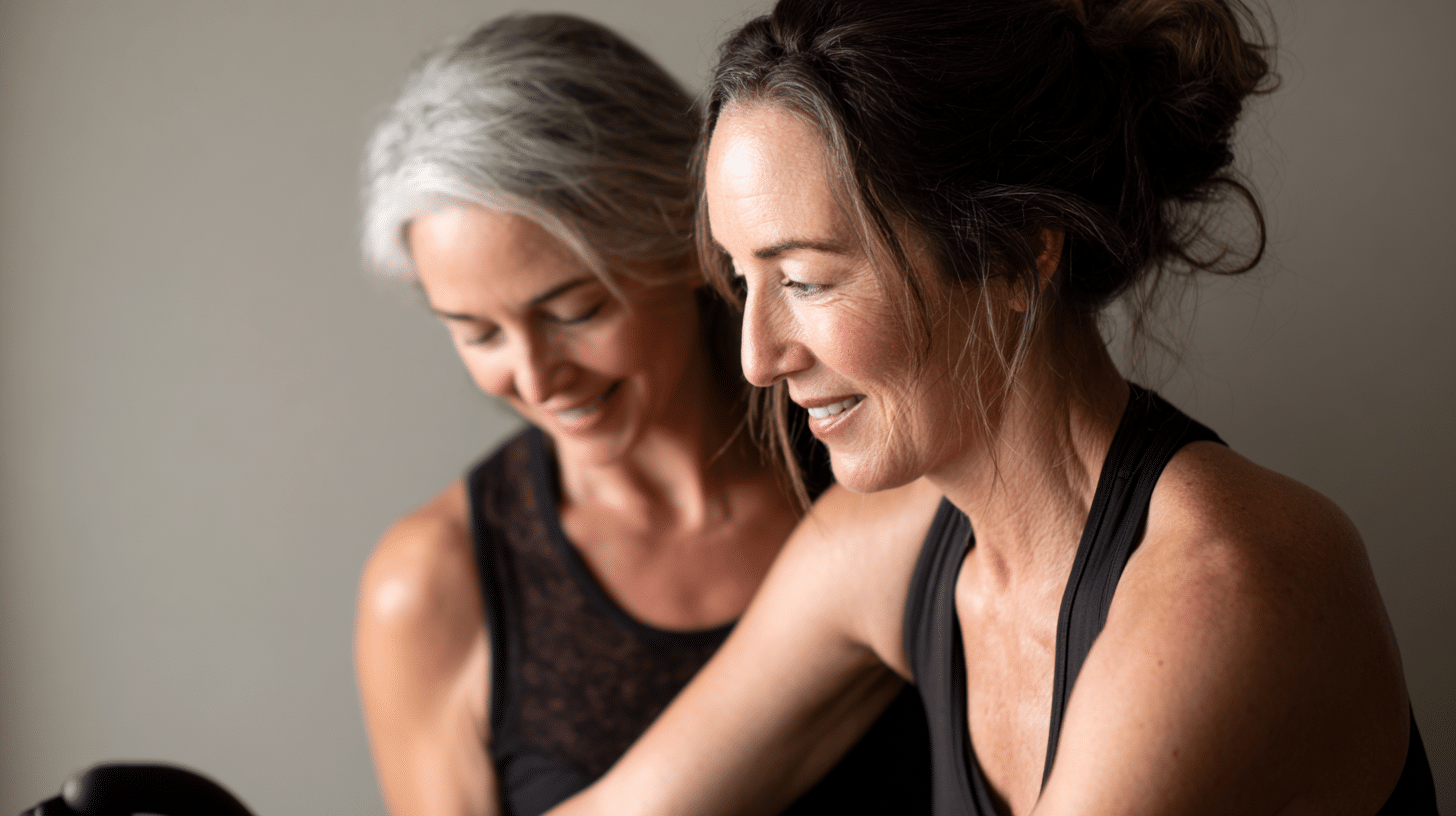
Your body after 50 responds differently to cardio equipment than it did in your thirties. Joints may feel stiffer in the morning. Recovery takes longer. You may be managing arthritis, osteoporosis, previous injuries, or the aftermath of a surgery. These are not reasons to avoid cardio. They are reasons to choose your equipment and intensity more carefully.
The good news is that both machines can work well at this stage of life when you match them to your situation. The mistake most people make is picking based on what a fitness influencer recommends rather than what their own body needs. A 58-year-old woman rebuilding strength after a knee replacement has different needs than a 65-year-old man who has been walking regularly for years. Both deserve a plan built around their actual starting point, not a generic template.
Community-based training can also help here. Small group training for adults over 40 creates an environment where you work alongside peers facing similar challenges, with a coach keeping your form and progression on track. That kind of accountability and context is something no piece of cardio equipment can provide on its own.
How Cardio Fits Into a Complete Program
Cardio equipment, whether bike or treadmill, works best when it sits on top of a foundation of strength, mobility, and recovery habits. An exercise bike alone will not replace the functional strength you need to get up from the floor, carry groceries, or stay steady on a hiking trail in the mountains around Asheville. It is a tool within a broader program, not a complete program on its own.
The six foundational movements covered in functional fitness after 50 illustrate why cardio is one piece of a larger picture. Squatting, hinging, pushing, pulling, carrying, and rotating are the movement patterns that keep you independent. Cardio supports your heart and stamina so you can perform those movements without getting winded.
Strength training also directly improves how well you perform on both machines. Stronger legs mean more power output on the bike. Better hip stability makes treadmill walking more efficient. Strength training over 40 explains what changes in your body and how to build muscle safely at this stage. Sleep is another part of the foundation that people often underestimate. Sleep and strength training over 40 covers why recovery quality affects everything from your energy on the bike to your progress in the weight room.
Making the Right Choice for Your Situation
The bike vs treadmill for joint health question has a clear answer once you know your own starting point. If your joints are your biggest concern right now, start with the bike. If bone density and functional walking strength are your priorities and your joints can handle it, the treadmill earns its place. If you are not sure, rotating between both across the week gives you the benefits of each without overloading either.
What matters most is that you choose a machine that matches where your body actually is today, not where it was ten years ago or where you hope it will be in six months. Consistency over months beats the perfect equipment choice every time. A structured program from a coach who understands adult physiology will always outperform the best machine used without direction.
If you are in the Arden, South Asheville, Fletcher, Hendersonville, Mills River, Fairview, Skyland, Biltmore Forest, or broader WNC area and you want help making this decision for your specific situation, we are ready to help you build a plan that works for your body, your history, and your goals.
Frequently Asked Questions
Is a stationary bike or treadmill better for bad knees?
A stationary bike is generally better for bad knees because your body weight is supported by the seat rather than loaded through your knee joint with each step. When you pedal, your knee moves through its range of motion without the impact stress that walking or jogging creates. This makes the bike the preferred choice for people managing knee arthritis, recovering from knee surgery, or dealing with chronic knee pain. A recumbent bike takes this even further by reducing the angle of knee flexion required during pedaling. Once knee strength and stability improve, many people are able to transition to treadmill walking with proper technique and appropriate speed. Your care team or a qualified coach can help you know when that transition makes sense for your specific situation.
Which burns more calories: an exercise bike or a treadmill?
Calorie burn on both machines depends more on your effort level than on the machine itself. At matched intensity, a treadmill walk with incline and a high-resistance cycling session produce similar calorie expenditure. Treadmills do tend to burn slightly more calories at low effort levels because walking is a full-body weight-bearing activity, while easy cycling is more isolated to the legs. However, a vigorous cycling session at high resistance and speed can easily outpace a casual treadmill walk. For adults over 50 focused on health rather than calorie counting, the more important question is which machine lets you sustain effort long enough to challenge your cardiovascular system. That machine, used consistently, is the one that will produce results over time.
Can I use a treadmill after hip or knee replacement surgery?
Treadmill use after hip or knee replacement surgery depends entirely on your surgeon’s clearance and the stage of your recovery. Most care teams recommend starting with a stationary bike, particularly a recumbent bike, before progressing to treadmill walking because the bike loads the replaced joint significantly less. Once you are cleared for weight-bearing cardiovascular exercise, treadmill walking at low speed and low incline is typically introduced gradually. The timeline varies widely depending on the procedure, your age, and how your recovery is progressing. Working with a coach who has experience with post-surgical adults can help you progress safely and avoid setbacks that push your recovery timeline back further.
What is the best cardio machine for seniors with osteoporosis?
For seniors with osteoporosis, treadmill walking is generally the preferred cardio machine because it is a weight-bearing activity that places mechanical stress on bones, which is the stimulus that helps maintain bone density. The National Institute of Arthritis and Musculoskeletal Diseases notes that weight-bearing exercises can help slow bone loss. That said, treadmill use needs to be appropriate for your balance, joint health, and fall risk. For seniors who are not yet stable enough for treadmill walking, starting with a stationary bike builds leg strength and cardiovascular fitness first. As stability improves, transitioning to treadmill walking with handrail support adds the bone-building benefit. A qualified coach can help you sequence this progression safely.
Is a recumbent bike a good workout for adults over 60?
Yes. A recumbent bike is an effective cardiovascular workout for adults over 60, particularly for those with lower back pain, balance concerns, or joint issues. The seated position with full back support allows you to focus on pedaling effort without the postural demands of an upright bike or treadmill. Resistance can be adjusted gradually over weeks to progressively challenge your cardiovascular system and leg muscles. Recumbent bikes are widely used in physical therapy and fitness settings as a starting point for people returning to exercise after surgery, injury, or a long break. They are not a lesser option. They are a smart one for many adults, and a bridge to more demanding cardio formats as strength and confidence grow.
Ready to stop guessing and start moving in a way that actually fits your body? Book Your Free Consultation at peakfit.studio/free-consultation/ or call (828) 620-7020. We work with adults across Arden, Asheville, South Asheville, Fletcher, Hendersonville, Mills River, Fairview, Skyland, Biltmore Forest, and surrounding WNC communities. No intimidation. No generic programs. Just a plan built around where your body actually is right now.







Marilyn’s Story: At 82, She Joined PEAKFIT to Lift Her Own Carry-On
Arden’s Only Private Personal Training Studio for Adults 40+ Marilyn had a very specific goal when she walked into PEAKFIT
Antioxidants and Exercise: Why Adults Over 40 Need More (and Where to Get Them)
Arden’s Only Private Personal Training Studio for Adults 40+ Every time you exercise, your body produces free radicals — unstable
Asheville Mountain Lifestyle Fitness That Supports Your Adventures
Key Takeaways Living an active mountain lifestyle in Asheville means your fitness needs to keep up with you, not the