

Key Takeaways
- A personal trainer designs individualized workout programs based on your goals, health history, and current fitness level
- Trainers teach proper form, track your progress, adjust your program over time, and keep you consistent
- Research from the Journal of Strength and Conditioning Research shows people who train with a coach progress significantly faster than those who train alone
- The biggest value isn’t the workout itself — it’s having someone who spots problems before they become injuries and keeps you accountable when motivation dips
- At PEAKFIT Studio in Arden, every new client starts with a free consultation and InBody body composition scan before a single session begins

Most people picture a personal trainer as someone who stands nearby counting reps. That picture is pretty incomplete. A good trainer does a lot more than that, and understanding what they actually do explains why working with one produces results that self-directed gym sessions often don’t.
What a Personal Trainer Does Beyond Counting Reps
The work starts before you ever pick up a weight. At a quality studio, your trainer reviews your health history, asks about past injuries, and assesses how you move. That assessment matters because most adults have at least one movement pattern that, if left uncorrected, leads to injury over time.
From there, your trainer builds a program around your specific goals and current capacity. Not a template. Not a generic plan from a fitness app. A program designed for your body, your schedule, and what you’re actually trying to accomplish. According to the American College of Sports Medicine (ACSM), individualized programming produces meaningfully better results than generalized fitness routines across nearly every population group.
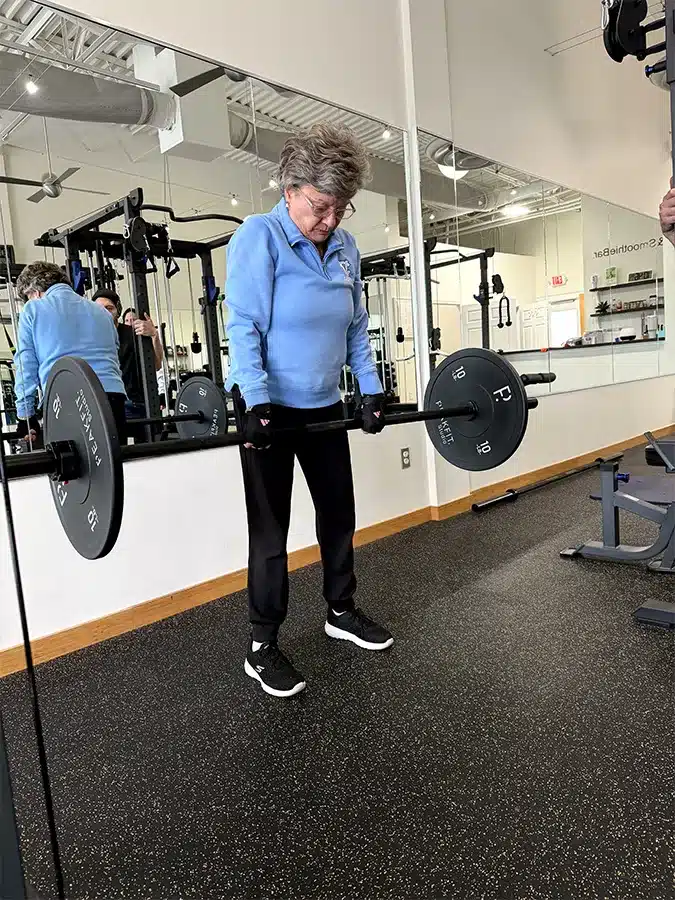
During sessions, the trainer watches your form in real time. This is one of the most underappreciated parts of the job. Most people have no idea their knees are caving during a squat or their lower back is rounding on a deadlift. Those small errors accumulate. A trainer catches them immediately and corrects them before they become a chronic problem.
At PEAKFIT Studio in Arden, trainers also track performance data across every session, adjusting the program as you get stronger. That ongoing adjustment is called progressive overload, and it’s what separates a well-designed training plan from one that stalls after six weeks.
The First Session: What to Expect
The first session at PEAKFIT starts with a conversation, not a workout. Your trainer wants to know what you’ve tried before, what worked, what didn’t, and what you’re hoping to accomplish. That context shapes everything that follows.
Next comes the movement assessment. Your trainer watches you walk, squat, hinge, and press at bodyweight. The goal is to identify any asymmetries, mobility restrictions, or compensations that need to be addressed before loading. Research published in the Journal of Athletic Training consistently shows that pre-training movement assessments reduce injury rates significantly, particularly in adults who have been sedentary for extended periods.
From there, you might complete a short, light workout so your trainer can see how you respond to basic exercises. The intensity stays low. The focus is on quality of movement, not sweat. You’ll leave with a clear picture of where you’re starting and what the first four weeks will look like.
Anyone considering one-on-one personal training in Asheville should know that the first session is designed to feel manageable. Showing up is the hardest part.
One-on-One vs Self-Guided: The Real Difference
The gap between training alone and training with a coach isn’t about access to equipment. Most gyms have everything you need. The gap is in execution, consistency, and adaptation.
When you train alone, you tend to avoid the exercises that are hardest for you. You skip the things that feel awkward. You stay comfortable. That’s human nature, not a character flaw. But staying comfortable doesn’t produce change. A trainer pushes into those uncomfortable areas with you and explains why they matter.
Consistency is the other major factor. A 2021 study in the Journal of Sports Science and Medicine found that clients who trained with a personal coach were significantly more consistent over a 12-week period compared to a matched group of self-directed exercisers. Showing up reliably is the single biggest driver of long-term results, and accountability to another person is one of the most effective tools for building that habit.
At PEAKFIT, the small group training format adds a community dimension to that accountability. Some clients find group energy more motivating. Others prefer the undivided attention of one-on-one sessions. PEAKFIT offers both.
How to Know If You Need a Trainer

A few honest indicators. If you’ve been trying to make progress on your own for more than six months without consistent results, that’s a signal. If you have a past injury and aren’t sure how to train around it safely, that’s a signal. If you keep starting programs and stopping them after a few weeks, that’s a signal.
You don’t have to be a fitness beginner to benefit from a trainer. Experienced gym-goers often work with coaches to break through plateaus, correct technique issues they’ve developed over years of self-directed training, or add structure to a program they’ve been winging.
The team at PEAKFIT Studio works with both first-timers and people who have been active for decades. The common thread is wanting better results than self-directed training is producing.
Frequently Asked Questions
How often should I meet with a personal trainer? Most trainers recommend two to three sessions per week for new clients. That frequency is enough to build a habit, allow for adequate recovery between sessions, and see measurable progress within the first 30 days. The ACSM recommends at least two days of resistance training per week for general health, and working with a trainer on those days maximizes their impact.
Do I need to be fit before I start with a personal trainer? No. Personal trainers work with people across every fitness level, including complete beginners and those returning to exercise after years away. The assessment process at the beginning of your program is specifically designed to meet you where you are.
What is the difference between a personal trainer and a strength and conditioning coach? A personal trainer works with general population clients on fitness, health, and body composition goals. A strength and conditioning coach typically focuses on athletic performance for competitive athletes. At PEAKFIT, the focus is on real-life results for adults of all ages and backgrounds, not sport-specific performance.
How long before I see results from personal training? Most clients notice improvements in energy, sleep quality, and how they feel physically within the first three to four weeks. Visible physical changes typically become apparent in weeks six through twelve with consistent training and aligned nutrition.
What should I bring to my first session? Wear comfortable athletic clothing and supportive footwear. Bring water. Eat a light meal or snack one to two hours beforehand. Arrive a few minutes early for any intake paperwork.
Your next step is simple. PEAKFIT Studio offers a free consultation and complimentary InBody body composition scan for new clients in the Arden, South Asheville, and Hendersonville area. Schedule your free consultation and find out what a program built around your goals actually looks like.
PEAKFIT Studio 100 Julian Ln, Suite 120 | Arden, NC 28704 (828) 620-7020 | hello@peakfit.studio







Marilyn’s Story: At 82, She Joined PEAKFIT to Lift Her Own Carry-On
Arden’s Only Private Personal Training Studio for Adults 40+ Marilyn had a very specific goal when she walked into PEAKFIT
Antioxidants and Exercise: Why Adults Over 40 Need More (and Where to Get Them)
Arden’s Only Private Personal Training Studio for Adults 40+ Every time you exercise, your body produces free radicals — unstable
Asheville Mountain Lifestyle Fitness That Supports Your Adventures
Key Takeaways Living an active mountain lifestyle in Asheville means your fitness needs to keep up with you, not the