

Find the Right Personal Trainer for Older Adults in Asheville
If you are searching for a personal trainer for older adults in Asheville, the options can feel overwhelming and the stakes feel higher than they did at 35. PEAKFIT Studio in Arden, NC specializes in fitness programs built specifically for adults 40 and older across South Asheville, Fletcher, Hendersonville, Mills River, Fairview, Skyland, Biltmore Forest, and surrounding WNC communities. This guide walks you through what certifications matter, what questions to ask, and how to spot a trainer who is genuinely equipped to help you move and feel better for the long haul.
Key Takeaways
- Not all personal trainers have the training or experience to work safely with adults over 60. The right certifications and communication style matter significantly.
- The assessment process is more important for older adults than for any other population. A trainer who skips it is a warning sign.
- According to the American College of Sports Medicine, adults over 65 who strength train consistently experience measurable gains in muscle mass, bone density, and balance regardless of their starting fitness level.
- The free consultation is your best tool for evaluating a trainer before committing to a program.
- PEAKFIT Studio’s team in Arden, NC specializes in senior fitness programs that combine personal training, nutrition counseling, and recovery services.
What Certifications Matter for Personal Training for Seniors in Asheville

The baseline for any personal trainer is a nationally recognized credential from NASM, ACE, NSCA, or ACSM. These organizations require passing a proctored exam and maintaining continuing education credits. A trainer without one of these credentials is not adequately qualified.
Beyond the baseline, look for specialty certifications in senior fitness, corrective exercise, or functional movement. NASM’s Certified Senior Fitness Specialist (CSFS) and ACSM’s senior fitness programming coursework signal a trainer who has studied the specific physiology of aging, not just applied general knowledge to an older client. That distinction matters more than most people realize.
Training adults over 60 requires understanding how sarcopenia (age-related muscle loss), reduced bone density, decreased joint flexibility, and changes in balance and proprioception affect exercise selection, load, and intensity. A trainer without that knowledge can cause injury by applying protocols designed for a 30-year-old to someone at a very different physiological starting point.
At PEAKFIT Studio, the team holds multiple certifications and has built their practice around working with the 60-plus population. Alex Zierhut holds a degree in exercise and health science from Florida Atlantic University and has hands-on experience designing senior-specific programs. Dakota Hall, the studio’s certified flexologist, specializes in assisted stretching and mobility work that directly addresses the joint stiffness and range of motion limitations common in older adults.
Personal Trainer for Seniors in Asheville: Questions to Ask Before You Hire
The free consultation exists for exactly this reason. Use it. Before committing to any program, ask these questions directly and listen carefully to how the trainer responds.
How much of your current client base is over 60? A trainer who answers vaguely or pivots to talking about younger clients is not your best option. You want someone who works with this population regularly and understands its specific needs without having to think too hard about them.
How do you assess a new client before designing their program? The answer should include a health history review, a movement assessment, and a direct conversation about current pain, past injuries, and any medications that might affect training. If the answer is anything close to “we just get started,” keep looking.
How do you handle it when a client reports new pain or discomfort? A well-qualified senior trainer will describe slowing down, assessing the situation, modifying or removing the movement causing the problem, and referring to a physician when appropriate. A trainer who says “push through it” or who does not have a clear protocol does not belong working with older adults.
What does a typical starting program look like for someone my age and fitness level? Good trainers can describe this in plain terms. You should hear mention of a gradual ramp-up period, a focus on movement quality before adding load, and regular check-ins to see how your body is responding. If the answer sounds like a script for a 25-year-old, it probably is.
Red Flags That a Trainer Is Not Right for Older Adults
A few clear warning signs that a trainer is not equipped to work safely with adults over 60:
No health history review before the first session. This step is not optional for any client. For adults over 60, who are more likely to have cardiovascular conditions, orthopedic concerns, and medication interactions, skipping it is genuinely irresponsible.
Pushing intensity too quickly. Older adults need a longer adaptation period than younger clients. A trainer who moves to high-intensity work within the first two weeks has not done the assessment process properly and is running on assumption rather than information.
Dismissing pain as normal soreness. Muscle soreness from training is normal and manageable. Joint pain, sharp pain, or pain that persists beyond 48 hours is not. A qualified trainer draws this distinction clearly and consistently.
No discussion of recovery in the program design. For adults over 60, recovery is as important as the training itself. That means adequate rest between sessions, sleep quality, and potentially recovery services like sauna or assisted stretching. A trainer who never mentions recovery is working with an incomplete model.
The senior fitness program at PEAKFIT covers all of these elements as standard practice, not as upgrades.
What Your First Session Should Look Like as an Older Adult

A well-structured first session for an older adult is not a workout. It is an assessment. Your trainer should spend the majority of that time gathering information, watching you move, and identifying what the program needs to address first.
The movement assessment should be thorough but low-key. Your trainer watches you squat, walk, bend, and press at bodyweight to look for compensations, limitations, and asymmetries. Nothing heavy, nothing intense. The goal is a clear and honest picture of your actual starting point.
By the end of a good first session, you should know your current body composition from an InBody scan, have a general sense of what the first four weeks will address, and feel comfortable with your trainer’s communication style. If you leave feeling confused, rushed, or uncertain about the plan, that information matters. Trust it.
PEAKFIT Studio serves adults in Arden, South Asheville, Fletcher, Hendersonville, Mills River, Fairview, Skyland, Biltmore Forest, and surrounding WNC communities. The team page provides background on each trainer’s credentials and areas of focus so you can get a sense of the fit before you even walk in the door.
Personal Training for Longevity in Asheville: Why the Goal Matters
Most of the adults who train at PEAKFIT are not chasing a number on a scale. They want to carry groceries without back pain, keep up with grandchildren, avoid the fall that sidelines so many people in their 70s, and stay off the medications their peers are accumulating. That is a longevity goal, and it requires a different kind of program than what most commercial gyms offer.
Strength training is the foundation. Research published in the Journal of the American Geriatrics Society documents significant strength and muscle mass gains in adults well into their 80s with consistent resistance training. But for older adults, the program also has to address balance, mobility, and recovery in a way that supports long-term health rather than just short-term progress metrics.
At PEAKFIT, the approach combines personal training with nutrition counseling and recovery services because the research is clear that none of these pieces works as well in isolation. If your current trainer only talks about what happens during the session and never about what happens between sessions, you are leaving meaningful results behind.
Osteoporosis and Bone Health: What to Know Before You Train in Asheville
Osteoporosis is common in adults over 60, particularly women, and it changes how a program should be designed. It does not mean you cannot train. In many cases, it means you should be training with even more intention and with a trainer who understands how to load the skeleton safely.
Weight-bearing and resistance exercises are among the most effective tools for maintaining and in some cases improving bone density. The key is that the loading needs to be appropriate, the movements need to be selected carefully, and the trainer needs to know your diagnosis and any physician guidance you have received before designing your program.
Trainers who are not familiar with osteoporosis protocols may inadvertently include movements that increase fracture risk, such as heavy spinal flexion under load, without realizing it. This is precisely why specialty knowledge matters when you are looking for a personal trainer for older adults in Asheville. Ask directly whether your trainer has experience working with clients who have osteoporosis before your first session.
Frequently Asked Questions
Is it safe to start strength training at 65 or older with no recent fitness history?
Yes, with appropriate guidance it is safe and genuinely beneficial. Research published in the Journal of the American Geriatrics Society documents significant strength and muscle mass gains in adults well into their 80s with consistent resistance training. The key is starting conservatively and progressing based on how your body responds rather than on a fixed timeline. A qualified senior fitness trainer will build that ramp-up period into the program from the start.
Should I get medical clearance before starting a senior fitness program?
If you have cardiovascular disease, diabetes, osteoporosis, or other chronic conditions, a conversation with your physician before starting is a smart step. For generally healthy adults over 60, medical clearance is not always required before beginning a supervised fitness program. What is non-negotiable regardless of your health status is disclosing your full health history to your trainer before the first session. That information shapes every decision a good trainer makes about your program.
How many times per week should adults over 60 train with a personal trainer?
The CDC recommends at least two days of muscle-strengthening activity per week for older adults. Most PEAKFIT clients in the senior population train two to three times per week, which aligns with the research on optimal frequency for muscle maintenance and strength development in this age group. Your trainer should also discuss what you are doing on the days between sessions, because recovery and light activity on off days are part of a well-designed program.
What is the difference between senior-specific personal training and regular personal training?
Senior-specific programs are built around the physiological changes that come with aging: slower recovery, decreased bone density, reduced joint range of motion, higher fall risk, and the more complex interaction between chronic conditions and exercise. Exercise selection, loading protocols, and intensity progressions are all adjusted accordingly. It is not a slower version of general fitness programming. It is a fundamentally different approach that requires specific knowledge most general trainers have not pursued.
How long before an older adult starting from scratch sees real results from personal training?
Most clients notice functional improvements, things like better balance, less joint stiffness, and more energy for daily activities, within the first four to six weeks of consistent training. Visible muscle changes typically appear between weeks eight and twelve when training is consistent and protein intake is adequate. Your trainer should be tracking progress along the way so you have clear data on how your body is responding, not just a subjective sense of whether things feel better.
Ready to Work With a Personal Trainer for Older Adults in Asheville?
Finding the right personal trainer for older adults in Asheville does not have to take long when you know what to look for. PEAKFIT Studio’s team in Arden, NC has built its entire practice around helping adults 40 and older move better, get stronger, and build the physical foundation that makes a longer life worth living. We serve Arden, South Asheville, Fletcher, Hendersonville, Mills River, Fairview, Skyland, Biltmore Forest, and surrounding WNC communities from our studio at 100 Julian Lane.
Book Your Free Consultation — peakfit.studio/free-consultation/ or call (828) 620-7020
PEAKFIT Studio
100 Julian Ln, Suite 120 | Arden, NC 28704
(828) 620-7020 | hello@peakfit.studio





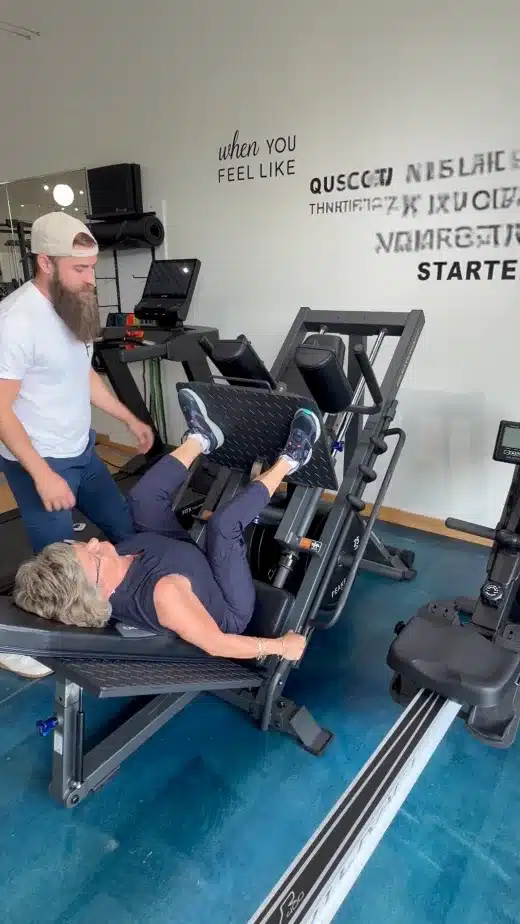


Marilyn’s Story: At 82, She Joined PEAKFIT to Lift Her Own Carry-On
Arden’s Only Private Personal Training Studio for Adults 40+ Marilyn had a very specific goal when she walked into PEAKFIT
Antioxidants and Exercise: Why Adults Over 40 Need More (and Where to Get Them)
Arden’s Only Private Personal Training Studio for Adults 40+ Every time you exercise, your body produces free radicals — unstable
Asheville Mountain Lifestyle Fitness That Supports Your Adventures
Key Takeaways Living an active mountain lifestyle in Asheville means your fitness needs to keep up with you, not the