
Key Takeaways
A luxury personal trainer in Asheville NC delivers a fundamentally different experience from a standard gym membership: individualized programming, professional body composition analysis, recovery tools, and consistent one-on-one accountability. Adults who invest in this level of coaching typically see measurable progress faster and with fewer setbacks than those following generic group plans.
- Luxury personal training differs from standard gym memberships through individualized programming, not just access to equipment.
- InBody body composition scanning gives trainers and clients a precise, data-driven baseline and ongoing progress tracking.
- Infrared sauna recovery sessions reduce muscle soreness and support circulation, making training sustainable for adults 40 and older.
- Semi-private training (2 to 6 clients per session) provides accountability and community without the chaos of large group fitness classes.
- Adults recovering from surgery, managing mobility issues, or rebuilding strength after a long break benefit most from a high-touch coaching environment.
- Price ranges for premium personal training in Western North Carolina vary depending on session frequency, format, and included services; prospective clients should contact studios directly for current pricing.
- A free initial consultation is the standard first step and allows both trainer and client to evaluate fit before any financial commitment.
What Makes a Personal Trainer Truly “Luxury” in Asheville NC?
A luxury personal trainer in Asheville NC provides an individualized, high-accountability coaching relationship supported by professional-grade tools, a low client-to-trainer ratio, and a distraction-free training environment — none of which are standard features of a chain gym membership.
The word “luxury” in fitness gets used loosely. A studio with clean floors and soft lighting can call itself luxury. A gym with $200 monthly dues can market itself as premium. But adults who have actually experienced both know the difference comes down to one thing: how much the training is actually built around you.
In Asheville and the surrounding South Asheville and Arden communities, there is a growing population of adults over 40 who are done with generic programming. They have tried the gyms in Asheville that weren’t built for adults over 40. They have done the group fitness classes. They may have even worked with a personal trainer before, only to find themselves handed a cookie-cutter plan that ignored their specific injury history, schedule constraints, or health goals. That experience is frustrating, and it is also preventable.
True high-touch personal training in this area starts with a detailed intake process. A qualified trainer reviews medical history, movement patterns, lifestyle factors, and specific goals before a single workout begins. Sessions are scheduled at consistent times that work for the client’s life, not slotted into whatever open blocks the gym has available. Progress is tracked with professional tools like InBody body composition scanners rather than a simple weigh-in. Recovery is built into the program, not treated as optional.
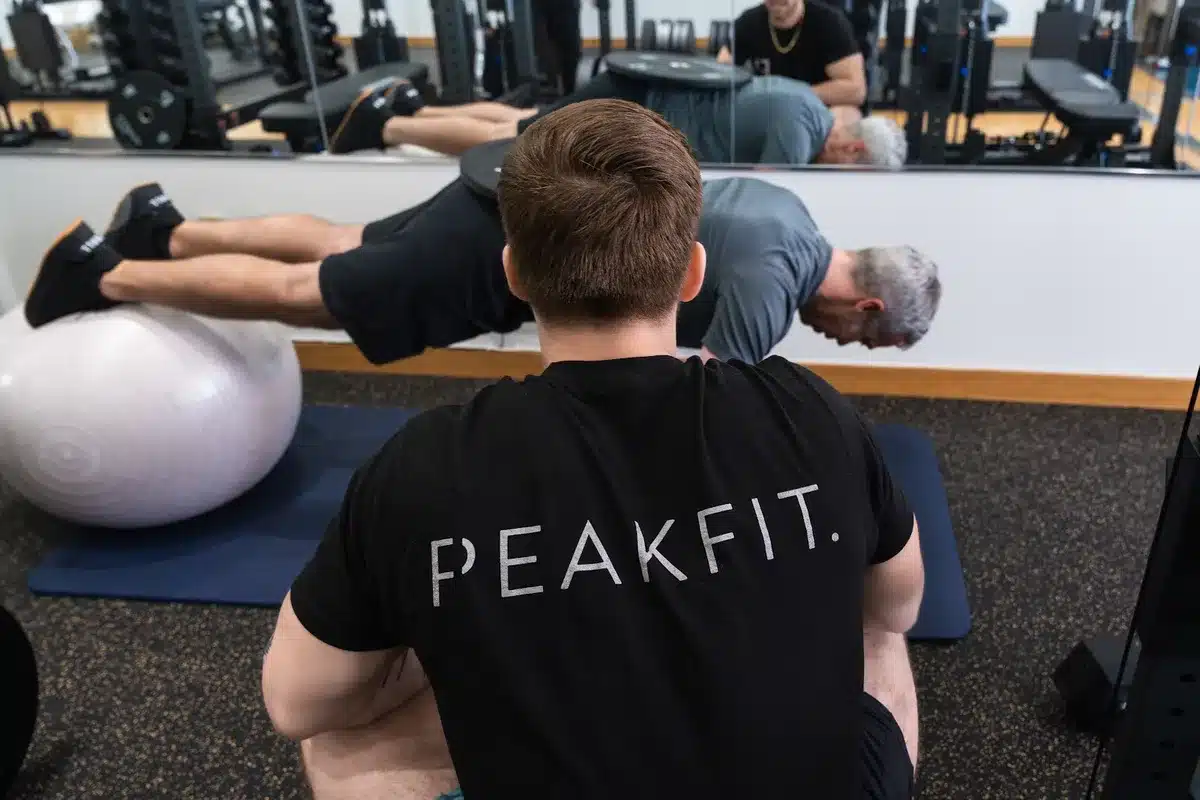
Peak Fit Studio, located in Arden just south of Asheville, structures its entire model around this approach. Clients receive individualized programs, access to InBody scanning technology that reveals what your body composition actually tells you, infrared sauna recovery, and either one-on-one or semi-private coaching with a low client-to-trainer ratio. This is what separates a high-touch fitness experience from a monthly membership that gives you access to a parking lot and some treadmills.
Who Actually Benefits Most From High-Touch Personal Training?
Adults between 40 and 75 who have specific health histories, movement limitations, or performance goals benefit most from luxury personal training because generic programming does not account for the physiological changes and individual variation that become more pronounced with age. Learn more about age-related fitness research from the National Institutes of Health.
Not everyone needs a luxury personal trainer, and a responsible coach will say so directly. If you are 24, healthy, and comfortable in a gym environment, a solid app-based program or group fitness class might serve you well. But for a specific and growing segment of adults in Western North Carolina, high-touch coaching is not a luxury in the indulgent sense. It is a practical necessity.
Is luxury personal training a good option for post-surgery recovery?
Adults recovering from joint replacements, cardiac procedures, or spinal surgeries need programming that accounts for restricted ranges of motion, medical clearance timelines, and gradual load progression. A trainer working in a large commercial gym with 20 clients in a session cannot safely provide that level of attention. A one-on-one coach who reviews your surgical notes, communicates with your physical therapist, and adjusts every session based on your daily readiness can. The difference in outcomes is significant. Many practitioners in post-rehabilitation settings observe that individualized exercise programming can better address each patient’s specific limitations compared to standardized group protocols. For more information on post-surgery recovery protocols, visit the CDC’s health and safety resources.
What about adults who have never felt comfortable in a gym environment?
Gym intimidation is real and widely recognized as a barrier that keeps many people from exercising in commercial gym settings. For women over 50 who are looking for the right personal trainer in Asheville, or for adults who associate exercise with past failure or embarrassment, walking into a crowded commercial gym with loud music and equipment they do not know how to use is a non-starter. A private or semi-private studio with a consistent trainer who knows their name and their history is a categorically different experience. It removes the friction that keeps people from showing up.
Can high-touch training work for busy professionals with irregular schedules?
Yes, provided the studio offers genuine scheduling flexibility. True high-touch training means the program adapts to the client’s life. A professional who needs personal training designed around a demanding executive schedule needs a trainer who can provide remote programming for travel weeks, adjust session intensity after a high-stress period, and communicate between appointments. This level of responsiveness is simply not possible in a volume-based training model where each trainer manages 30 or more clients.
InBody Body Composition Scanning: What It Measures and Why It Matters
InBody scanning uses bioelectrical impedance analysis to measure skeletal muscle mass, body fat percentage, visceral fat levels, and segmental muscle distribution in under 60 seconds, giving trainers and clients a precise, reproducible baseline that a standard scale cannot provide. For detailed information on body composition and health metrics, see NIH resources on nutrition and body composition.
Weight alone is one of the least useful metrics in a fitness program. Two people can weigh exactly the same and have entirely different body compositions. One might carry 35 percent body fat with low muscle mass, while the other carries 22 percent body fat with significantly more lean tissue. The training and nutrition approach for each person should look very different, but a standard gym weigh-in gives you no way to tell them apart.
How often should a client get an InBody scan during a training program?
Most certified trainers recommend an initial scan at the start of a program, a follow-up scan at 8 to 12 weeks, and then quarterly scans thereafter. This frequency captures meaningful changes in body composition without creating anxiety around short-term fluctuations. Muscle gain is a slow process for adults over 40, so scanning too frequently can produce discouraging noise rather than useful signal. The data from each scan is used to adjust programming, caloric targets, and recovery protocols. Adults pursuing body recomposition after 40 find this kind of precise tracking especially valuable when the scale alone fails to reflect real progress.
What does the segmental analysis feature show that a standard scan does not?
Segmental analysis breaks muscle and fat distribution down by body region: left arm, right arm, trunk, left leg, right leg. This is clinically relevant for adults recovering from injury or surgery on one side of the body. A person who had a right knee replacement, for example, may have significantly less muscle mass in the right leg compared to the left due to disuse during recovery. A segmental InBody scan quantifies that imbalance precisely, allowing the trainer to design exercises that target the weaker side without overloading a joint that is still adapting to its new hardware.
Is InBody scanning accurate for older adults with hydration variability?
Bioelectrical impedance analysis is affected by hydration status, which is why consistent testing conditions — same time of day, same hydration state — are recommended for accurate comparisons over time.





Functional Movement Training Asheville NC: Move Better, Live Longer
Key Takeaways Functional movement training focuses on the patterns your body uses every day, such as bending, reaching, carrying, and
Senior Fitness Training Asheville NC for Adults 60 and Up
Key Takeaways Senior fitness training in Asheville NC addresses the specific physical changes that come with aging, including muscle loss,
Personal Training Hendersonville NC Adults Can Count On
Key Takeaways Adults in Hendersonville, NC who want real fitness results need more than a gym membership. Personal training built