
Red Light Therapy for Muscle Recovery: What the Science Actually Shows
Red light therapy muscle recovery is one of the better-supported applications in the current wellness research landscape, and if you train in the Arden, Asheville, or greater WNC area, it is worth understanding what the evidence actually says. PEAKFIT Studio offers red light therapy sessions in Arden, NC, available individually or as part of a structured recovery program designed for adults who want to train consistently without breaking down in the process.
Key Takeaways
- Red light therapy (RLT) uses specific wavelengths of light, typically 630 to 850 nanometers, to stimulate cellular energy production in tissue
- Multiple peer-reviewed studies support RLT’s effects on muscle recovery, skin health, and inflammation reduction
- Research published in the Journal of Athletic Training found that red light therapy accelerated return-to-play time after muscle injury compared to placebo treatment
- Unlike ultraviolet light, red light therapy does not damage skin. It works at the cellular level without burning or ionizing tissue
- PEAKFIT Studio offers red light therapy sessions in Arden, NC, available individually or as part of a comprehensive recovery program
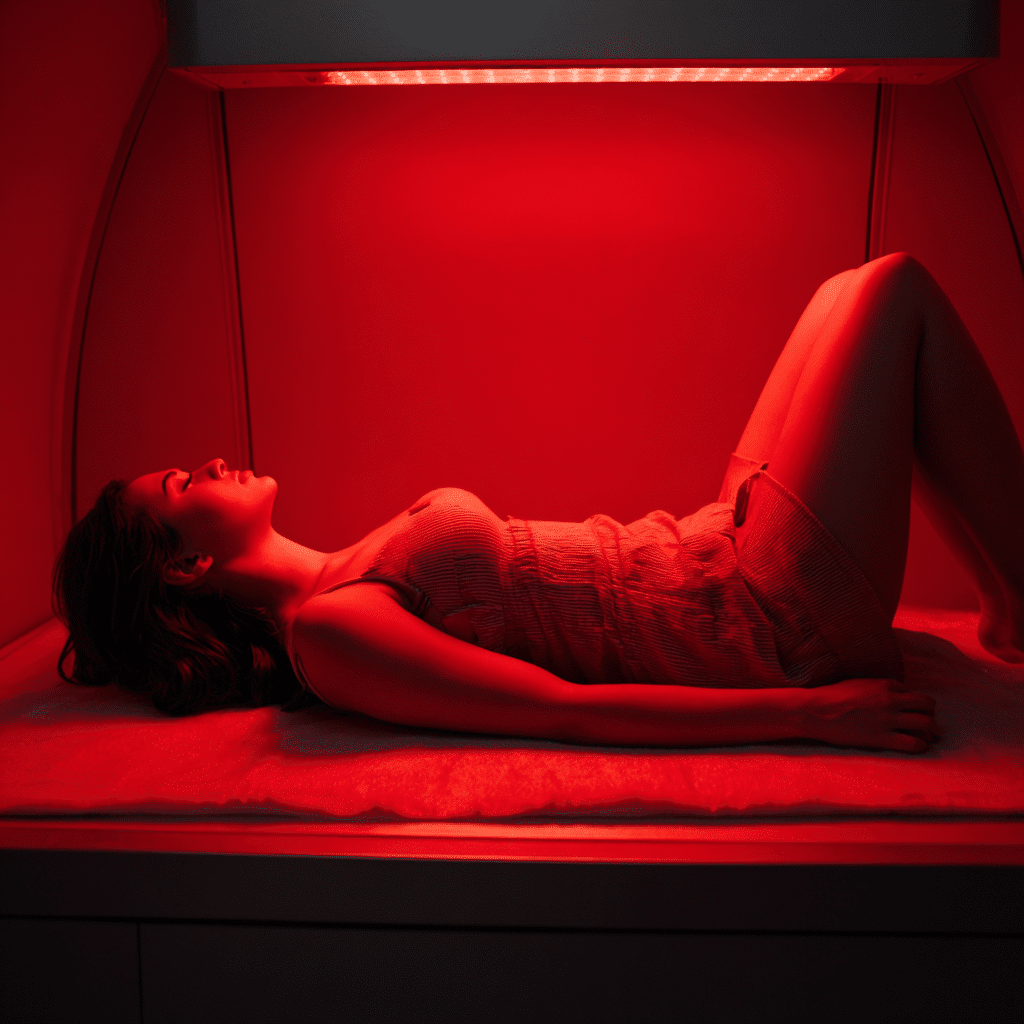
Red light therapy has been around longer than the current wellness trend cycle would suggest. NASA researched it in the 1990s for wound healing in space missions. The military has studied it for injury recovery. The clinical literature is more developed than most people realize, and it supports several specific applications quite well.
The Science Behind Red Light Therapy and Muscle Recovery
Red light therapy, also called photobiomodulation or low-level laser therapy (LLLT), works by exposing tissue to red and near-infrared light wavelengths that penetrate the skin and are absorbed by cells. The primary mechanism involves the mitochondria, the energy-producing structures inside every cell.
Mitochondria contain a light-sensitive enzyme called cytochrome c oxidase. When exposed to red and near-infrared wavelengths, this enzyme absorbs the light and uses it to produce more adenosine triphosphate, or ATP, which is the energy currency of the cell. More ATP means better cellular function, faster repair, and a more efficient response to stress and damage. For adults over 40 who are strength training or recovering from injury, that cellular efficiency matters more than most people realize.
A 2017 review published in the journal Photobiomodulation, Photomedicine, and Laser Surgery compiled data from over 40 controlled trials and found consistent evidence that photobiomodulation improved outcomes in wound healing, musculoskeletal pain, and post-exercise recovery. The evidence quality varied by application, but the mechanistic basis, which is increased ATP production and reduced oxidative stress, was consistent across studies.
Different wavelengths reach different depths. Red light, roughly 630 to 700 nm, is absorbed primarily in the skin and superficial tissue. Near-infrared light from 700 to 850 nm penetrates deeper, reaching muscle and joint tissue. Most clinical applications for athletic recovery and musculoskeletal pain use near-infrared or a combination of both ranges.
What Research Shows About Inflammation Reduction After Training
The inflammation connection is one of the most consistently supported applications of red light therapy for muscle recovery. Cellular stress from training, injury, or chronic overuse creates inflammatory markers including cytokines and reactive oxygen species. Red light therapy reduces the production of pro-inflammatory cytokines and increases antioxidant activity at the cellular level.
A 2016 study published in the Journal of Athletic Training found that near-infrared light therapy applied after acute muscle injury significantly reduced recovery time compared to a sham treatment group. Athletes who received active treatment returned to full training faster and reported less pain at comparable time points.
For strength training specifically, a 2014 randomized controlled trial in the Journal of Strength and Conditioning Research found that red light therapy applied before training sessions reduced muscle damage markers and soreness while increasing performance in subsequent sessions. The study used a six-week training protocol, which suggests cumulative benefit over time rather than just acute session-by-session recovery.
These are real effects with real clinical support. Not every application of RLT has the same evidence base, and some claims in the wellness market go well beyond what the research currently supports. But the recovery and anti-inflammatory applications are among the better-established uses, which is why they belong in a serious training and recovery program rather than in the category of unproven wellness trends.
At PEAKFIT Studio, red light therapy sessions are available alongside infrared sauna as part of a recovery protocol designed to complement regular training. Many clients pair both services in the same visit for a more comprehensive recovery effect.
Red Light Therapy for Muscle Recovery vs Skin Health: Understanding the Difference
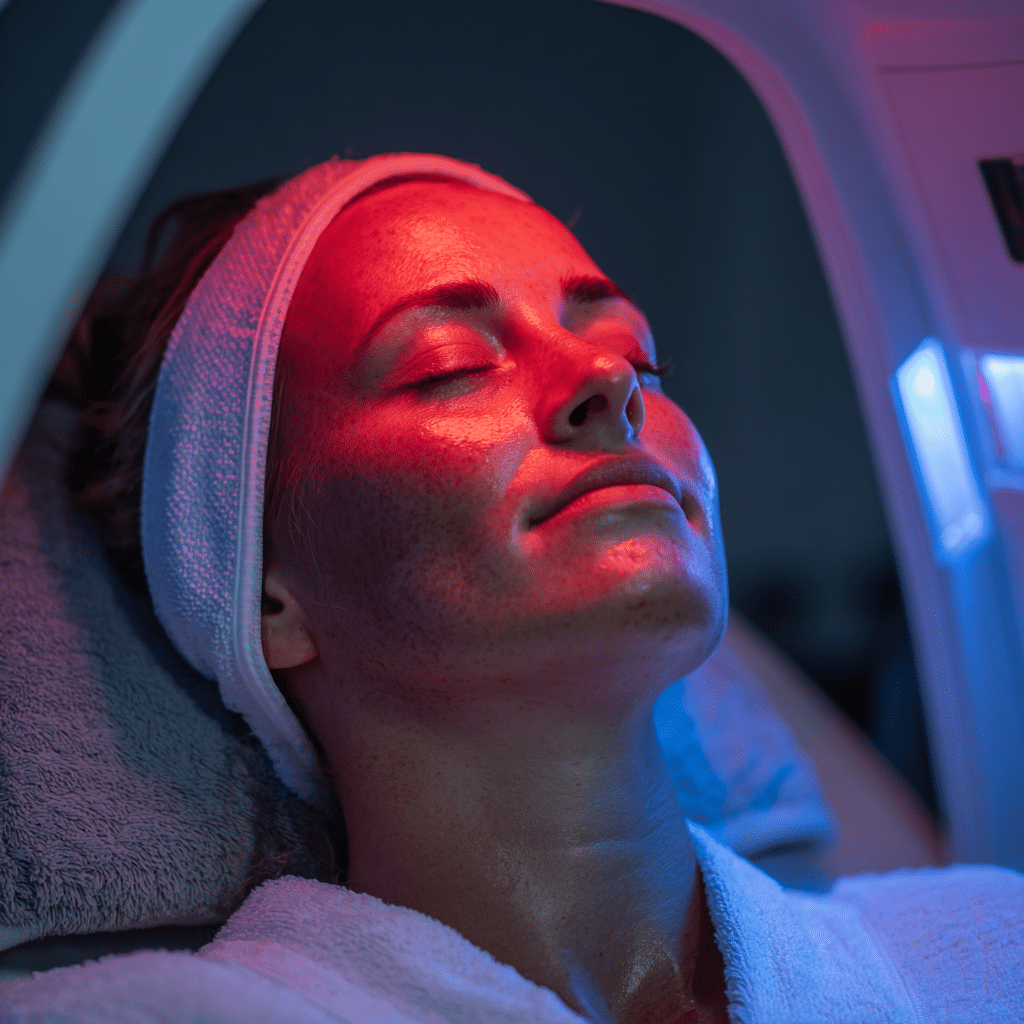
The skin health applications of red light therapy are distinct from the muscle recovery applications, but they share the same cellular mechanism. Several well-designed studies have shown that red light therapy stimulates fibroblast activity and collagen production in skin tissue, which is why it appears in clinical research on wound healing, scar reduction, and skin aging.
A 2014 randomized, double-blind study published in Photomedicine and Laser Surgery found significant improvements in skin complexion, collagen density, and skin tone in participants who received regular red light therapy sessions compared to a placebo group. These effects were attributed to increased collagen synthesis driven by photobiomodulation.
For active adults, particularly those over 45, the combination of skin and recovery benefits from a single modality makes RLT a compelling addition to a wellness routine. If you are already coming in for training, adding a red light session before or after your workout addresses both tissue repair and skin health at the same time. The skin benefits compound over time with consistent use, making it more useful to think of red light therapy as a long-term investment rather than a quick fix.
Who Benefits Most from Red Light Therapy Muscle Recovery Sessions
Red light therapy is not just for competitive athletes. At PEAKFIT Studio, the clients who use RLT most consistently tend to be adults in their 40s, 50s, 60s, and beyond who are training for longevity, managing chronic inflammation, or working through the slower recovery that comes with age. If any of these situations sound familiar, you are likely a strong candidate.
Post-surgery recovery is one application where red light therapy has a meaningful role. The research on wound healing and tissue repair is among the most established in the photobiomodulation literature, and clients returning to training after a joint procedure, orthopedic repair, or other surgery often find that RLT supports their rehab timeline. You should always coordinate with your physician before starting any recovery modality after surgery, and the team at PEAKFIT can work alongside your care providers.
Adults with mobility issues or chronic joint pain represent another group who respond well. Near-infrared wavelengths reach joint tissue, and the anti-inflammatory effects documented in the research are relevant for anyone dealing with persistent soreness that is not resolving through training adjustments alone. A 2017 review in PAIN Research and Management found that photobiomodulation produced meaningful pain reduction in several joint pain conditions.
Women rebuilding strength after a period of inactivity, illness, or hormonal changes also benefit from having a recovery tool that reduces soreness without adding pharmaceutical load. If you are returning to training and finding that your recovery is slower than it used to be, red light therapy muscle recovery sessions can help close that gap and keep your training consistent.
What to Expect During a Red Light Therapy Session at PEAKFIT Studio
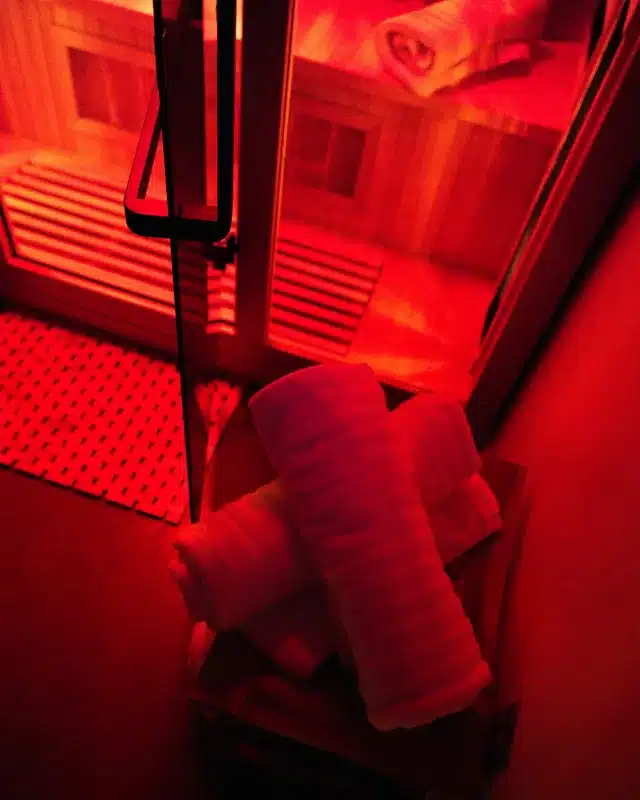
A red light therapy session at PEAKFIT Studio is straightforward. You position yourself in front of the light panel, typically for 10 to 20 minutes depending on the protocol and your goals. The light is visible and warm but produces no burning sensation. Most clients describe it as comfortable and relaxing.
You do not need to do anything during the session except be still and allow the light to penetrate the target tissue. For muscle recovery applications, positioning the panel toward the muscles you trained is more effective than a general full-body exposure. Your trainer or the front desk team can help you optimize your positioning based on your specific goals and the areas you want to prioritize.
Consistency matters more than individual session intensity. Research protocols for RLT outcomes typically involve three to five sessions per week over four to eight weeks. Occasional single sessions produce some benefit, but the cumulative effect of regular exposure is where the research-backed results appear. If you are serious about using red light therapy for muscle recovery, building it into your weekly schedule rather than treating it as an occasional add-on is the approach that aligns with what the clinical literature supports.
The programs and pricing page at PEAKFIT outlines session options and package pricing for red light therapy in Arden. The team can help you integrate RLT sessions into your weekly training schedule in a way that actually fits your life.
How Red Light Therapy Fits Into a Complete Recovery Program
Red light therapy works well as a standalone session, but it produces the most meaningful results when it is part of a thoughtful recovery strategy. At PEAKFIT Studio, recovery is treated as a training variable, not an afterthought. The goal is to help you train consistently over years, not just push hard for a few months before your body forces a break.
Pairing red light therapy with infrared sauna is a combination that addresses recovery from two different angles. Infrared sauna heats tissue systemically, improving circulation and reducing muscle tension. Red light therapy works at the cellular level, stimulating ATP production and reducing inflammatory markers. Using both in the same visit produces effects that neither delivers alone, and it takes less time than most people expect.
For clients in Arden, South Asheville, Hendersonville, Fletcher, Mills River, and the broader WNC area, PEAKFIT offers a private, non-intimidating environment where recovery services are integrated into your program from the start. You are not navigating a crowded facility or figuring out equipment on your own. You have a team that treats your recovery as seriously as your training.
Frequently Asked Questions
Is red light therapy the same as tanning or UV light therapy?
No. Red light therapy uses non-ionizing wavelengths of red and near-infrared light that do not damage skin cells or produce a tan. UV light, used in tanning beds and some dermatological treatments, uses shorter, higher-energy wavelengths that can damage DNA in skin cells. RLT is specifically chosen because it stimulates cellular function without the damaging effects of UV exposure. If you have ever been told to avoid UV exposure due to skin sensitivity or medication interactions, that concern does not automatically apply to red light therapy, though you should still discuss it with your physician if you have specific photosensitive conditions.
How quickly will I see results from red light therapy muscle recovery sessions?
Recovery applications can produce noticeable effects within the first few sessions, particularly if you are using RLT in the hours after a hard training session. Reduced soreness and faster return to full effort are the most commonly reported early benefits. Skin health improvements typically become visible over four to eight weeks of consistent use. The research suggests cumulative effects build over time rather than appearing immediately from a single session, which is why frequency and consistency matter more than any individual session duration or intensity.
Can I use red light therapy every day?
Yes, at standard session lengths. Daily use of 10 to 20 minutes appears safe based on current research. Most clinical protocols use three to five sessions per week, which is a practical frequency for most people. More is not necessarily better. There appears to be an optimal dose range beyond which additional sessions produce diminishing returns. If you are training five days a week, adding a red light session on each of those days and taking your rest days off the device is a reasonable approach that aligns with how most research protocols are structured.
Is red light therapy safe for adults over 60?
Red light therapy is considered safe for most adults, including older adults, and it is particularly well suited for the recovery and joint pain applications that are most relevant for people over 60. Exceptions include individuals with photosensitive conditions, certain medications that increase light sensitivity, or active cancer in the treatment area. If any of those apply to you, consult your physician before starting. For the majority of adults in that age range who are otherwise healthy and training for longevity, RLT is a low-risk recovery tool with a well-established mechanism and a growing clinical evidence base.
Does red light therapy help with joint pain alongside muscle recovery?
The research on RLT and joint pain, particularly osteoarthritis and chronic inflammation in joint tissue, is encouraging. A 2017 review in PAIN Research and Management found that photobiomodulation produced meaningful pain reduction in several joint pain conditions. Near-infrared wavelengths penetrate deeply enough to reach joint tissue, which makes this a realistic application rather than a speculative one. For adults dealing with both muscle recovery and chronic joint discomfort, RLT addresses both through the same session, which is one reason it fits well into a recovery program for adults over 40 in the WNC area.
Start Your Red Light Therapy Muscle Recovery Program in Arden, NC
If you are ready to take red light therapy muscle recovery seriously and want guidance on how to build it into a program that fits your training goals, PEAKFIT Studio is the right place to start. We work with adults throughout Arden, South Asheville, Hendersonville, Fletcher, Mills River, Fairview, Skyland, Biltmore Forest, and surrounding WNC communities who want to train smarter, recover faster, and stay consistent for the long haul.
Book Your Free Consultation at peakfit.studio/free-consultation/ or call (828) 620-7020.
PEAKFIT Studio
100 Julian Ln, Suite 120 | Arden, NC 28704
(828) 620-7020 | hello@peakfit.studio




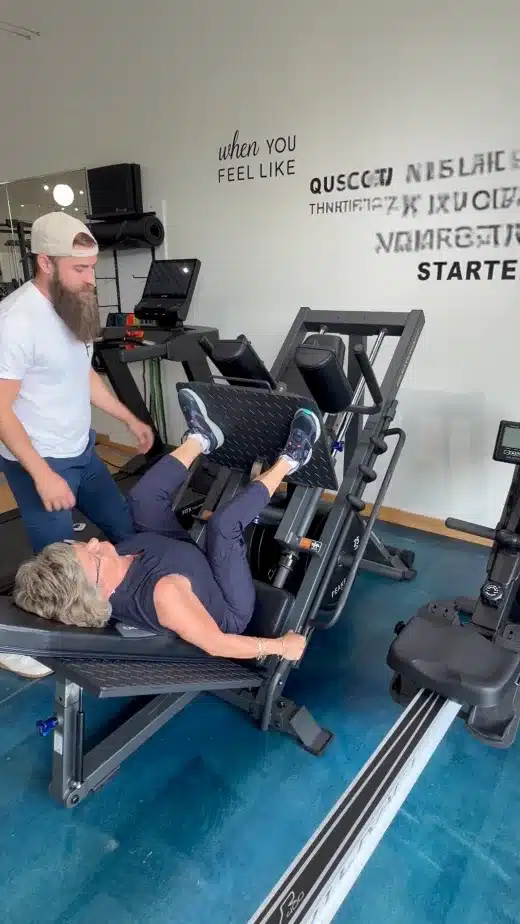


Marilyn’s Story: At 82, She Joined PEAKFIT to Lift Her Own Carry-On
Arden’s Only Private Personal Training Studio for Adults 40+ Marilyn had a very specific goal when she walked into PEAKFIT
Antioxidants and Exercise: Why Adults Over 40 Need More (and Where to Get Them)
Arden’s Only Private Personal Training Studio for Adults 40+ Every time you exercise, your body produces free radicals — unstable
Asheville Mountain Lifestyle Fitness That Supports Your Adventures
Key Takeaways Living an active mountain lifestyle in Asheville means your fitness needs to keep up with you, not the