

Key Takeaways
- Infrared saunas use radiant heat that penetrates tissue directly rather than heating the surrounding air, making them effective at lower temperatures than traditional steam saunas
- Research published in JAMA Internal Medicine found that regular sauna use was associated with reduced risk of cardiovascular events in a 20-year Finnish cohort study
- Infrared heat supports circulation, muscle recovery, and joint mobility — benefits that are especially relevant for adults who train regularly
- Unlike marketing claims about “detox,” the recovery and cardiovascular benefits of infrared sauna have genuine research support
- PEAKFIT Studio offers infrared sauna sessions in Arden, NC, available as standalone sessions or as part of a comprehensive wellness program
Few wellness services have accumulated as much hype as the infrared sauna. The claims range from reasonable to wildly exaggerated depending on who’s talking. The goal here is to separate what the research actually supports from what belongs in the marketing copy.
How Infrared Saunas Work (and Why They Are Different From Steam)

A traditional steam sauna heats the air around you to very high temperatures, typically between 185 and 195 degrees Fahrenheit, and your body responds by sweating heavily as it tries to cool itself. An infrared sauna works differently. The infrared panels emit radiant heat that the body absorbs directly, similar to how sunlight warms your skin without heating the air around you.
Because infrared heat penetrates tissue rather than relying on hot air, effective sessions occur at much lower ambient temperatures — usually between 120 and 150 degrees Fahrenheit. Many people who find traditional saunas uncomfortable due to the intense heat tolerate infrared sessions well. The body still heats internally, core temperature rises, and the cardiovascular and circulatory responses are similar, but the experience feels less harsh.
Full-spectrum infrared includes near, mid, and far infrared wavelengths. Different wavelengths penetrate to different depths and are associated with slightly different physiological effects, though the body of research on full-spectrum infrared is still growing. The majority of clinical studies on sauna use and health outcomes have been conducted on Finnish dry saunas, with infrared research catching up over the past decade.
What Research Says About Recovery and Circulation
The cardiovascular research on sauna use is legitimately impressive. A landmark 20-year cohort study published in JAMA Internal Medicine followed over 2,000 Finnish men and found that those who used a sauna four to seven times per week had a 66% lower risk of dementia, a 65% lower risk of Alzheimer’s disease, and significantly reduced cardiovascular mortality compared to those who used a sauna once per week. These are observational data points, not controlled interventions, but the associations are consistent and strong.
For recovery specifically, heat exposure increases blood flow to muscles and connective tissue. That improved circulation delivers oxygen and nutrients to tissue undergoing repair while helping clear metabolic byproducts from intense exercise. A study in the Journal of Human Kinetics found that post-exercise heat therapy reduced delayed onset muscle soreness (DOMS) and supported faster return to full performance compared to passive rest.
Heat exposure also stimulates the production of heat shock proteins, cellular proteins that help repair damaged cells and protect against oxidative stress. This effect is relevant for active adults who are regularly creating small amounts of tissue damage through training.
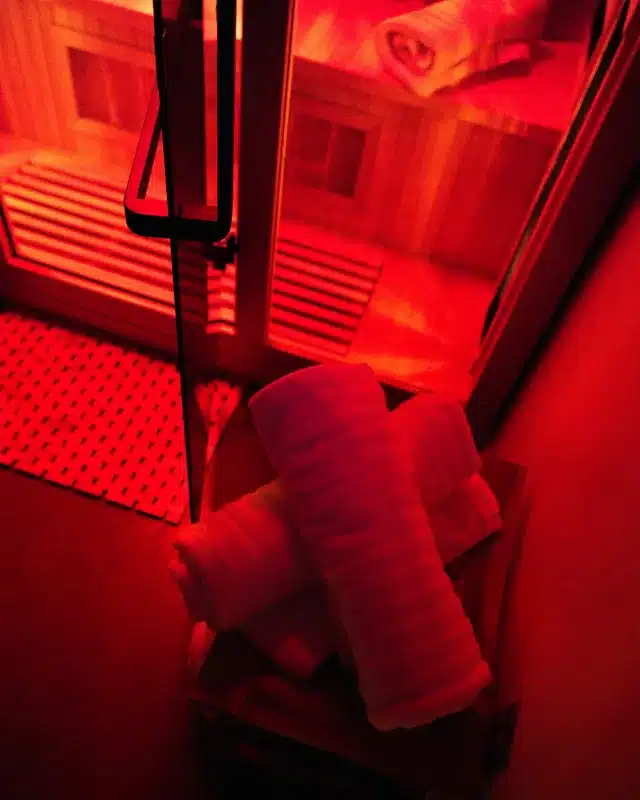
At PEAKFIT Studio in Arden, infrared sauna sessions can be scheduled around training to support the recovery process. The wellness services page outlines session pricing and frequency options.
Detox Claims vs What Science Supports
The claim that saunas “detox” the body gets applied loosely in wellness marketing. The body’s primary detoxification systems are the liver and kidneys, not sweat. While sweat does contain trace amounts of some metals and other compounds, the claim that regular sauna use “flushes toxins” in any clinically meaningful sense is not well-supported by controlled research.
What is well-supported: saunas improve circulation, support cardiovascular function, reduce muscle soreness, and appear to have meaningful effects on stress hormones. A 2018 study in the Journal of Human Kinetics found that sauna sessions reduced cortisol levels in study participants compared to control conditions. For active adults dealing with high daily stress loads, that’s a real benefit.
The distinction matters because overselling wellness services with unsupported claims erodes trust. The legitimate benefits of infrared sauna are substantial enough that they don’t need embellishment.
Who Benefits Most From Infrared Sessions

Adults who train regularly. People dealing with chronic muscle tension or joint stiffness. Anyone whose stress levels are chronically elevated. And adults over 50 who are looking for a recovery tool that’s gentle on the body while still producing meaningful physiological effects.
Athletes often pair sauna sessions with red light therapy for a more comprehensive recovery protocol. Red light therapy works at the cellular level to support mitochondrial function and reduce inflammation, while infrared sauna supports circulation and systemic stress reduction. The two services complement each other well. PEAKFIT offers both, and the training team can help you figure out how to incorporate them into your weekly schedule based on your training load and goals.
A practical note: hydration matters. Infrared sessions cause significant fluid loss through sweating. Drinking 16 to 24 ounces of water before a session and replenishing fluids immediately after is standard practice. PEAKFIT’s juice bar provides an easy way to rehydrate post-session with added electrolytes from fresh ingredients.
Frequently Asked Questions
How long should an infrared sauna session be? Most sessions run between 20 and 45 minutes. For new users, starting with 20-minute sessions allows the body to adapt to the heat. Frequency of two to three sessions per week appears to be the range associated with cardiovascular and recovery benefits in most research.
Can I use the infrared sauna immediately after a workout? Yes, and many clients prefer this timing. Post-workout heat exposure extends the circulatory benefits of exercise and supports muscle recovery. Allow about 10 to 15 minutes after finishing your workout before entering the sauna to let your heart rate come down somewhat.
Is infrared sauna safe for people with heart conditions? People with diagnosed heart conditions, low or high blood pressure, or other cardiovascular concerns should consult their physician before using an infrared sauna. For most generally healthy adults, sauna use is considered safe. PEAKFIT recommends discussing any health concerns with your doctor before beginning sauna sessions.
What is the difference between near, mid, and far infrared? Near infrared penetrates the skin surface and is most associated with skin health effects. Mid infrared reaches deeper into soft tissue and is thought to support circulation. Far infrared penetrates deepest, reaching muscle and joint tissue, and is most associated with recovery and cardiovascular effects. Full-spectrum saunas deliver all three.
Will infrared sauna help me lose weight? Sauna sessions cause fluid loss through sweating, which temporarily reduces scale weight. This is not fat loss. However, the cardiovascular effects of regular sauna use, including elevated heart rate and improved circulation, do produce some caloric expenditure during the session. Sauna is a recovery and wellness tool, not a primary weight management strategy.
Can I use infrared sauna if I’m pregnant? Pregnant individuals should avoid sauna use without explicit clearance from their OB-GYN or midwife. Elevated core temperature during pregnancy carries documented risks, and sauna use in this population is generally not recommended without medical supervision.
Infrared sauna sessions at PEAKFIT Studio are available to clients in Arden, South Asheville, Hendersonville, and Fletcher. Schedule your free consultation to discuss how recovery services fit into your overall wellness program.
PEAKFIT Studio 100 Julian Ln, Suite 120 | Arden, NC 28704 (828) 620-7020 | hello@peakfit.studio






Marilyn’s Story: At 82, She Joined PEAKFIT to Lift Her Own Carry-On
Arden’s Only Private Personal Training Studio for Adults 40+ Marilyn had a very specific goal when she walked into PEAKFIT
Antioxidants and Exercise: Why Adults Over 40 Need More (and Where to Get Them)
Arden’s Only Private Personal Training Studio for Adults 40+ Every time you exercise, your body produces free radicals — unstable
Asheville Mountain Lifestyle Fitness That Supports Your Adventures
Key Takeaways Living an active mountain lifestyle in Asheville means your fitness needs to keep up with you, not the