

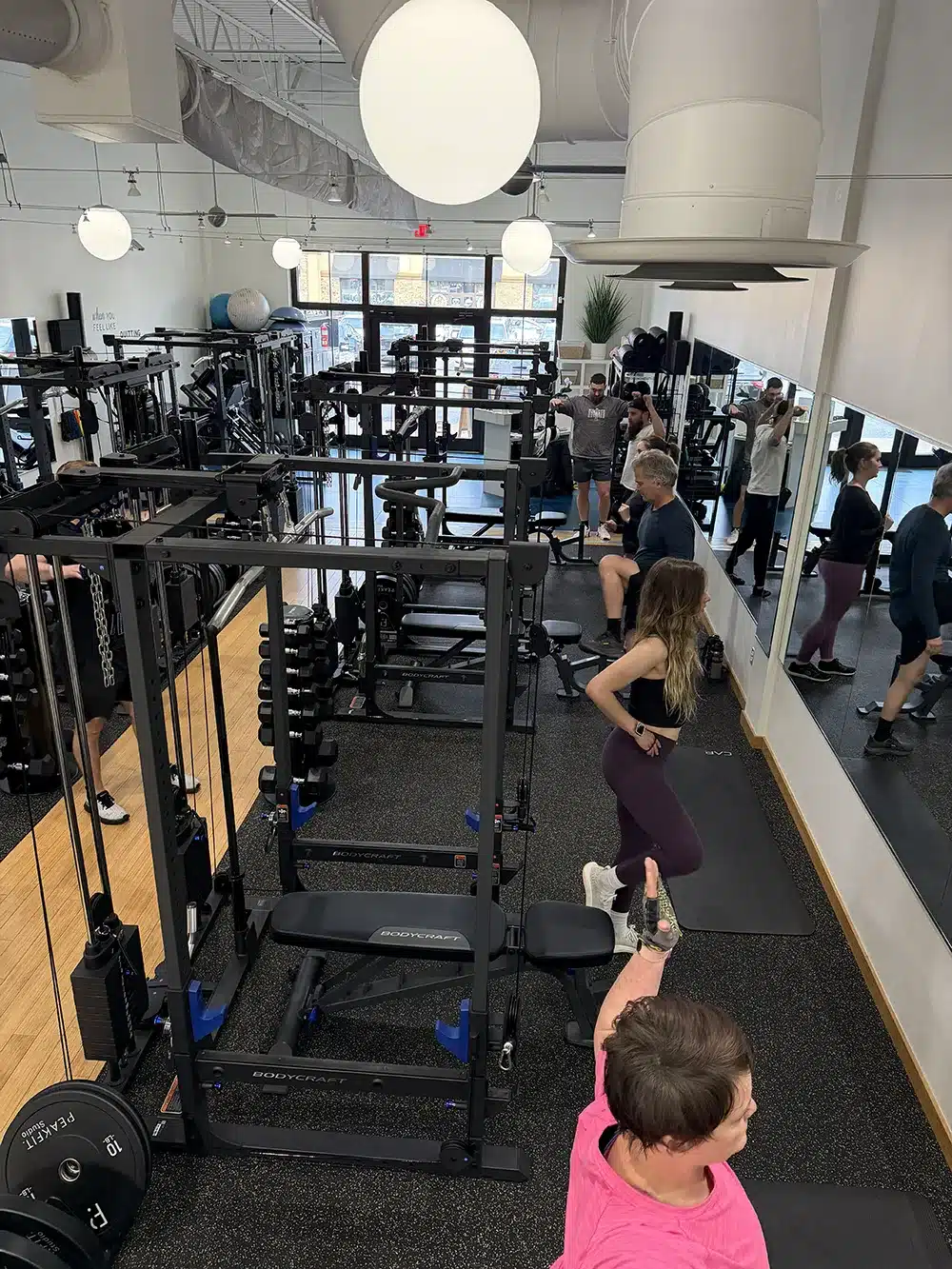
From the parking lot, small group fitness classes and big-box gym group classes look identical. People walking in with water bottles. Loud music. A coach at the front. An hour later, everyone walks out sweaty. The marketing for both formats uses overlapping language — functional, community, results, energy. The differences only become obvious once you have spent a month in each. Here is what you actually get from each format and why one of them tends to outperform the other for adults over 40 looking for long-term progress.
1. The coach-to-client ratio
The most measurable difference. A small group fitness class is typically capped at 8–12 people. A big-box gym class often has 25–40 people on the floor at once. With one instructor.
That ratio determines whether the coach can actually coach. At 1:8, the coach moves through the room giving real cues. At 1:35, the coach is a class leader running through choreography. They are physically incapable of correcting your hip drop in a lunge from across the room. The math does not work.
2. The programming philosophy
Big-box gym classes are programmed for entertainment retention. Members need to come back, so the workout needs to feel fresh. Each session is mostly random. Same equipment, different combinations, new music. This works as a recruitment tool. It does not produce progressive strength adaptation because there is no progressive overload.
Small group fitness classes — when done right — are programmed for adaptation. Specific lifts repeat on a planned cadence. Loads progress week over week. The plan is intentional. You are building toward something, not just sweating today.
3. Equipment quality and individualization
Big-box gym class equipment is usually limited — light dumbbells, bands, mats, maybe a few kettlebells. Everyone uses the same load because the room cannot be customized at scale.
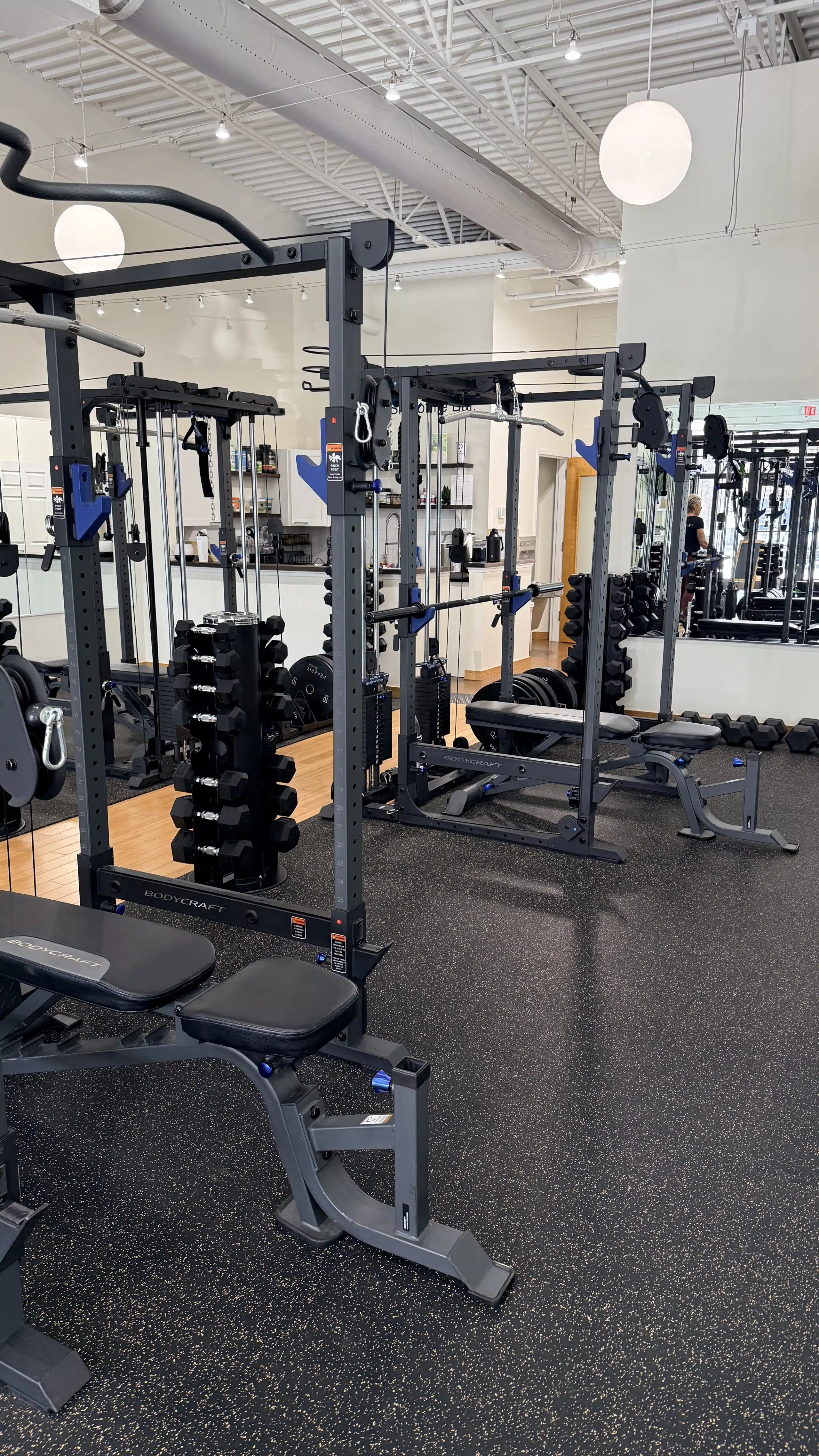
Small group rooms have a fuller suite: squat racks, barbells, full kettlebell ranges, sleds, rowers, trap bars. More importantly, each client uses the load that fits them. Two clients on the same exercise often work at radically different weights. That individualization is impossible at scale in a 35-person class.
4. The intake process
Big-box gym classes have no intake. You sign up, you show up. There is no assessment of how you move, what hurts, what your goals are, or whether the class is even right for you.
Quality small group studios put you through an intake screen before your first session. Movement assessment, conversation about history and goals, regressions and progressions identified for you specifically. Your first session is built around what the coach learned in the intake.
5. The accountability dynamic
In a 35-person class, your absence does not register. Nobody notices when you are gone for three weeks. There is no social cost to missing.
In an 8-person group you see every Tuesday and Thursday, your absence is visible. Names get used. Conversations happen. Adherence is dramatically higher because the social structure pulls you back. This is one of the most underrated drivers of long-term results.
6. The results timeline
This is where the difference shows up. Six months in a big-box gym class will improve your cardiovascular fitness modestly, improve your mobility marginally, and produce small body composition changes. Six months of structured small group personal training, programmed correctly, will materially change your strength, your body composition, your posture, and how you feel in everyday life.
It is not because one is harder than the other. It is because one is built for adaptation and one is built for entertainment.
When the big-box class is the right call
To be fair: big-box classes do have a place. If you want general activity, social variety, and a low-stakes way to move regularly, they work fine. If you have a specific goal — building strength, recovering function, training for a goal, changing body composition — they will underdeliver.
When small group is the right call
Almost any adult who wants measurable strength, capability, or body composition progress over the next six to twelve months is better served by small group personal training than by big-box classes. The cost is higher per session and lower per result.
If you want to feel the difference firsthand, book a free session at PEAKFIT in Arden. After one session you will know which format actually fits where you are headed.




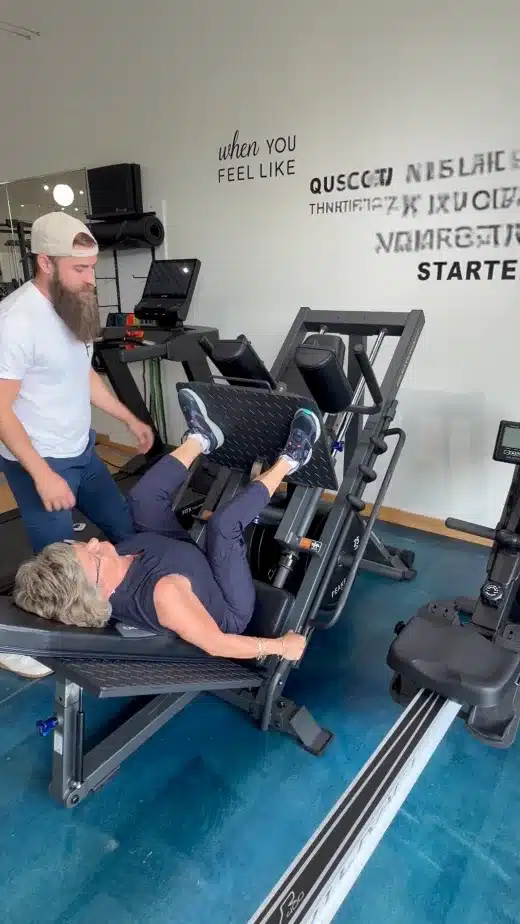


Marilyn’s Story: At 82, She Joined PEAKFIT to Lift Her Own Carry-On
Arden’s Only Private Personal Training Studio for Adults 40+ Marilyn had a very specific goal when she walked into PEAKFIT
Antioxidants and Exercise: Why Adults Over 40 Need More (and Where to Get Them)
Arden’s Only Private Personal Training Studio for Adults 40+ Every time you exercise, your body produces free radicals — unstable
Asheville Mountain Lifestyle Fitness That Supports Your Adventures
Key Takeaways Living an active mountain lifestyle in Asheville means your fitness needs to keep up with you, not the