You have been showing up to the studio three times a week for eight weeks straight. You are lifting heavier than you have in years, sleeping better, and your jeans feel different in the morning. Then you step on the bathroom scale and it says you have lost two pounds. Two. After all of that.
That is the moment most adults over 40 quit. Not because the training is not working — because the only tool they are using to measure progress is the worst tool for the job. The bathroom scale is a single number that lumps muscle, fat, water, bone, and the cup of coffee you drank an hour ago into one verdict. It cannot tell you that your lean mass climbed four pounds while you dropped six pounds of fat. It cannot tell you that the dangerous fat wrapped around your organs went down two full levels. It just says “two pounds” and lets you decide whether that means success or failure.
This is why InBody scans exist. And it is why, for an adult over 40, the InBody is the single most useful number you can put your name next to every month.
What an InBody Scan Actually Measures
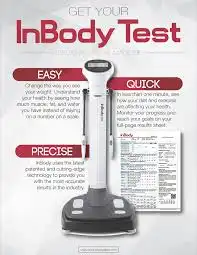
An InBody scan is a bioelectrical impedance test. You stand on the platform, hold the handles, and a low-level electrical current passes through your body. Water conducts the current well, fat resists it, and muscle sits in between. The machine uses those resistance patterns to estimate what your body is actually made of.
Here is what comes back on the printout, in plain English.
Lean body mass. This is everything in your body that is not fat — muscle, bone, organs, and water. For an adult over 40, this is the number that matters most. Lean mass is what holds your posture up, keeps your metabolism running, and protects you from the falls and frailty that take down most people in their 70s and 80s. If this number is climbing, your strength training is working, regardless of what the scale says.
Body fat percentage. Total fat as a share of body weight. This is more honest than the scale because it separates the pounds you want to keep from the pounds you want to lose. A 165-pound woman at 28 percent body fat and a 165-pound woman at 38 percent body fat look completely different in the mirror and have completely different health risks, even though the scale calls them identical.
Visceral fat level. This is the big one for adults over 40. Visceral fat is the deep fat that wraps around your liver, pancreas, and intestines. It is the fat that drives type 2 diabetes, heart disease, and stroke risk. You can be thin on the outside and still have a high visceral fat level — and you would never know it without a scan. Watching this number drop is one of the most meaningful wins in any training program.
Body water composition. Total body water, split into the water inside your cells and the water outside your cells. The ratio between those two tells you whether you are well hydrated and recovering, or whether you are holding inflammatory fluid that signals stress, poor sleep, or under-recovery.
Segmental analysis. This breaks lean mass and fat down by body region — right arm, left arm, trunk, right leg, left leg. For anyone over 40 dealing with old injuries, surgeries, or a dominant side, this is where you find out whether your right side is doing all the work while your left side coasts. It is the difference between training and training intelligently.
Why the Bathroom Scale Is Lying to You
The scale is not broken. It is just answering the wrong question. It tells you how much you weigh. It does not tell you what you are made of.
Three things make the scale especially useless for adults over 40:
Water swings daily. A salty meal, a hot day, a glass of wine, a poor night of sleep — any of these can move the scale three to five pounds in 24 hours. None of it is fat. All of it is noise.
Muscle is heavier than fat by volume. When you start strength training in your 40s, 50s, or 60s, you build muscle while you lose fat. For weeks at a time, those two things can cancel each other out on the scale while your body completely transforms. People quit during exactly this window because they think nothing is happening.
The scale cannot see visceral fat moving. You can drop two full visceral fat levels — a meaningful reduction in your risk of heart disease and diabetes — and the scale will not budge. The InBody catches it. The scale never will.
The Numbers Worth Watching Month Over Month
When you scan every four to six weeks, you stop looking at any single reading and start looking at the trend line. Here is what the trend tells you.
Lean mass climbing. Your strength training is doing its job. The protein you are eating is being put to work. You are building the muscle that will carry you through your 70s and 80s standing tall instead of stooped over a walker.
Body fat percentage dropping while lean mass holds or rises. This is the gold standard outcome. You are losing fat without losing muscle, which is the exact opposite of what crash diets do. Crash diets drop the scale fast and burn through muscle in the process, leaving you weaker and more likely to gain the weight back. The InBody catches the difference.
Visceral fat level dropping. Your metabolic health is improving. The fat that drives the diseases that kill most adults is being mobilized and burned. This is often the slowest number to move, and the most meaningful when it does.
Body water staying stable with a healthy intracellular ratio. You are recovering. You are hydrated. Your training load is appropriate for what your body can handle.
Segmental balance evening out. Your weak side is catching up to your strong side. Old injuries are no longer dictating how you move.
What an InBody Scan Does Not Tell You
This is where most studios oversell the technology, and we are not going to.
An InBody is an estimate, not a medical-grade DEXA scan. A DEXA uses low-dose X-rays and gives you bone density along with body composition. An InBody uses electrical current and gives you a very good approximation. For tracking change over time at the same machine, under the same conditions, it is excellent. For a one-time absolute reading you can take to your doctor, a DEXA is more precise.
Hydration throws it off. If you scan dehydrated, your body fat percentage reads high. If you scan right after chugging a liter of water, it reads low. This is why we standardize the conditions — same time of day, similar hydration state, no workout in the two hours before — so the trend line is honest.
It does not measure sleep. It does not measure cortisol or hormones. It does not measure inflammation markers, blood sugar, or cardiovascular fitness. Those require bloodwork and other tests. The InBody handles body composition. It is not a full physical.
It is not a diagnostic tool. A high visceral fat number is a signal to act, not a diagnosis of disease. Pair it with your annual physical and your doctor’s read on your bloodwork.
How Peakfit Uses InBody Scans
Every member gets a baseline scan when they start. We do not use it to shame anyone or assign a grade. We use it to set a starting point so that four to six weeks later, when we scan again, the trend means something.
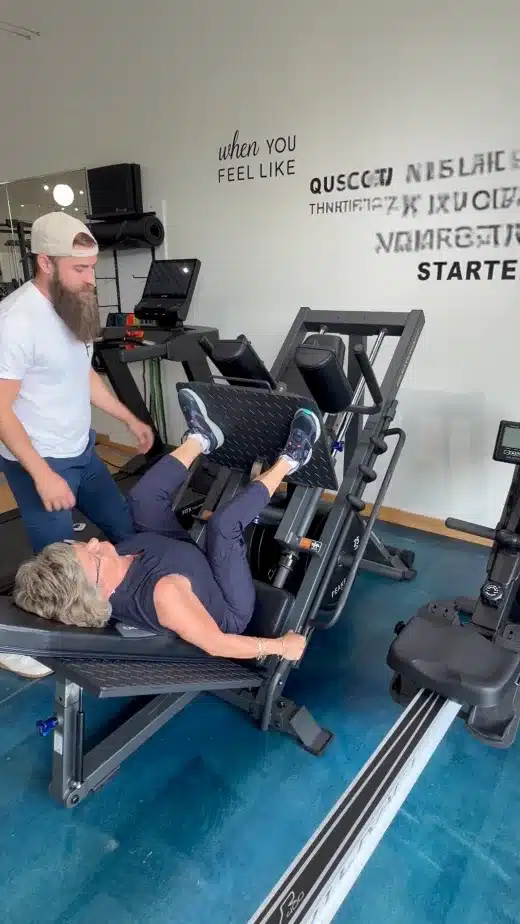
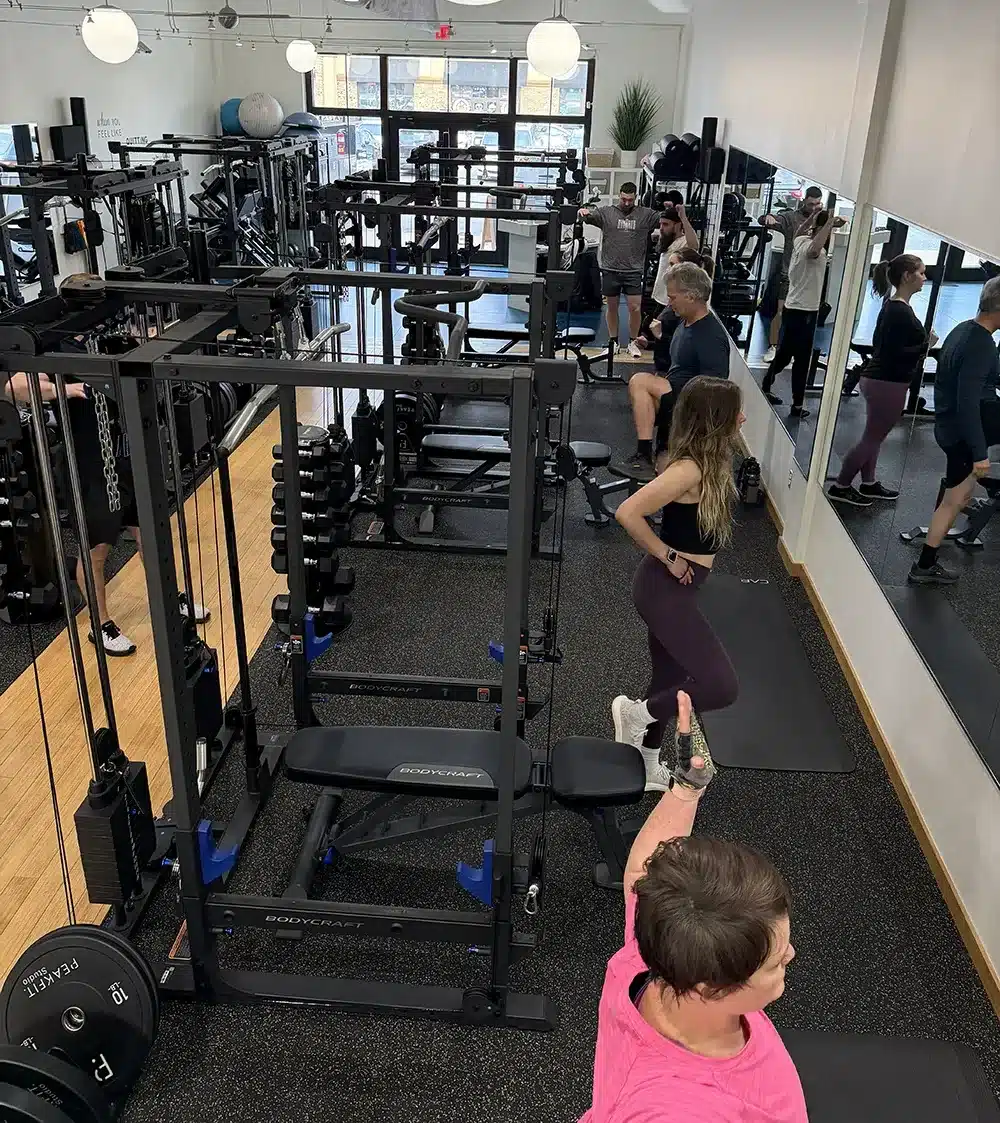
The training program is built around moving the numbers that matter for adults over 40 — lean mass up, visceral fat down, segmental balance evening out. Alex Zierhut runs the pod-based small group personal training sessions that drive those changes, with Franklin and Ariel rounding out the coaching team. The InBody is how we hold ourselves accountable to whether the program is actually doing what we said it would do.
Scans are included in every membership. There is no upsell. We pair the numbers with the training, the nutrition counseling, and the juice bar piece for post-workout recovery, so the data is never floating in isolation. The numbers exist to serve the training, not the other way around.
The Most Underrated Feedback an Adult Over 40 Can Get
The bathroom scale has been the default measurement tool for 100 years. It is also the wrong tool. It cannot see the four pounds of muscle you built. It cannot see the two visceral fat levels you dropped. It cannot tell you whether you are getting stronger or just getting smaller.
The InBody can. Not because it is perfect, and not because it replaces every other health marker — but because it answers the one question the scale cannot: are you actually changing the body you are walking around in.
If you have been training for weeks and the scale is making you question whether any of it is working, you owe it to yourself to find out what is actually happening underneath. That is what the scan is for.
Book a free consultation at Peakfit, get your first InBody scan, and see where you actually stand. We will walk you through every number on the printout, show you what to watch over the next 90 days, and build the training plan that moves the ones that matter. Learn more about our approach on the Asheville Personal Trainer hub.