
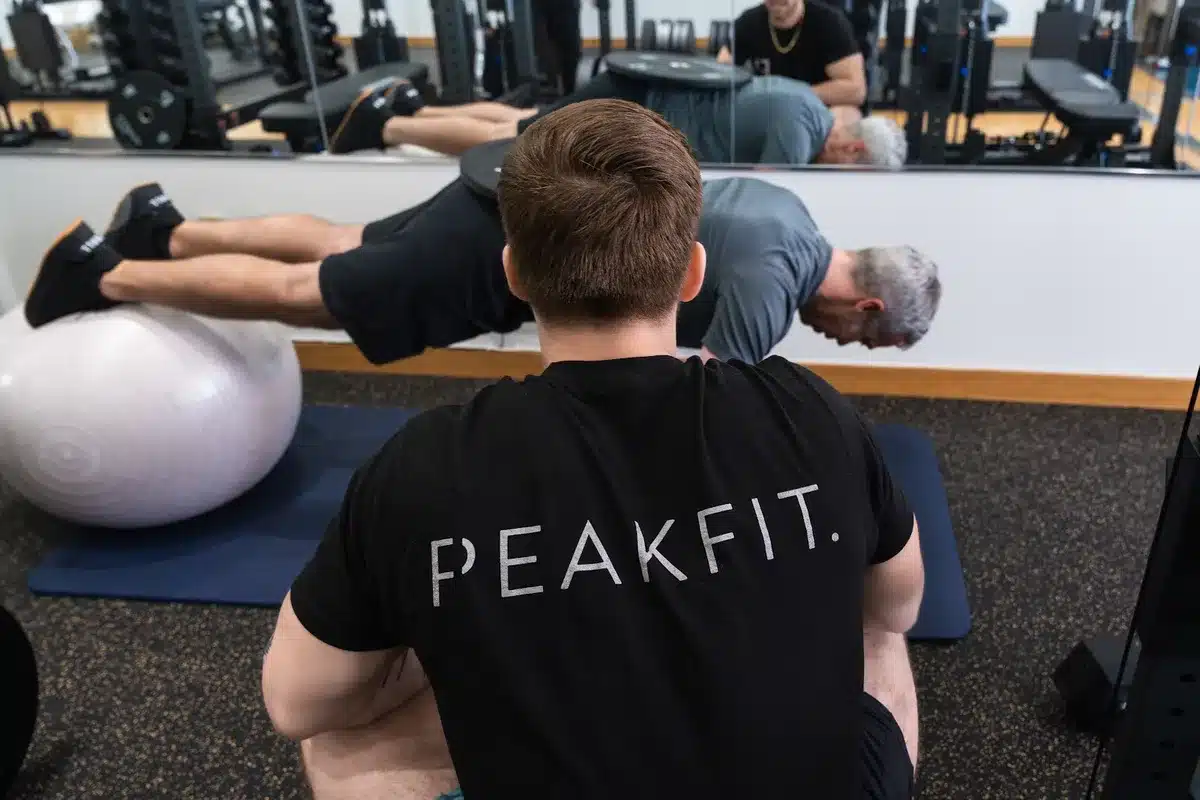

TL;DR: The biggest barrier to fitness for professionals over 40 isn’t motivation — it’s time. The good news: you don’t need it. Two to three focused, coached sessions a week — roughly three hours total — is enough to build real strength, change your body composition, and sharpen your energy. The secret is eliminating waste: no wandering the gym, no deciding what to do, no junk volume. A coach hands you a plan, you execute, you leave. Here’s how busy professionals get meaningful results on a calendar that’s already full.
What This Guide Covers
- The real barrier is time, not willpower
- Why three focused hours a week is enough
- Where most gym time gets wasted
- Training as a performance and stress tool
- Fitting it into a packed schedule
- FAQ
If you’re running a business, a team, or a household at 45, you don’t have a discipline problem — you have a calendar problem. You’d train if it fit. The mistake is assuming meaningful fitness requires the hour-plus daily grind you see online. It doesn’t. For a busy professional over 40, the winning strategy is the opposite: minimal time, maximal focus, zero waste. Done right, three hours a week buys you strength, a leaner body, and the energy to handle everything else better.

The Real Barrier Is Time, Not Willpower
High-performing professionals are great at commitment when something has a clear return and a defined slot on the calendar. Fitness fails for them not because they lack drive but because it shows up as a vague, open-ended “should” with no structure. The fix isn’t more willpower — it’s converting fitness into what you already manage well: a scheduled appointment with a defined plan and a measurable outcome. That single reframing is what makes training stick for people who run on calendars.
Section summary: Busy professionals don’t lack discipline — they need fitness structured as a scheduled, outcome-driven appointment, not an open-ended chore.
Why Three Focused Hours a Week Is Enough
You don’t need daily training to transform your body after 40 — you need enough quality strength stimulus and enough recovery to adapt. For most people, that’s two to three focused sessions per week. National guidance calls for at least two strength sessions weekly plus regular activity (Physical Activity Guidelines for Americans), and that baseline drives real change when the sessions are well-programmed rather than wandering.
This matters more with age: adults lose roughly 3–8% of muscle per decade after 30, and a focused strength routine is the proven countermeasure. Three deliberate hours a week beats six aimless ones — the trajectory comes from progression and consistency, not from sheer time logged. The fundamentals are in strength training over 40.
Section summary: Two to three focused strength sessions a week is enough to build muscle and change your body after 40 — quality and consistency beat hours logged.
Where Most Gym Time Gets Wasted
Walk into any gym and watch where the minutes go: scrolling between sets, deciding what to do next, repeating comfortable exercises that no longer challenge you, and doing volume that doesn’t move the needle. A busy professional can’t afford any of that. Coached training strips it out — the plan is written before you arrive, the progression is deliberate, and every set has a purpose. You’re not managing your workout; you’re executing it. That’s also why decision-free training is so durable: you’ve removed the daily “what should I even do today?” that quietly kills consistency. It’s a core reason small group personal training works so well for time-pressed people.
Section summary: Coached training removes the deciding, scrolling, and junk volume that waste gym time, so every minute counts.
Training as a Performance and Stress Tool
For professionals, the return on training isn’t only physical. Regular strength work is one of the most effective tools for managing stress, stabilizing energy, and protecting sleep and focus — the exact resources a demanding career drains. Many members say the workout becomes the most clear-headed hour of their day. Framed that way, three hours a week isn’t time taken from your performance; it’s an investment in it. It’s part of why small group training works so well for adults over 40 who are juggling a lot.
Section summary: Strength training pays back as better stress management, energy, and focus — making it an investment in your performance, not a tax on it.
Fitting It Into a Packed Schedule
The practical moves are simple. Book your sessions as recurring appointments and defend them like a client meeting. Choose times you can actually protect — early morning before the day takes over works for many professionals. Keep it to two or three sessions and resist the urge to overcomplicate. And let a coach own the programming so your only job is to show up and work. Pair that with a customized fitness program built around your goals and you get maximum return on minimal time.
Section summary: Book sessions as defended recurring appointments, keep it to two or three, train at protectable times, and let a coach handle the plan.
Frequently Asked Questions
Can I really get results training only 2–3 times a week?
Yes. Two to three focused, well-programmed strength sessions a week is enough to build muscle, improve body composition, and boost energy after 40. Consistency and progression matter far more than total hours.
How long does each session need to be?
Most effective sessions run about 45–60 minutes, including warm-up. Roughly three focused hours a week is plenty for meaningful results.
I travel a lot for work. Can this still work?
Yes. A coach can build a plan that accounts for travel, including simple sessions you can do on the road so a trip doesn’t erase your progress.
What’s the best time of day for busy professionals to train?
The time you can protect most reliably — often early morning, before the day’s demands pile up. The best schedule is the one you’ll actually keep.
Why is coached training better when I’m short on time?
Because it removes every minute of waste: no deciding, no junk volume, no wasted sets. The plan is ready when you arrive, so all your limited time goes into work that produces results.
Real Results. Three Hours a Week.
Book a consultation at PEAKFIT Studio in Arden, NC. We’ll build an efficient, coached plan that fits a full calendar and actually delivers after 40.
Key Takeaways:
- The barrier for busy professionals is time, not willpower — so structure fitness as a scheduled appointment.
- Two to three focused strength sessions a week (about three hours) drives real results after 40.
- Coached training removes deciding, scrolling, and junk volume so every minute counts.
- Strength work pays back as better stress management, energy, and focus.





Luxury Personal Trainer Asheville NC: High-Touch Fitness Coaching
Key Takeaways A luxury personal trainer in Asheville NC delivers a fundamentally different experience from a standard gym membership: individualized
Functional Movement Training Asheville NC: Move Better, Live Longer
Key Takeaways Functional movement training focuses on the patterns your body uses every day, such as bending, reaching, carrying, and
Senior Fitness Training Asheville NC for Adults 60 and Up
Key Takeaways Senior fitness training in Asheville NC addresses the specific physical changes that come with aging, including muscle loss,