Key Takeaways
- Falls are the leading cause of injury-related death among adults 65 and older in the U.S., according to the CDC.
- Targeted strength and balance training reduces fall risk by up to 34%, per a meta-analysis in the British Journal of Sports Medicine.
- Muscle loss (sarcopenia) begins as early as age 30 and accelerates significantly after 60, directly impacting stability and coordination.
- A complete fall prevention plan addresses strength, flexibility, nutrition, and recovery together, not just one piece of the puzzle.
- PEAKFIT Studio in Arden, NC offers personalized training, assisted stretching, InBody analysis, and nutrition counseling designed to support lifelong mobility.
|
If you’ve ever caught yourself grabbing a railing you didn’t used to need, or hesitated before stepping off a curb, that moment of doubt is worth paying attention to. It doesn’t mean something is wrong. It means your body is signaling that it needs some focused attention.
Fall prevention isn’t just a concern for people in their 80s. The physical changes that lead to falls, including loss of muscle strength, declining balance, reduced ankle flexibility, and slower reaction time, start showing up well before most people expect them. The good news is they respond directly to exercise. According to the Centers for Disease Control and Prevention, falls are the leading cause of injury-related death for adults 65 and older, but they are also among the most preventable.
At PEAKFIT Studio, our trainers work with clients across the greater Asheville area who want to stay strong, stay mobile, and stay independent long-term. Meet the full team here. Here’s what you actually need to know about fall prevention and how training supports it.
Why Falls Happen: The Physical Factors You Can Control
Falls rarely happen for one reason. They’re almost always the result of multiple factors stacking on top of each other. Understanding the main contributors helps explain why a comprehensive training program outperforms any single exercise or stretch.
Muscle Weakness, Especially in the Lower Body
Sarcopenia, the gradual loss of muscle mass that comes with aging, begins in your 30s. By age 60, the rate of loss picks up significantly. According to the National Institute on Aging, adults can lose as much as 3-5% of their muscle mass per decade starting in their 30s, with the lower body particularly affected.
Weak glutes, quadriceps, and hip flexors directly reduce your ability to catch yourself when you start to stumble. That split-second response requires real muscular strength. You can’t think your way through it.
Balance and Proprioception Decline
Proprioception is your body’s ability to sense where it is in space. It’s what lets you walk across an uneven surface without looking at your feet. This sense dulls with age, particularly if you spend a lot of time sedentary. Research from the Journal of Neurophysiology notes that proprioceptive acuity can decline by up to 30% between ages 40 and 80, but targeted training can partially reverse that trend.
Balance training at PEAKFIT focuses on single-leg stability work, dynamic movement patterns, and coordination drills that challenge your nervous system to stay sharp. You can explore our full training programs to see how this fits into a personalized plan.
Reduced Ankle and Hip Flexibility
Tight ankles don’t flex well enough to absorb uneven ground. Stiff hips reduce the stride length and gait stability that keep you upright on longer walks or stairs. Both are directly trainable through targeted mobility work, which is a core part of what our certified flexologist Dakota Hall addresses in assisted stretching sessions at the studio.
Reaction Time and Neuromuscular Speed
Even when someone starts to fall, a fast enough reactive step can prevent it. Reaction time slows with age, but resistance training has been shown to improve neuromuscular speed in older adults. A 2019 review published in Ageing Research Reviews found that progressive resistance training significantly improved both strength and reaction time in adults over 60.
What the Research Actually Says About Exercise and Fall Prevention
The evidence here is clear. A comprehensive meta-analysis published in the British Journal of Sports Medicine found that exercise programs that include balance, strength, and functional training reduce fall rates in older adults by up to 34%. That’s not a marginal improvement. That’s a meaningful reduction in one of the most serious health risks adults face.
The same research identified that programs targeting multiple components, not just one, produced the strongest outcomes. Balance-only programs helped. Strength-only programs helped. But combining them with flexibility and functional movement produced the best results.
This is exactly why PEAKFIT’s approach to fall prevention isn’t a single class or a simple stretching routine. It’s a structured training plan that addresses strength, mobility, balance, and neuromuscular coordination together. Book a free consultation to see what that looks like for your specific situation.
“The hour flies by, even when my muscles are screaming. Alex doesn’t just tell me what to do, he explains the why behind it, which keeps me engaged and focused.” – EG Sebastian, PEAKFIT client
What Effective Fall Prevention Training Actually Looks Like
The specific exercises matter less than the principles behind them. Here’s what a well-designed fall prevention program addresses:
Lower Body Strength
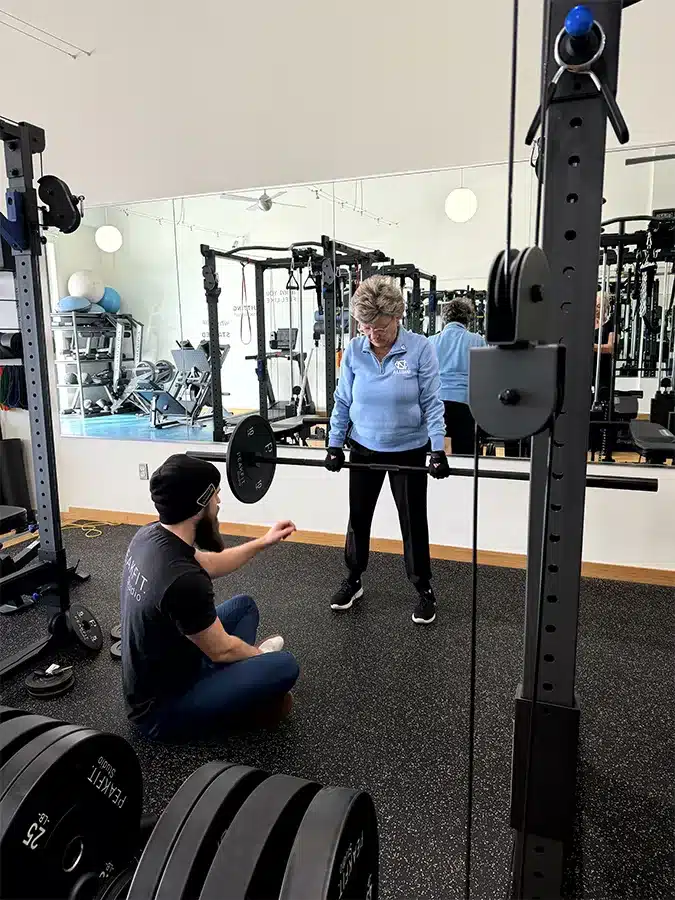
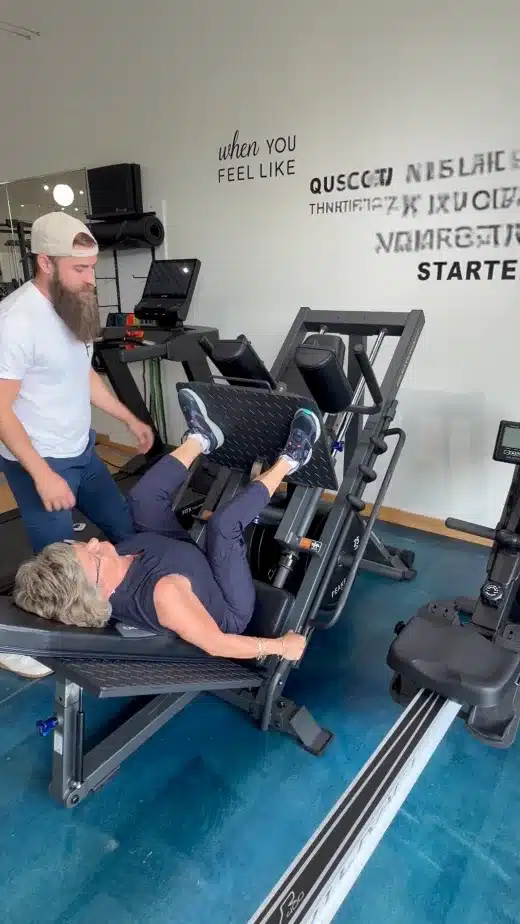
Squats, lunges, step-ups, hip hinge patterns, and calf raises build the primary muscle groups responsible for postural control and reactive strength. At PEAKFIT, these movements are taught with careful attention to form before load is added. According to the American College of Sports Medicine, older adults should perform strength training targeting major muscle groups at least two days per week to maintain functional capacity and reduce injury risk.
Our trainers work with clients at every fitness level, adjusting for knee limitations, hip replacements, and balance concerns. Meet the team to learn about each trainer’s background and areas of expertise.
Balance and Stability Work
Single-leg stance, tandem walking, and balance board progressions train your proprioceptive system directly. These exercises are added progressively, starting from supported positions and working toward unsupported and dynamic challenges as your stability improves. The goal isn’t to get you doing circus tricks. It’s to prepare your body for the unpredictable surfaces and situations that real life throws at you.
Functional Movement Patterns
Getting up from the floor, stepping over obstacles, walking on uneven terrain, reaching overhead without losing your base. These functional patterns get built into training programs because they mirror the actual situations where falls happen. A well-designed program trains the movements you actually need, not just isolated muscle groups.
Assisted Stretching and Mobility
Tight muscles limit range of motion and alter how you walk, stand, and react. Dakota Hall, our certified flexologist at PEAKFIT Studio, uses PNF-assisted stretching techniques to work on ankle dorsiflexion, hip mobility, and thoracic extension. Stretching sessions run 30 or 60 minutes and can be added as a standalone service or combined with a training program.
The Role of Nutrition in Fall Prevention
Exercise builds the strength and balance that prevent falls. Nutrition provides the foundation that makes that strength possible.
Protein intake directly supports muscle maintenance. Most adults over 50 are under-consuming protein relative to what their bodies need for tissue repair and muscle retention. The International Osteoporosis Foundation recommends 1.0-1.2 grams of protein per kilogram of body weight daily for older adults, significantly above typical intake levels for this age group.
Calcium and vitamin D support bone density, and vitamin D also plays a role in muscle function and neuromuscular coordination. A 2011 meta-analysis in the British Medical Journal found that vitamin D supplementation reduced fall rates by 19% in older adults with deficiency.
At PEAKFIT Studio, our nutrition counseling addresses these variables directly. Whether you’re working with Alana Altland, our advanced nutrition specialist with a background in psychology, or exploring our personalized nutrition plans, the goal is fueling your body to support the physical work you’re doing.
Recovery Supports Consistency, and Consistency Is Everything
One of the most underappreciated aspects of any long-term fitness program is recovery. If you’re sore, stiff, or fatigued, you skip workouts. If you skip workouts, you lose the consistency that actually produces results. Recovery isn’t a luxury. It’s part of the plan.
Infrared sauna sessions at PEAKFIT use deeply penetrating heat to support circulation and reduce muscle soreness. Red light therapy may help with inflammation and tissue recovery after training. Both services are available as individual sessions or packages, and many clients build them into their weekly routine around training days.
According to a 2020 study in the Journal of Athletic Training, structured recovery practices, including heat therapy, active mobility work, and adequate sleep, significantly improved training consistency in adults over 50 compared to those without a recovery protocol.
Why This Matters in the Asheville Area
Living in western North Carolina means terrain. If you’re navigating the hills of South Asheville, uneven trails around Arden, or the streets of downtown Hendersonville, your body faces real balance and stability challenges every day. The ground isn’t flat here, and that’s not changing.
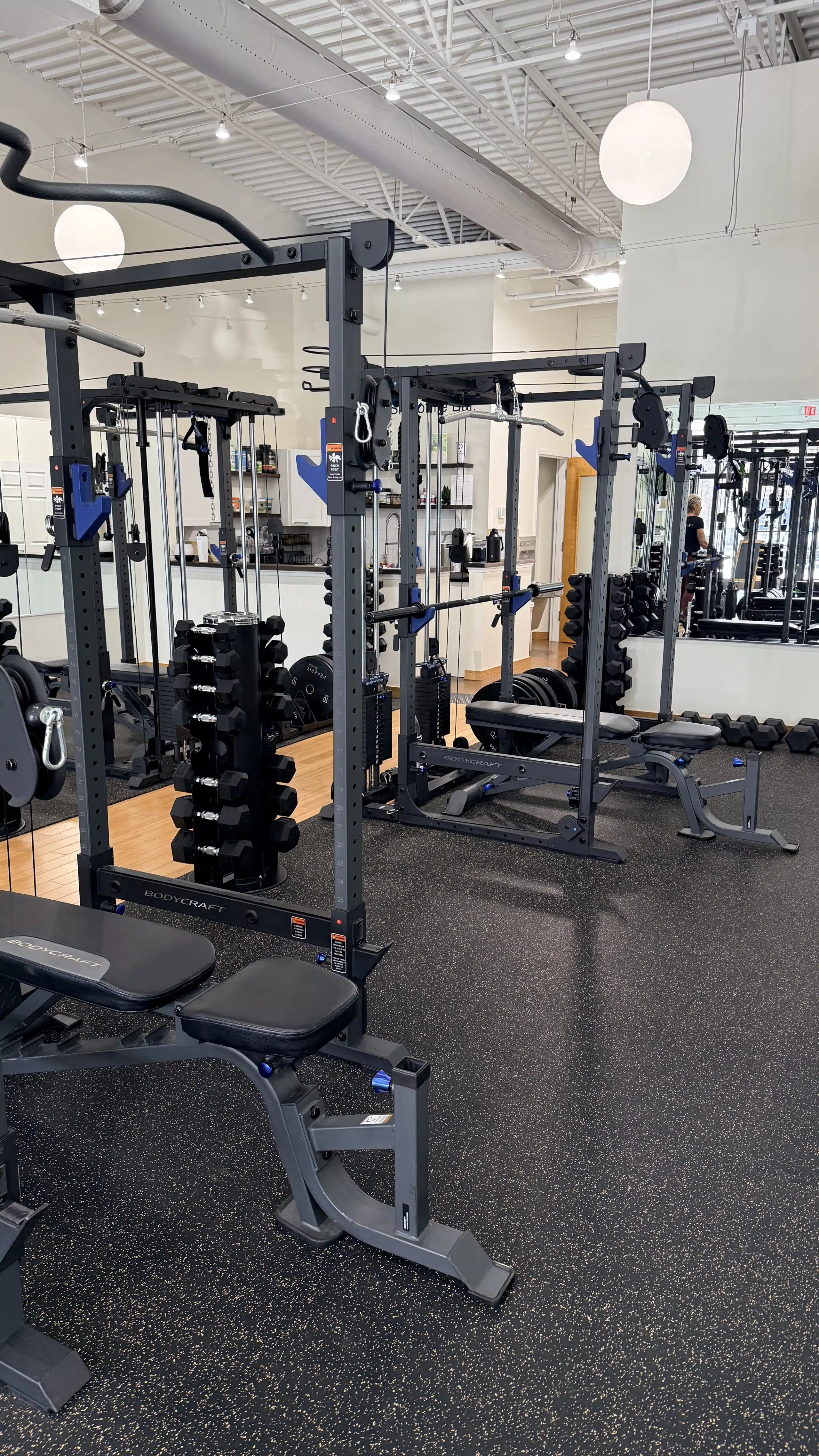
PEAKFIT Studio is located at 100 Julian Lane, Suite 120 in Arden, serving clients from Asheville, Hendersonville, Fletcher, and the surrounding communities. Our free consultation includes an InBody body composition scan, which gives you objective data on muscle mass, fat distribution, and other markers that inform your training priorities.
Many fall prevention clients are surprised to learn exactly where their muscle imbalances are concentrated. That data drives smarter programming. Schedule your free InBody scan and intro session here.
Frequently Asked Questions
At what age should I start thinking about fall prevention training?
You don’t need to wait until you’ve had a fall or a scare to start. The physical changes that contribute to falls, including muscle loss, reduced balance, and declining flexibility, begin earlier than most people expect. Starting strength and balance training in your 40s or 50s builds a stronger foundation before any significant decline sets in. That said, it’s never too late to start. PEAKFIT trainers work with clients who are beginning training in their 60s and 70s and seeing meaningful results.
What does a fall prevention training program at PEAKFIT look like?
It starts with an InBody scan and a consultation to understand your current fitness level, any injuries or limitations, and your goals. From there, your trainer builds a program that addresses lower body strength, balance, functional movement, and mobility. Sessions can be one-on-one or small group, and many clients add assisted stretching and recovery services as part of their routine.
Can I work on fall prevention if I have knee or hip problems?
Yes. Our trainers at PEAKFIT have experience working with clients who have knee replacements, hip issues, osteoarthritis, and other orthopedic concerns. Every program is adapted to your specific situation. Meet the team to find the right trainer for your needs.
How does assisted stretching help with fall prevention?
Tight ankles, stiff hips, and limited thoracic mobility all affect how you walk and how you react when you lose your footing. Assisted stretching sessions with Dakota Hall use PNF techniques to work on these areas specifically. Clients typically notice improvements in gait quality, stride length, and overall confidence in how they move.
Does PEAKFIT offer fall prevention programs specifically for older adults?
PEAKFIT serves adults across all fitness levels and life stages. The principles behind fall prevention, strength, balance, functional movement, and mobility work, are built into how we approach training for every adult client. Book a free consultation to talk through your specific goals.
How does nutrition affect my fall risk?
Nutrition directly supports the muscle you’re working to build and maintain. Inadequate protein intake accelerates muscle loss, and low vitamin D levels impair both muscle function and neuromuscular coordination. Our nutrition counseling at PEAKFIT evaluates your current intake and creates a plan that addresses these gaps.
How do I get started at PEAKFIT Studio?
Book a free consultation online or call us at (828) 620-7020. Your first visit includes an InBody body composition scan and a conversation with one of our trainers about your goals, your history, and what the right starting point looks like for you. There’s no commitment required to take that first step.
Ready to Build a Body That Stays Strong for the Long Haul?
Fall prevention isn’t about fear. It’s about staying capable, confident, and active in the life you want to live. Whether you’re in Asheville, Arden, Hendersonville, or anywhere in western North Carolina, PEAKFIT Studio is here to help you get there.
Schedule your free consultation today at peakfit.studio or call (828) 620-7020. Your free InBody scan and intro session are waiting.