Why Combining Personal Training and Small Group Gym Sessions Works Better Than Either Alone
The default question most people ask is whether they should do solo personal training or small group training. Pick one, the thinking goes, and stick with it. That framing is wrong. The most effective and cost-efficient plan for most adults is to do both — deliberately and in the right ratio. Here is how the combination works, why it outperforms either format alone, and what it looks like in practice.
Solo sessions teach. Group sessions execute. The combination compounds.
What each format does best
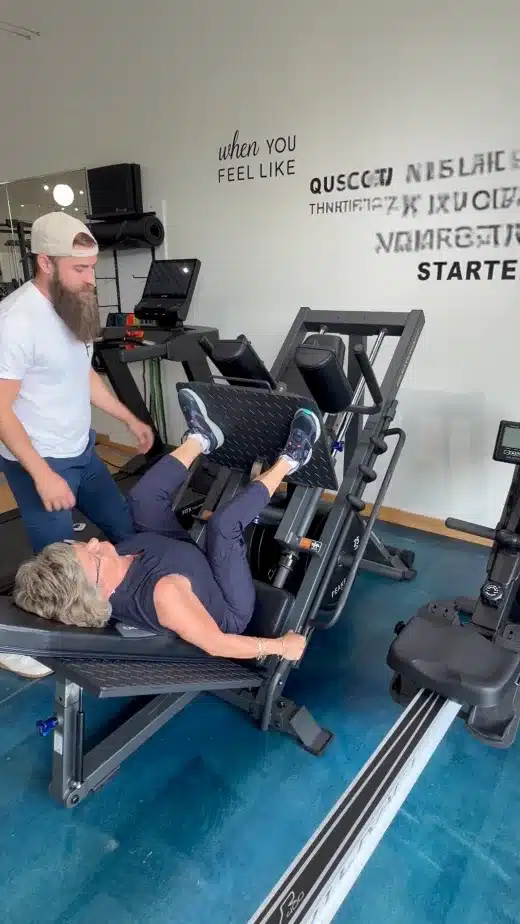
Solo personal training is a teaching format. The coach has your full attention, can run detailed movement assessment, can stop mid-lift to fix a single hip cue, can deep-dive on programming questions. It is the fastest path to mastering a new lift, debugging a stuck progression, or correcting an entrenched movement pattern.
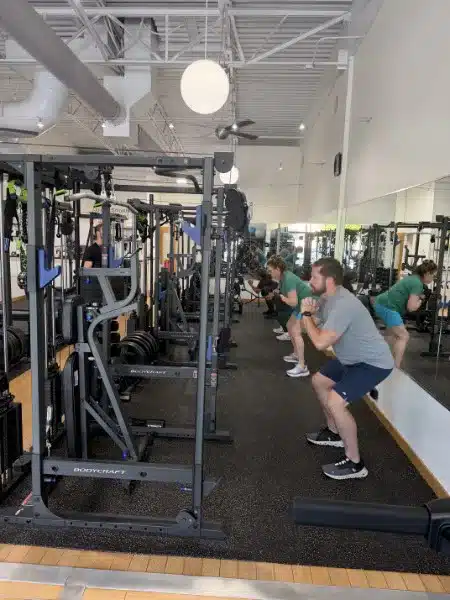
Small group personal training is an execution format. The program is written. The coach is there to spot-check and adjust. The room provides energy and accountability. It is the most efficient way to put in volume over months and years.
What each format does worst
Solo PT is expensive. For most adults, two or three sessions a week of solo PT is financially unsustainable as a long-term plan. People start strong, then drop frequency to once a week, then drift away.
Small group is less customized in the moment. The coach is dividing attention. If you have a specific issue — a knee that complains in a goblet squat, a shoulder that pinches on overhead press, a deadlift form drift — group time is not the right place to chase it down.
The hybrid that solves both problems
The cleanest pattern is this:
One solo PT session every two to four weeks. Use it for movement assessment, deep-dive form work on lifts you are stuck on, programming check-ins, and any specific issue that came up in group sessions.
Two to three small group sessions per week. This is where you put in the strength training volume that drives adaptation.
The math: roughly $300–$400 per month for the group portion and $80–$120 per month for the solo PT portion. Total: around $400–$500 per month for a complete program. Compared to four solo PT sessions per week ($1,200–$2,000/month), it is a fraction of the cost with arguably better outcomes.
Why the combination outperforms either alone
1. Pattern correction lands faster. An issue caught in a group session gets a focused fix in your next solo session. Two weeks later, you bring the fix back into group reps and own it. The feedback loop is tight.
2. Volume is sustainable. Most adults need three quality strength sessions per week to drive meaningful progress. That cadence is sustainable in small group. It is rarely sustainable solo.
3. Coaching attention compounds. The coach who sees you in group sessions also coaches your solo session. They have weeks of context. Their solo sessions are sharper because of it.
4. Plateaus get diagnosed quickly. When progress stalls, the solo session is where you debug. In a solo-only or group-only program, plateaus tend to drag on for weeks before someone identifies what is missing.
How to know when to lean which way
Lean toward more solo if you are new to strength training, returning after a long break, working around a specific injury, or training for a specific event where every cue matters.
Lean toward more group if you are an experienced trainee in a maintenance or progression phase, you train better with social energy, or you need accountability more than instruction.
How we run it at PEAKFIT
Most of our long-term clients run some version of this hybrid. Two or three group sessions a week, one solo session per month, plus recovery support through infrared sauna and red light therapy. The combination produces the steepest progress curve we see across the client base — faster than solo-only and faster than group-only.
If you want to build a hybrid program around your goals, book a consultation at PEAKFIT. We will lay out the cadence, the cost, and the expected progress curve over six and twelve months.