
Breathing Exercises for Stress Relief That Actually Work
If you have tried everything to manage stress and still feel wired, exhausted, or stuck in a cycle of tension, your breathing pattern may be part of the problem. Breathing exercises for stress relief give you a direct, science-backed way to calm your nervous system without medication, equipment, or a gym membership. At Peak Fit Studio in Arden, we teach adults across South Asheville, Fletcher, Hendersonville, and the wider WNC region how to use breathwork as a foundation for lasting health, not just a momentary fix.
Key Takeaways
Simple breathing techniques can reduce stress hormones, lower blood pressure, and improve sleep quality when practiced consistently for just 5 to 10 minutes daily.
- Diaphragmatic breathing activates your parasympathetic nervous system to counter stress responses
- Box breathing provides immediate relief during acute stress situations
- Regular breathing practice enhances overall fitness recovery and performance
- Proper breathing technique requires focused practice but delivers measurable health benefits
- Combining breathwork with movement creates powerful stress management strategies
Why Your Breathing Pattern Affects Your Entire Body
Most adults breathe in a way that quietly works against them. Shallow chest breathing keeps your nervous system in a low-level state of alert, affecting everything from sleep quality to muscle recovery. When stress builds, breathing becomes faster and more shallow, which triggers a cascade of physiological responses that leave you feeling depleted long after the stressful moment has passed.
The science here is straightforward. Deep, controlled breathing activates your vagus nerve, which signals your body to shift out of fight-or-flight mode and into rest-and-digest mode. This is not relaxation theory. Researchers have documented measurable changes in heart rate variability, cortisol levels, and blood pressure within minutes of proper breathing practice. For more on stress physiology, see the National Institutes of Health.
Breathing is the only autonomic function you can consciously control. When you change your breathing pattern, you change your physiology in real time. That makes breathwork one of the most accessible tools available for managing chronic stress, regardless of your fitness level, health history, or how long it has been since you last felt calm.
For adults over 40 in the Asheville area, this matters even more. Chronic stress accelerates the physical changes that come with aging, including disrupted sleep, slower recovery, and reduced resilience. Addressing your breathing pattern is not a luxury or a wellness trend. It is a practical starting point for protecting your long-term health.
Four Breathing Techniques for Stress That Deliver Real Results
Not all breathing exercises are created equal. These four techniques are grounded in research, easy to learn, and practical for everyday use. Whether you are dealing with acute anxiety, poor sleep, or general tension that never seems to go away, one of these approaches will give you a reliable place to start.
Box Breathing for Immediate Stress Relief
Box breathing is one of the most effective breathing techniques for stress because it works quickly and requires nothing except a few minutes and a quiet space. Inhale for four counts, hold for four, exhale for four, hold empty for four. Repeat this cycle 8 to 12 times. You can do this sitting at your desk, parked in your car before a difficult appointment, or lying in bed when your mind will not quiet down. The simplicity of the four-count structure gives your mind something concrete to focus on, which interrupts the mental spiral that accompanies most stress responses.
Diaphragmatic Breathing for Daily Practice
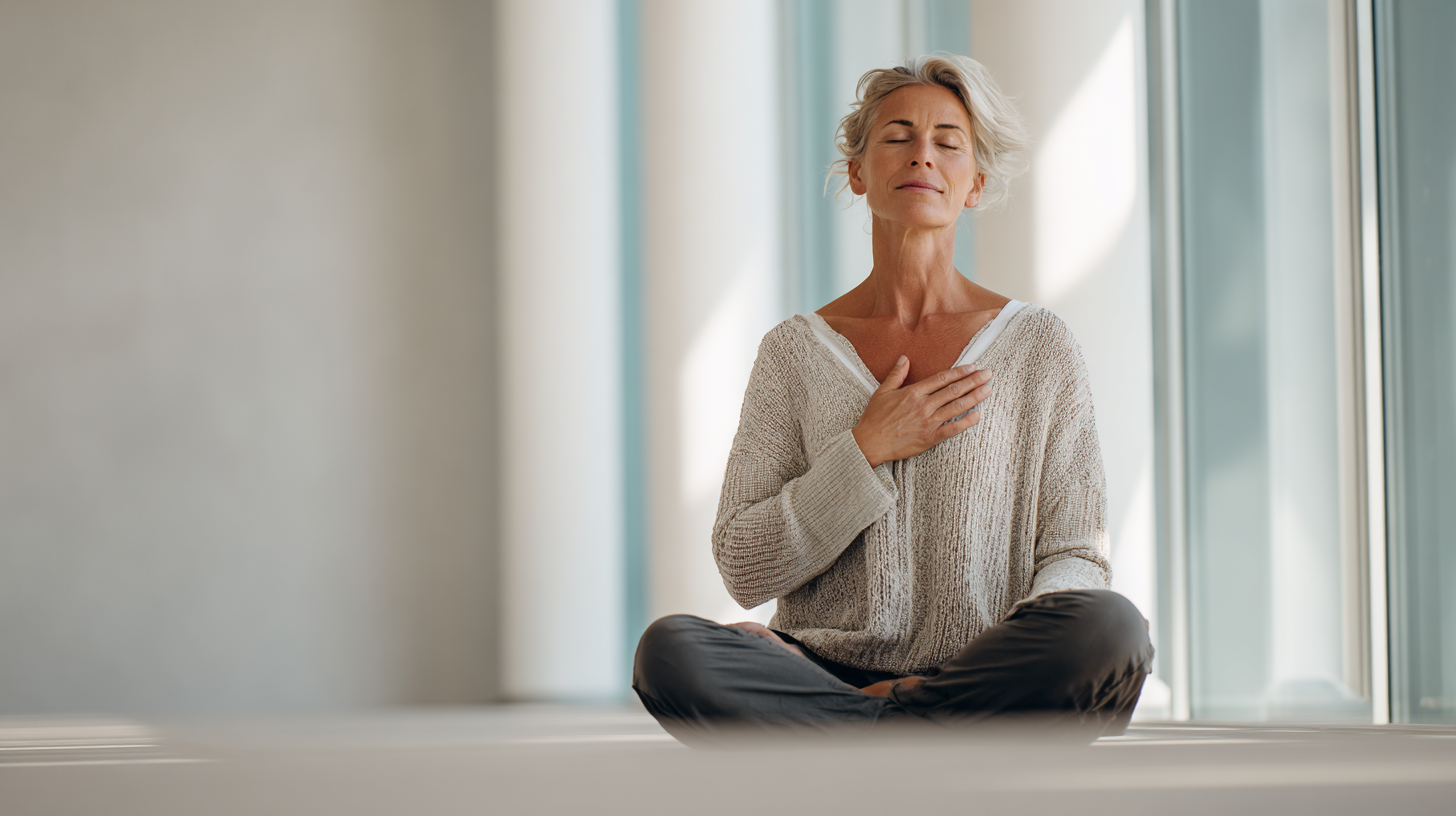
Place one hand on your chest and one on your belly. Breathe so that only the lower hand moves. This engages your diaphragm properly and maximizes oxygen exchange. Most adults default to chest breathing, which is shallower and keeps the nervous system on edge. Practicing diaphragmatic breathing for 5 to 10 minutes daily, either before bed or first thing in the morning, gradually retrains your default breathing pattern so that calmer, deeper breaths become your norm rather than the exception. This is one of the most foundational breathing exercises for stress relief available, and it costs nothing to practice.
4-7-8 Breathing for Sleep and Anxiety
Inhale through your nose for four counts, hold for seven, exhale through your mouth for eight. This technique is especially useful when anxiety peaks at night or when you cannot fall asleep despite feeling tired. The extended exhale is the key mechanism here. A longer exhale relative to your inhale drives your heart rate down and signals safety to your nervous system. Use it when you are lying in bed unable to sleep, or any time anxiety spikes unexpectedly during the day. Learn more about anxiety management strategies from the Centers for Disease Control and Prevention.
Coherent Breathing for Heart Rate Balance
Breathe in and out for equal counts of five seconds each. This steady rhythm creates optimal heart rate variability, which is a well-studied marker of stress resilience and cardiovascular health. Research shows this particular rhythm naturally synchronizes with your cardiovascular system. Over time, practicing coherent breathing trains your body to return to a balanced state more quickly after stressful events. This makes it one of the most valuable long-term breathing techniques for stress and performance combined.
How Breathing Techniques for Stress and Performance Work Together
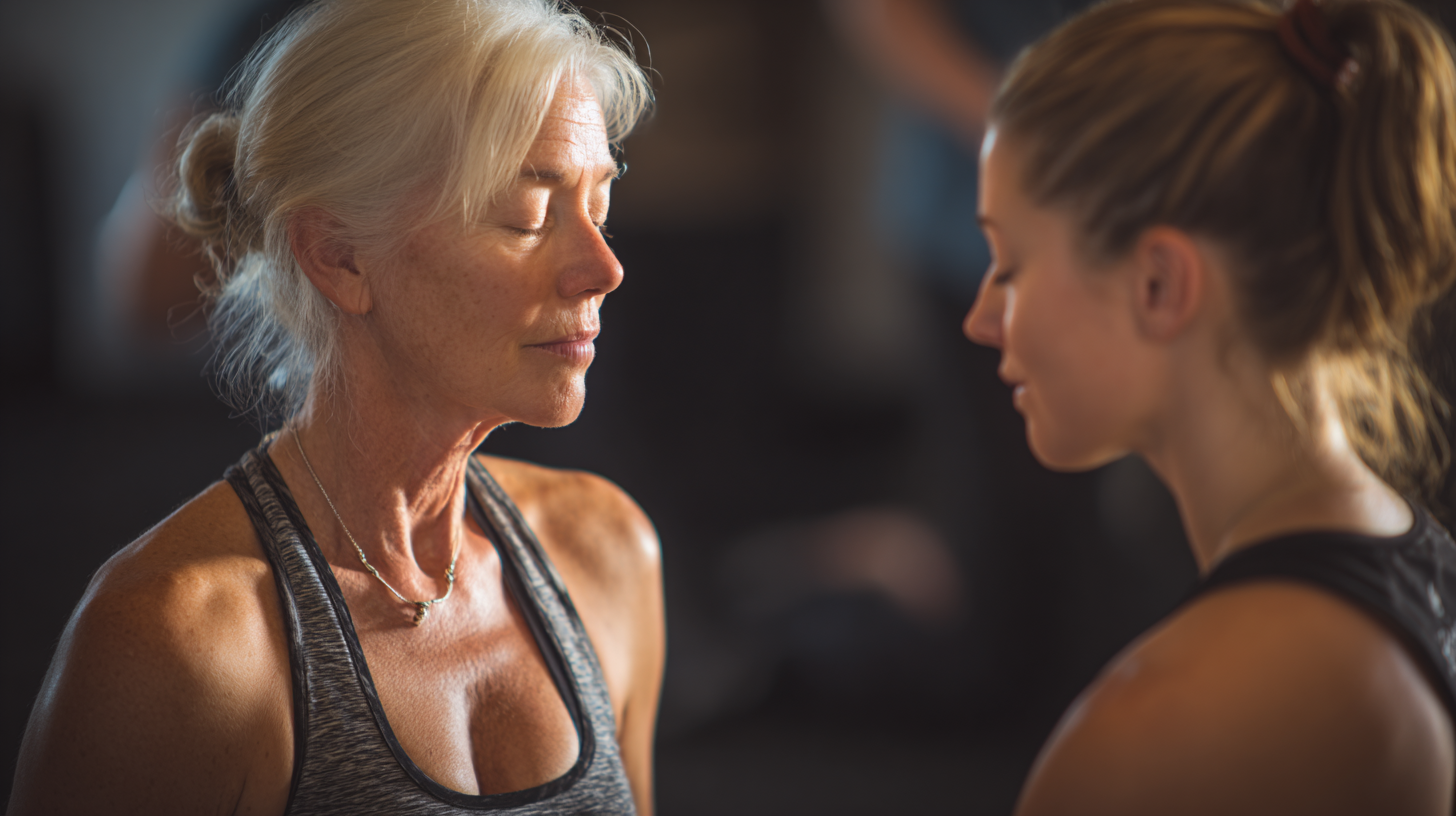
Breathing is not just a stress management tool. It is also a performance variable that most adults over 40 overlook entirely. When you breathe correctly during exercise, you deliver more oxygen to working muscles and clear waste products more efficiently. The result is better endurance, less fatigue, and faster recovery between sets. If you have ever felt winded doing something that should not be that hard, inefficient breathing mechanics may be a bigger factor than cardiovascular fitness.
Many adults in the Asheville and South Asheville area discover that addressing their breathing patterns significantly improves their response to exercise for anxiety and depression over 40. The combination of physical movement and controlled breathing creates a compounding effect over time. Each supports the other. Better breathing improves workout quality. Better workouts reduce baseline stress. Lower stress makes it easier to breathe well.
For women rebuilding strength after a health challenge, or for anyone returning to fitness after time away, breathing exercises offer a safe and genuinely productive entry point. They require no equipment, create no joint stress, and can be modified for almost any physical limitation. This makes them particularly valuable for anyone who feels hesitant about returning to structured exercise.
At Peak Fit Studio, we integrate breathwork into personalized training programs because we know that how you breathe during movement directly determines how much you get out of it. Our coaches across the Arden, Fletcher, Mills River, and Biltmore Forest communities work with clients to build breathing awareness from the first session, not as an afterthought.
Breathing, Stress Management, Sleep, and Physical Activity: How They Connect
Stress, sleep, breathing, and physical activity are not separate concerns. They are part of the same system. Chronic stress disrupts sleep. Poor sleep degrades your body’s ability to manage stress the following day. Shallow breathing keeps your nervous system in a low-grade alert state that makes restful sleep harder to reach. And without adequate recovery, physical activity becomes harder to sustain, which removes one of the most effective natural stress buffers available to you.
Breathing exercises sit at the center of this web because they influence all four variables simultaneously. A consistent breathing practice lowers baseline cortisol, which improves sleep onset. Better sleep improves physical performance. Improved physical capacity reduces the physiological burden of daily stress. Understanding this connection is why the World Health Organization and public health bodies consistently recommend physical activity and stress management together, not as competing priorities.
If you are a busy professional in the Hendersonville or Fairview area, or if you are managing post-surgery recovery in Skyland, this interconnected view of health is exactly how we approach program design at Peak Fit Studio. We look at the whole picture, which means breathwork is never an add-on. It is part of the foundation.
Building a Sustainable Breathing Practice That Sticks
Start with three minutes daily rather than an ambitious 20-minute session you will abandon after a week. Consistency matters far more than duration when you are establishing new habits. Choose the same time each day and connect your practice to something you already do, such as morning coffee, an evening wind-down routine, or the five minutes before a regular meeting.
Track your practice simply. Before and after each session, rate your stress level on a scale of one to ten. Most people notice measurable improvement within two weeks of consistent practice. That data is useful motivation during the early phase when techniques may still feel awkward or uncertain.
Environmental cues help your nervous system distinguish breathing practice from the rest of the day. Practice in the same space when possible. Silence your phone. Sit with your spine upright but not rigid. These small signals tell your body that this time is different, which accelerates the calming response over time. For guidance on wellness in the workplace, see OSHA guidance on occupational wellness.
As your practice develops, combine breathing with gentle movement. Shoulder rolls, neck stretches, or a slow walk while maintaining controlled breathing patterns amplify the stress relief benefits and build the body awareness that carries into more structured fitness activities. This progression is how breathwork connects to broader physical health, not just momentary calm.
Frequently Asked Questions
How long does it take for breathing exercises to reduce stress?
Most people notice an immediate calming effect within 5 to 10 minutes of practice. Acute relief can happen in your very first session if you follow the technique correctly. Lasting changes in your baseline stress response, meaning the way your nervous system handles stress on an average day, typically develop after 2 to 3 weeks of consistent daily practice. The key variable is regularity, not session length. Three focused minutes every day will produce better results than a 30-minute session once a week.
Can breathing exercises replace anxiety medication?
Breathing exercises are evidence-based stress management tools, but they are not a substitute for medical treatment when anxiety rises to the level of a clinical disorder. They work best as a complement to care you are already receiving from your healthcare provider. If you are managing diagnosed anxiety, talk with your doctor about how breathwork might fit alongside your current treatment plan. See additional information on anxiety disorders for broader context on this distinction.
What is the best time of day to practice breathing exercises for stress?
Morning practice sets a calmer physiological baseline before the demands of the day accumulate. Evening practice helps your nervous system transition out of the active state that makes falling asleep difficult. Both windows are effective. The best time is whichever one you can realistically maintain. Many people start with one daily session and add a second once the habit is solid. If your stress tends to spike at a predictable time, such as before a commute or after work, practicing immediately before that window can make a meaningful difference.
Should breathing exercises feel uncomfortable or cause dizziness?
Proper breathing should never cause pain, pressure, or significant dizziness. If you feel lightheaded, you are likely breathing too fast or too deeply for your current comfort level. Slow down, let your breath return to a natural rhythm, and try a shorter session. Start with two to three minutes and build from there as your body adapts. Some mild tingling in the hands or feet can occur with certain techniques during the early sessions, but it should pass quickly and is not a cause for concern unless it persists or worsens.
How do I know if I am doing breathing exercises correctly?
Focus on smoothness and control rather than depth or speed. Your belly should expand on each inhale, your shoulders should remain relaxed and low, and you should feel a progressive sense of calm during the session rather than effort or strain. If you feel more agitated after a few minutes, adjust your pace or switch techniques. Diaphragmatic breathing is the most reliable starting point because it gives you a clear physical reference: the hand on your belly should be the only hand that moves.
Can I practice breathing exercises if I have a respiratory condition?
People managing respiratory conditions such as asthma or COPD should consult their doctor before starting any structured breathing practice. Many techniques can be safely modified for a wide range of health conditions, but your medical team is the right starting point to confirm what is appropriate for your specific situation. When you have clearance, working with a qualified fitness professional who understands your health history adds an additional layer of safety and accountability.
Do breathing exercises work for everyone?
Most people experience meaningful benefit from consistent breathing practice, but individual responses vary. Some find box breathing immediately effective while others respond better to the 4-7-8 method or coherent breathing. If one technique feels forced or produces no relief after a week of honest effort, try a different approach. Patience is part of the process. Your nervous system has developed its current patterns over years, and retraining those patterns takes consistent repetition rather than intensity.
Start Building Your Stress Management Foundation Today
Breathing exercises for stress relief work because they address the actual physiological patterns that keep you stuck in chronic tension. Unlike quick fixes that mask symptoms, consistent breathwork retrains your nervous system’s default responses. That creates changes that carry forward into your sleep, your workouts, your recovery, and the quality of your daily life.
At Peak Fit Studio in Arden, we understand that managing stress is foundational to any health goal worth pursuing. That is why we integrate breathing techniques into our personalized training programs for adults across the South Asheville, Fletcher, Hendersonville, Skyland, and surrounding WNC communities. We know that rest and recovery are just as important as active training, especially if you are returning to fitness after time away or training after a long break. You do not have to figure this out alone, and you do not have to wade through crowded gyms or generic programs to get there.
Book Your Free Consultation at peakfit.studio/free-consultation/ or call (828) 620-7020.






Marilyn’s Story: At 82, She Joined PEAKFIT to Lift Her Own Carry-On
Arden’s Only Private Personal Training Studio for Adults 40+ Marilyn had a very specific goal when she walked into PEAKFIT
Antioxidants and Exercise: Why Adults Over 40 Need More (and Where to Get Them)
Arden’s Only Private Personal Training Studio for Adults 40+ Every time you exercise, your body produces free radicals — unstable
Asheville Mountain Lifestyle Fitness That Supports Your Adventures
Key Takeaways Living an active mountain lifestyle in Asheville means your fitness needs to keep up with you, not the