Are You Too Out of Shape for a Small Group Class? The Honest Answer
The single biggest thing keeping adults out of small group classes is not cost, location, or schedule. It is the fear of being the slowest, weakest, most awkward person in the room. The fear of holding the group up. The fear of getting judged in front of strangers.
This fear is real, it is common, and the people who feel it most strongly are usually the people who would benefit from the format the most. Here is the honest answer to whether you are too out of shape for a small group class.
The room is not the gauntlet you are picturing. The people in it are mostly thinking about themselves, not you.
The short answer
No. You are almost certainly not too out of shape for a small group class — specifically a small group personal training class with real intake and scaling, not a chase-the-burn boot camp.
Quality small group programs are designed to accommodate beginners, returners, and adults of widely varying fitness levels in the same room at the same time. The reps are the same. The loads are different. The regressions are built into every movement. The format works precisely because it scales.
What you are actually picturing
The mental image of a small group class for most hesitant adults looks something like this: a room of 25-year-old fit people doing burpees while you stand in the corner gasping after the warm-up. The trainer is yelling. People are watching you. You leave humiliated.
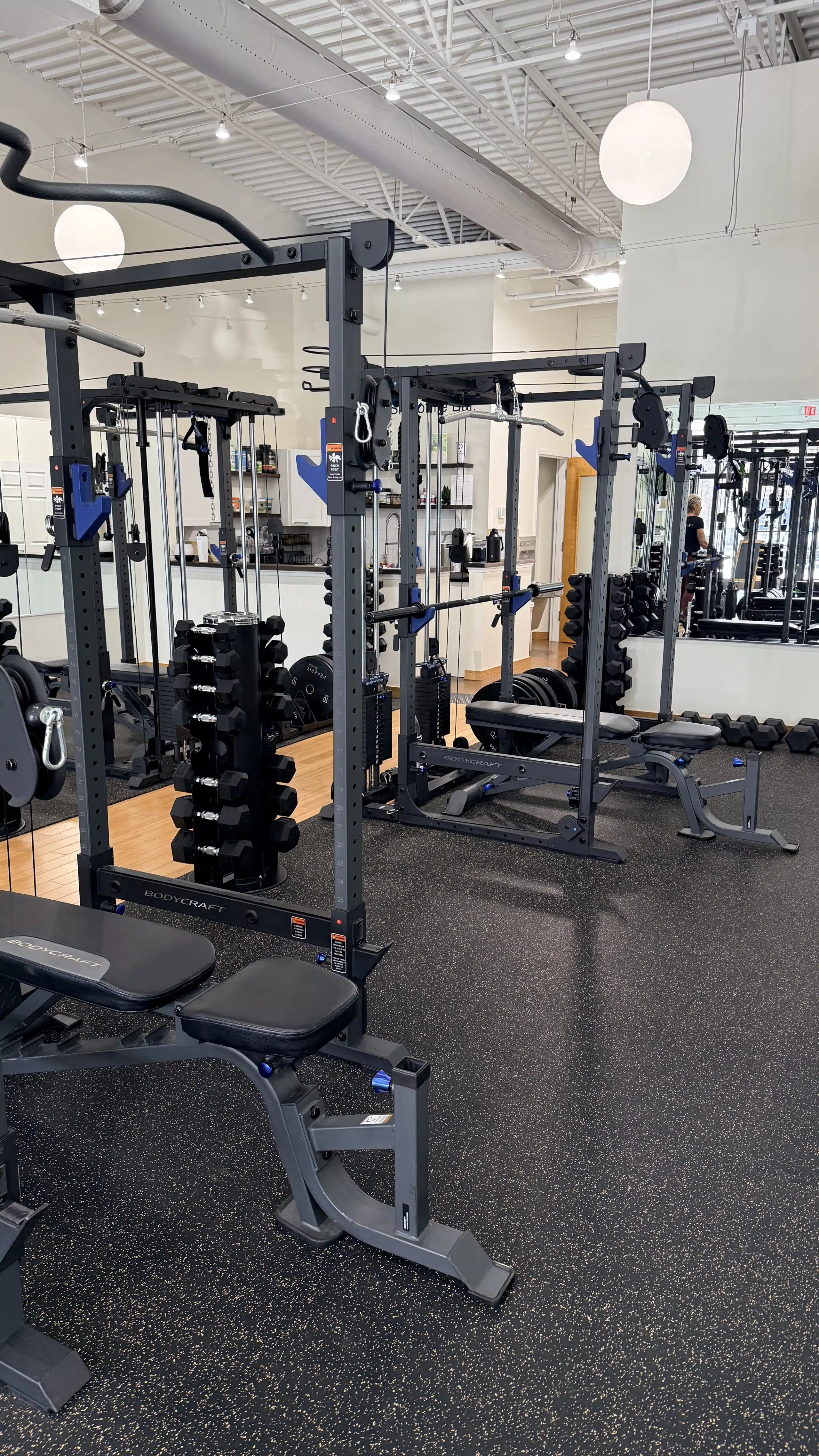
Almost none of that is accurate for a quality small group personal training studio. The actual room at PEAKFIT looks like:
Six to eight people, mostly between ages 40 and 65
Several clients who started in worse shape than you are imagining
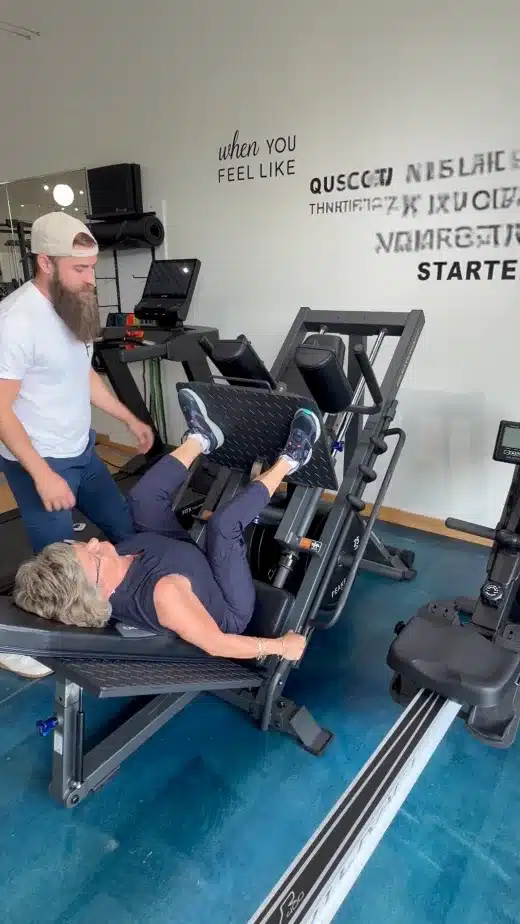
A coach actively scaling weights up and down per person
No burpees as the focus of the workout
No yelling
People mostly focused on their own work, occasionally chatting between sets
What “scaling” actually means
Every movement in a quality small group program has a regression and a progression. The coach’s job is to put each client on the version that fits their current capability:
Barbell back squat regresses to goblet squat, then to box squat, then to assisted squat with TRX or band
Deadlift regresses to trap-bar deadlift, then to kettlebell deadlift, then to a hip-hinge drill with a dowel
Push-up regresses to elevated push-up on a bench, then to wall push-up
Pull-up regresses to assisted pull-up with band, then to ring rows, then to seated rows
You will not see the words “regression” or “progression” on the board. You will see a movement, and the coach will quietly put you on the version that works for you. No announcement. No flag. Just the right version.
What if I really am the least fit person in the room
This is the honest second-order question. Sometimes the answer is: yes, you might be. Here is what actually happens.
The other clients in the room have almost without exception been in your spot. They were the least fit person at some point. They remember it. The room is overwhelmingly supportive because the demographic is overwhelmingly people who have walked this path. Nobody is judging. They are mostly thinking about their own work, their own loads, and whether they can hit one more rep.
The trainer is on your side. The whole format depends on you progressing and sticking around. There is zero incentive to embarrass you and every incentive to make session one work.
The pre-existing condition objection
If you have a real condition — arthritis, joint replacement, heart condition, recent surgery, chronic injury — tell the trainer at intake. A quality studio will accommodate it without making it a big deal. We program around joint replacements, back conditions, shoulder limitations, and recovery from surgery on a regular basis at PEAKFIT. It is normal, expected, and built into how we scale.
The honest test of whether the format is for you
You are a fit for small group training if:
You can walk into a room without medical emergency risk
You can move basic patterns with regressions (sit and stand, push something away, pull something toward you)
You have approval from your physician if you have any meaningful medical condition
If you can clear those three, you are not too out of shape. You are exactly the person the format was built for.
The first session strategy
If the fear is still loud, here is what to do for session one:
Book the intake first. One-on-one with the coach, no group present. Easier entry point.
Tell the coach exactly what you are nervous about. They will not be surprised, and they will adjust.
Pick the least-busy class on the schedule for your first group session. Smaller room, less audience.
Plan to do session one and session two before you decide anything. The first session is the hard one. Session two feels like a different room.
If you want to start with a low-pressure intake before any group session, book a free consultation at PEAKFIT. We will walk through what to expect, scale anything that needs scaling, and have you on a path that fits where you actually are — not where you wish you were.