

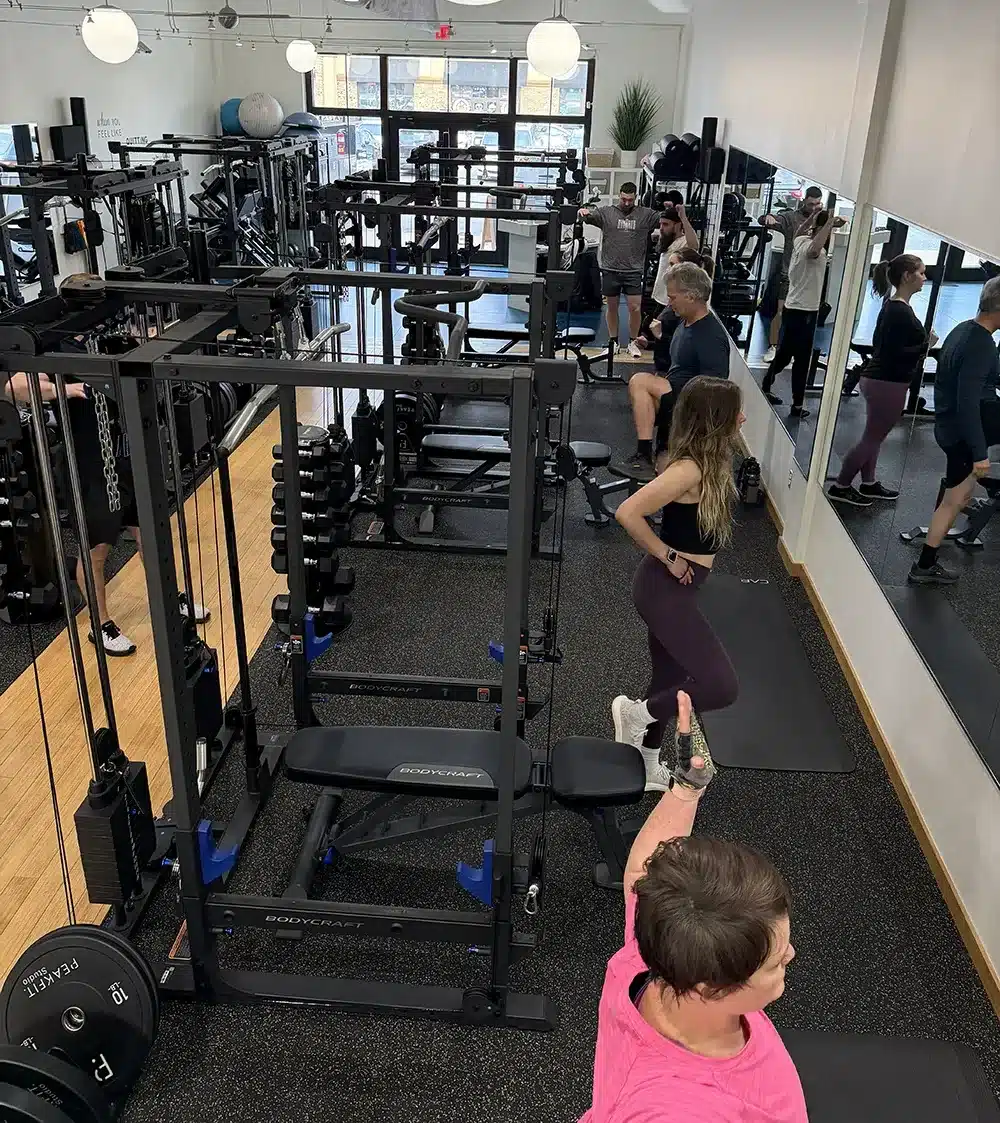
If you have never done small group personal training, the format is harder to picture than a typical gym class. It is not a group class with weights. It is not solo PT in a slightly bigger room. It is its own thing, with its own rhythm. Here is what an actual hour looks like at PEAKFIT in Arden, minute by minute, so you can walk in knowing exactly what you are signing up for.
Minutes 0–5: Arrival and check-in
Doors open ten minutes before the session. You walk in, set down your water bottle, scan the board for today’s program. The coach is already in the room. There is a quick exchange — how is your week, how did the squat session feel on Tuesday, anything we need to know. This is the moment that produces the “they know me here” effect over weeks.
Minutes 5–15: Warm-up
The warm-up is built for today’s session. Not generic mobility. If we are squatting, the warm-up activates hips, ankles, and glutes. If we are pressing, we mobilize the thoracic spine and prime the shoulders. Six to eight movements, two minutes each, building intensity. By the time the warm-up ends, your heart rate is up and the target muscles are primed.
The coach is in the room watching warm-up too. They are using this window to scan for issues: anyone moving stiff, anyone protecting a side, anyone who needs a regression today.
Minutes 15–35: Strength Block A
This is the main lift of the day. Usually a compound movement: squat, deadlift, bench press, or overhead press. Four working sets, three to six reps depending on the cycle phase. Plenty of rest between sets — 90 seconds to three minutes.
This is where the coach earns their money. They are moving between clients constantly. One client is loading up the rack — coach quietly trades the 45-pound plates for 35s, no comment, just a nod. Another client is set up for their first working set — coach calls a single specific cue (“chest up out of the bottom”) and steps back. Another client is between sets — coach uses the rest window to ask how the knee feels today.
You are working at your weight. The person next to you might be at a totally different weight. The reps and the lift are the same. The load is yours.
Minutes 35–50: Strength Block B (paired accessory work)
The second strength block is usually a pair of complementary lifts performed in a circuit. For example, a row paired with a single-leg movement. Three to four rounds, eight to twelve reps each. The pace is slightly faster than the main lift, but it is still strength work — not conditioning.
The coach is doing the same work as Block A but with more clients moving at once. Cues are tighter and faster. You learn the cues that apply to you and feel them stack week over week.
Minutes 50–55: Finisher
A short, intentional finisher. Usually six to eight minutes. Could be a sled push circuit, a kettlebell complex, a rower interval, or a focused core block. The point is to push capacity briefly without trashing recovery for the next session.
This is where the room’s energy peaks. People are cheering each other through it. You finish gassed and clear.
Minutes 55–60: Cooldown and check-out
Three to five minutes of mobility, breath work, or static stretching depending on the day. Then you log your weights in the app or on paper. The coach uses the cooldown to ask: anything that felt off, anything I should know for next time, any updates on what is going on outside.
You leave with a clear sense of what you did and what next session will likely look like.
What you do not see on the surface
The coach has spent maybe forty-five minutes preparing today’s session. They know what is supposed to happen, what loads each client should be at based on last session, what each client has been working through, what cues they have been hammering. The visible hour is the tip of the iceberg.
What separates this from a typical class
You worked on three to five specific lifts. You received individual cues. You loaded weight that fit you. You progressed from last session. You will progress to next session. Twelve weeks of this and you will be measurably stronger and move materially better. A typical class cannot promise any of that because the format does not support it.
If you want to experience an actual hour of small group personal training — not a class, not a boot camp, the real thing — book a free intro at PEAKFIT. The structure is the same one above. Your starting point will be tailored to where you are.




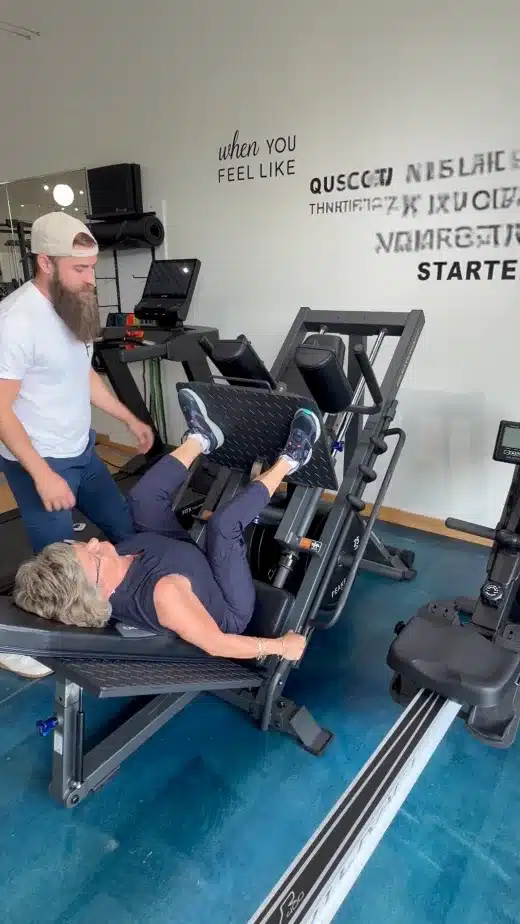


Marilyn’s Story: At 82, She Joined PEAKFIT to Lift Her Own Carry-On
Arden’s Only Private Personal Training Studio for Adults 40+ Marilyn had a very specific goal when she walked into PEAKFIT
Antioxidants and Exercise: Why Adults Over 40 Need More (and Where to Get Them)
Arden’s Only Private Personal Training Studio for Adults 40+ Every time you exercise, your body produces free radicals — unstable
Asheville Mountain Lifestyle Fitness That Supports Your Adventures
Key Takeaways Living an active mountain lifestyle in Asheville means your fitness needs to keep up with you, not the