What to Look for in a Group Training Gym: 8 Things That Matter More Than Equipment
Most adults pick a group training gym off the website. The pictures look nice. The packages are clear. The location works. They sign up, train for three months, drift, and move on. Then they pick the next gym off the next website. The cycle repeats. The thing that breaks the cycle is knowing what to look for that is not visible until you walk in.
Here are eight features that actually predict whether a group training gym will produce real results for you over six to twelve months. Only one of them is equipment.
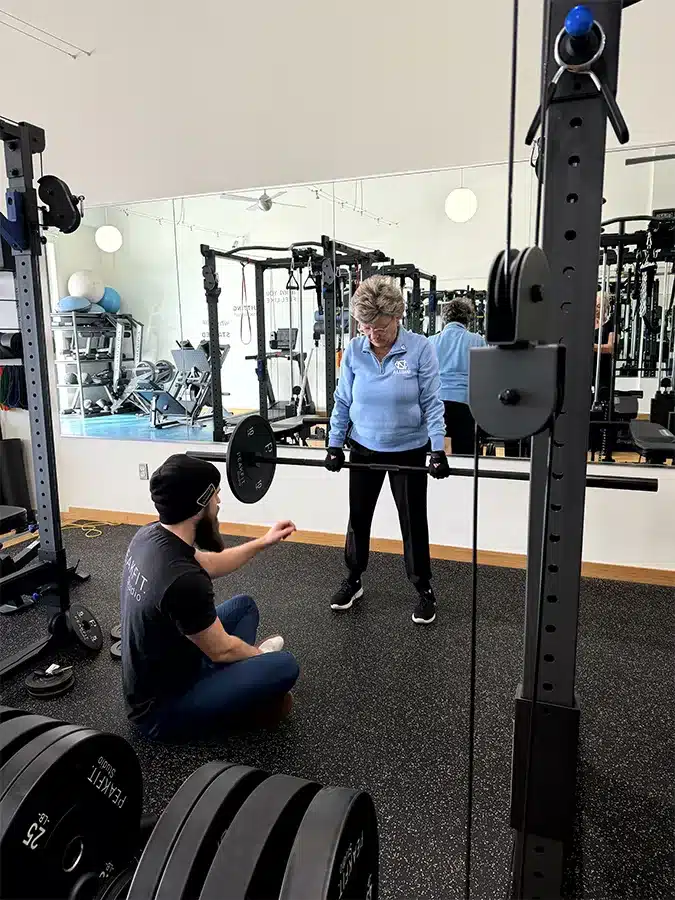
Equipment matters. The coach pointing to your knee in this photo matters more.
1. Coach quality, measured by what they correct
The single biggest variable in any gym is the coaching. Watch a coach run a session for thirty minutes. Count how many times they correct a movement. Count how many of those corrections were specific and useful, not just generic encouragement. A great coach will correct things you did not even know were wrong. A bad coach counts reps.
2. Programming you can describe
Ask the gym what next month looks like. If they cannot describe the framework — the major lifts that will repeat, the loading progression, the planned deload — the programming probably does not exist. Random sessions every day are not a program. They are improvisation.
3. A coach-to-client ratio you can actually live with
Eight is the absolute ceiling for personalized group training. Six is ideal. Above ten, the coach cannot reasonably watch every rep, and you are paying for group fitness with personal training branding.
4. Client demographics that match yours
If you are 50 and the room is full of 25-year-olds, the programming is built for 25-year-olds. The intensity, volume, and recovery assumptions will not fit you. Look for a room where someone five years older than you is thriving. If they can do it there, you probably can too.
5. Real intake process
The first session at a quality group training gym should not be a group session. It should be a one-on-one intake — movement assessment, conversation about history and goals, regressions and progressions identified for you specifically. If they put you straight into the group, they have no idea how to scale for you.
6. Recovery integration
The better gyms understand that an adult training body needs more than weights. They have something on site or recommend integration: sauna, red light therapy, mobility work, sleep coaching, nutrition guidance. At PEAKFIT, the infrared sauna and red light therapy are part of the offering specifically because they make the training work harder for clients.
7. Long-term clients in the room
Walk through the gym. Look at the regulars. Are there clients who have been there a year? Two? Five? If yes, the programming and culture work. If everyone is new, retention is poor, and that is information.
8. Equipment that supports the programming
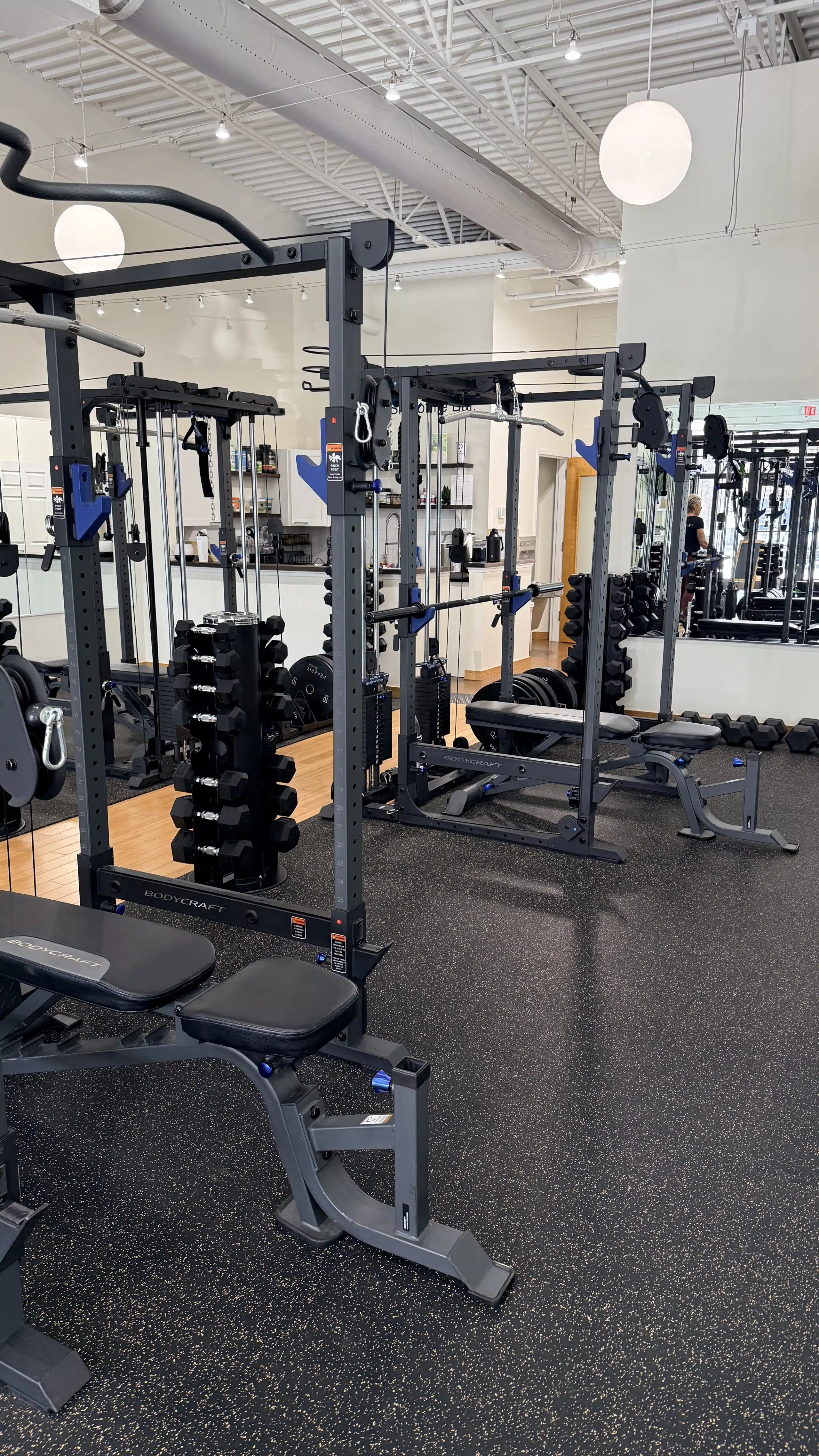
Yes, equipment matters — but only the right equipment. A good group training gym has squat racks, real barbells, kettlebells in usable weight ranges, dumbbells up to at least 80–100 lb, a trap bar, a rower, a sled or assault bike. If the equipment is just light dumbbells and bands, the programming will be limited by what you can lift.
What you do not need
Sparkling new equipment. A scuffed barbell with proper weight plates does more than chrome dumbbells with no rack.
The fanciest space. Fitness happens in well-equipped rooms with good coaches, not in showrooms.
The largest class times menu. Three good time slots is better than fifteen mediocre ones.
The thirty-minute test
If a gym lets you observe before committing, go watch a session for thirty minutes. In that window, you can confirm: coaching quality, ratio, demographic fit, programming structure, and client retention all at once. Studios that resist this are signaling something.
If you are looking at group training gyms in the Asheville area, come visit PEAKFIT in Arden. Sit in on a session. Talk to clients who have been with us for a year or more. Use these eight criteria on us — if the fit is right, you will know fast.