5 Gym Habits That Are Secretly Working Against You After 40
The frustrating thing about training after 40 is that the work that used to produce results stops producing them. You do what you have always done, you train hard, you eat reasonably — and the body just does not respond the way it used to.
The honest answer is usually not that you need more training. It is that several habits you carried in from your 20s and 30s are now actively working against you. Here are five of the most common, and what to swap them for.
After 40, technique is more important than effort. Fix the habit, not just the workout.
Habit 1: Skipping the warm-up because you do not have time
At 25, you could roll out of the car, walk to the squat rack, and put a working set on the bar. At 45, that habit costs you a tweaked hip flexor by week three. Cold tissue, restricted joints, and an unprimed nervous system are a far bigger deal at 40 than at 25 — not because anything is wrong with you, but because tissue tolerance is genuinely different.
The fix: Ten minutes. That is the floor. Dynamic mobility, two activation sets at fifty percent of your working weight, and a brief breath reset. The time you think you are saving by skipping the warm-up is the time you will spend rehabbing the injury you eventually get.
Habit 2: Training through pain
The cultural script of fitness still rewards toughness. Push through. No pain, no gain. That script is responsible for an enormous percentage of training injuries in adults over 40.
There is a useful distinction here. Muscle soreness, especially in the 24 to 48 hours after a session, is normal and not a reason to back off. Joint pain — specifically sharp, localized, or movement-pattern-specific pain — is information. It is your body telling you the loading is wrong, the form is wrong, or the volume is too high.
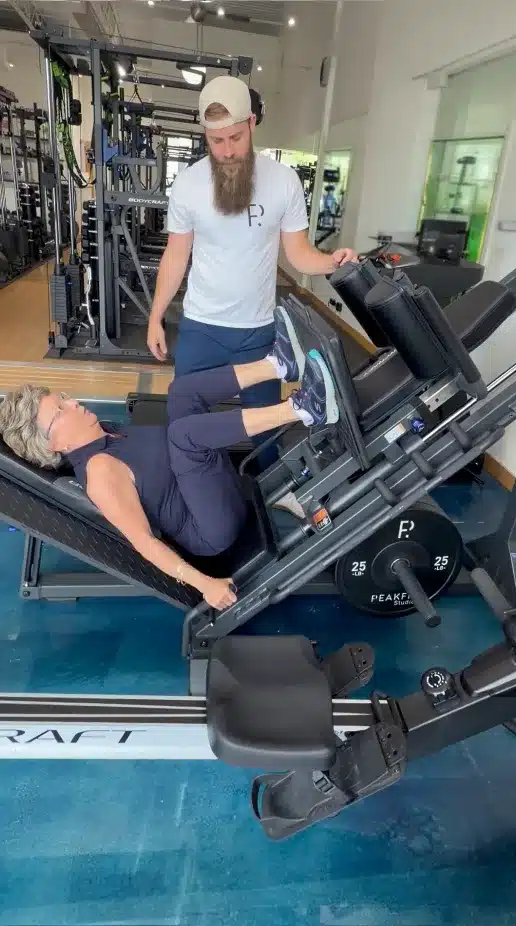
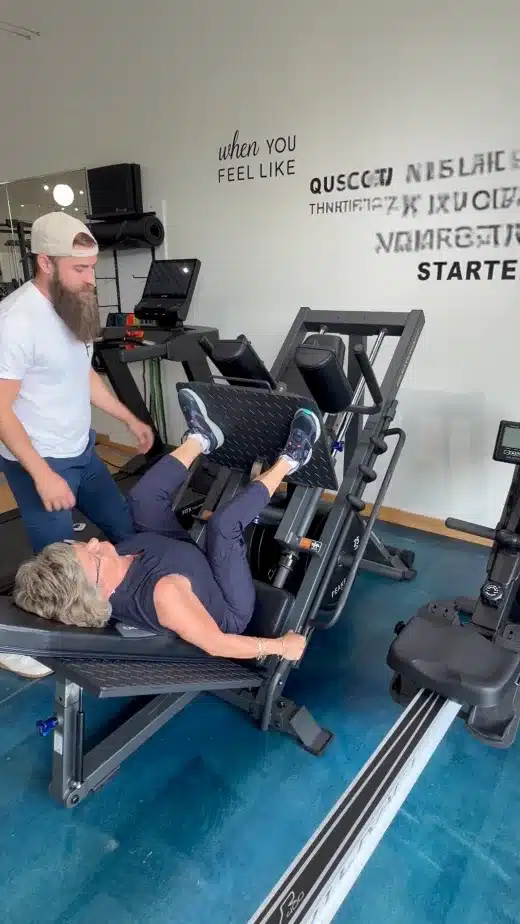
The fix: If a movement hurts a joint, substitute it. If a substitution is not obvious, ask a coach. There is always a version of the pattern that loads your muscle without irritating the joint. Pushing through is the slowest path to results because it leads to injury, which leads to time off, which leads to detraining.
Habit 3: Doing too much cardio and not enough lifting
The intuitive response to wanting to look leaner is to do more cardio. After 40, this is often counterproductive. Long-duration steady-state cardio at moderate-to-high intensities is catabolic to muscle and elevates cortisol. Combined with the gradual loss of muscle mass that happens with aging, the effect is to make the body softer, not harder — even when weight is dropping.
The fix: Strength train three times a week as the primary intervention. Add cardio as zone two work (easy enough to hold a conversation) two to four days a week, and brief intervals once a week if you want. The ratio that works for most adults over 40 is roughly three lifts to one or two structured cardio sessions, not the inverse.
Habit 4: Treating sleep as optional
This is the habit that quietly nukes the most training results in adults over 40. Sleep is not the recovery layer that sits beside training. Sleep is the recovery. Muscle protein synthesis, growth hormone release, glycogen restoration, central nervous system repair — all of it happens while you are asleep.
Six hours per night means your training is operating with the brakes on. You will adapt at maybe half the rate you would on seven and a half. Body composition will be worse. Hunger regulation will be worse. Sessions will feel heavier than they should.
The fix: Seven hours minimum is non-negotiable. Eight is better. Treat it like the most important variable in your program, because it is. Modalities that support sleep quality — infrared sauna in the early evening, red light therapy, consistent bedtime, no screens in the last 30 minutes — all stack quickly.
Habit 5: Copying programs written for 25-year-olds
Most strength training content online is written by and for younger lifters. High frequency, high volume, low rest between sets, aggressive intensity. That programming is not wrong — it is just optimized for a recovery profile that does not match yours.
For an adult over 40, the same volume that builds muscle in a 25-year-old usually accumulates fatigue faster than it can be recovered from. Within four to six weeks, you are overreached: lifts stop progressing, sleep gets worse, mood drops, joints feel worn out.
The fix: Lower volume per session, slightly longer rest between sets, more recovery days, and slower progression. Two to three quality sessions per week with intentional progressive overload outperform four to five sessions of grinding for adults over 40. Less is genuinely more.
What to do with this
If two or more of these habits feel familiar, that is your starting point. You do not need to overhaul everything at once — the swaps compound. Fix the warm-up this week. Fix the cardio-to-lift ratio next week. Sleep the week after.
If you want help auditing your routine and building a program that actually fits an adult body, our personal training and small group training options at PEAKFIT are designed around exactly this. Start where you are. Adjust what is not working. Build from there.