
The idea of small group training is straightforward. The reality of walking into your first session is not. Most newcomers spend half their first class wondering what is happening, where to stand, whether they are doing it right, and whether everyone is looking at them. (They are not. Everyone is too busy doing their own work.)
This is a walkthrough of what actually happens at your first small group training session at PEAKFIT Studio in Arden — minute by minute — so you can show up without that first-session anxiety doing half the work for you.

What small group training actually is
Small group training is the middle path between solo personal training and a typical group fitness class. You get a programmed strength workout, written by a coach, with a coach actively watching and correcting your form. But instead of working one-on-one, there are four to eight people in the room running through the same session at the same time.
What it is not: a high-intensity bootcamp where everyone races each other through random exercises. There is structure. There is programming. There is a real reason for every movement on the board.
Before your first session: what to bring and wear
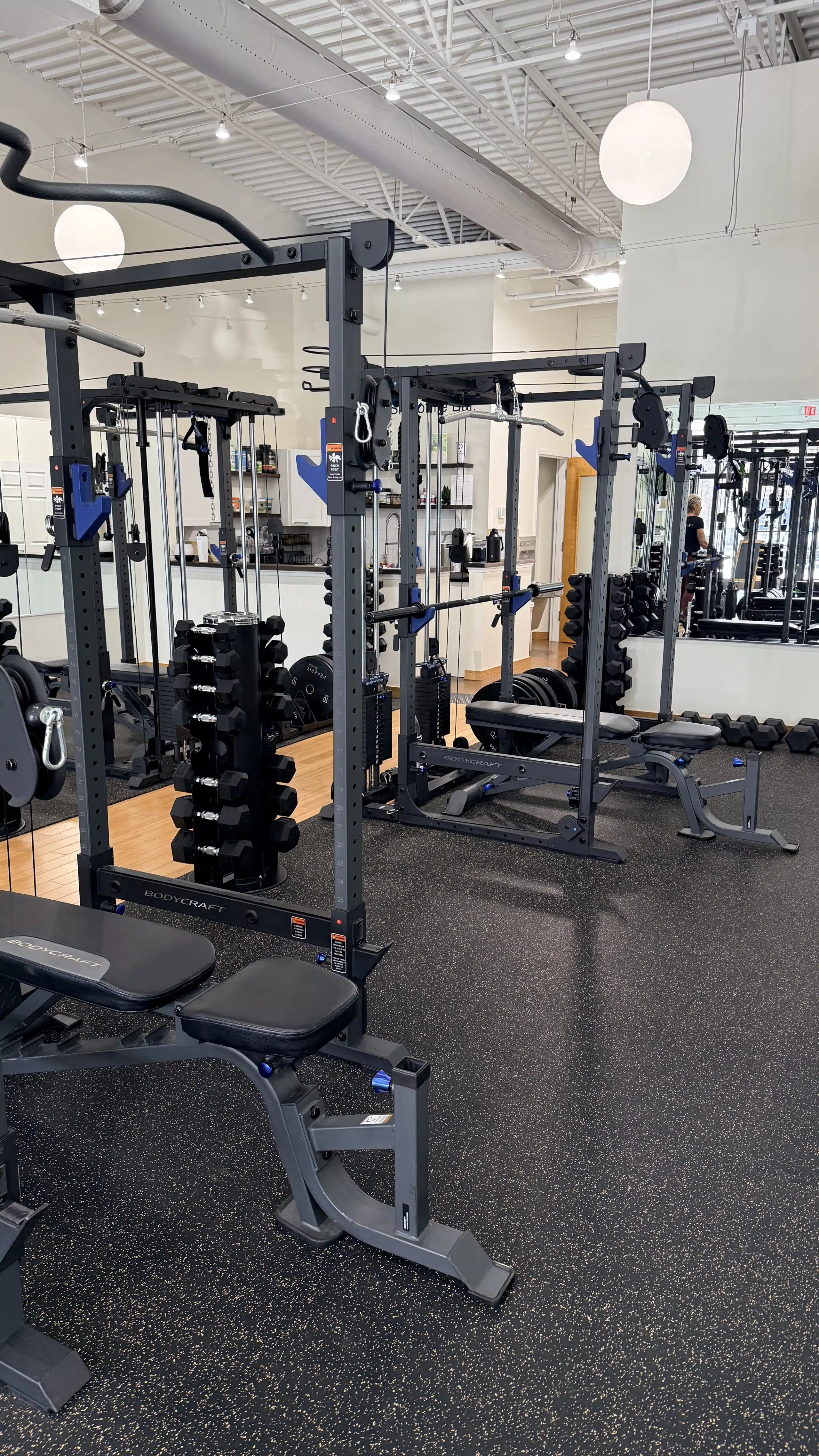
Wear what you would wear to a gym — athletic shoes with a flat sole work best for lifting, but normal sneakers are fine. Bring a water bottle. We provide everything else: kettlebells, dumbbells, barbells, mats, bands, accessories.
Eat something an hour or two before. Not a big meal — just enough that you are not running on fumes. Coffee is fine. Pre-workout is fine if you use it. Just do not show up hungry.
The first ten minutes: check-in and movement screen
You arrive five to ten minutes early. We meet you, walk you through the space, and run you through a brief movement screen if it is your very first session. This is not a test. It is a five-minute look at how you squat, hinge, press, and pull so we can adjust the day’s workout to your starting point.
You will not be judged. We are looking for the inputs we need to program well. If your overhead position is limited, we substitute a landmine press. If your hip mobility is restricted, we adjust your squat depth. Every movement on the board has a regression and a progression. You get the version that fits you on day one.
Minutes 10–20: warm-up
The warm-up is built. We are not just standing around stretching. It is usually six to ten minutes of dynamic mobility, activation, and movement prep that primes the specific patterns you will use that session.
If we are squatting that day, the warm-up loads up your hips, ankles, and glutes. If we are pressing, it works your thoracic spine and shoulders. By the time the actual strength work starts, your body is ready to lift cold but is not gassed by the warm-up itself.
Minutes 20–45: the strength block
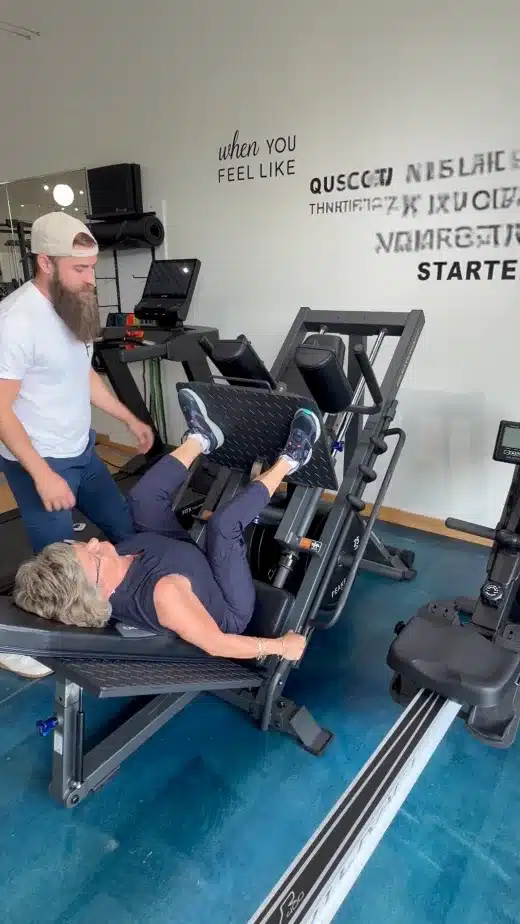
This is the meat of the session. Two to three primary lifts, programmed in straight sets or paired groups, with prescribed reps, sets, and rest. The coach is in the room the entire time, moving between people, giving cues, adjusting loads.
You work at your own weight. The person next to you might be squatting 185. You might be squatting 65. Nobody cares. The programmed sets and reps are the same; the load is yours. This is the part most newcomers misunderstand — small group training is not synchronized aerobics. It is individual programming, executed at the same time, with a coach across the room.
Minutes 45–55: accessory work or conditioning
After the main strength lifts, there is usually a finisher: either accessory work for postural muscles (rows, face pulls, carries, core work) or a brief conditioning block (sled push, rowing intervals, kettlebell circuits). Six to ten minutes, structured, with a clear stopping point.
This is where the heart rate goes up. It is not the entire workout — the strength block is the workout — but it adds capacity and conditioning to the session.
Minutes 55–60: cooldown and check-out
A short cooldown, a few minutes of stretching or breath work, and you log your weights so we can progress them next session. Then we check in: how did it feel, what was hard, what was easy, anything to know for next time. We use that information to program the following session.
What about the intimidation factor
The most common reason adults over 40 hesitate on small group training is the fear of being the slowest, weakest, or most awkward person in the room. Honest answer: the room is not what you think. The average client at PEAKFIT is 45 to 65. Most have come back to training after years away. Almost nobody is showing off. Almost everybody is in the same boat you are, just at a slightly different mile marker.
The energy is supportive, not competitive. You will probably make small talk with the same people every week within a month. That community piece is part of why small group works — you show up because people expect you.
Why it works as well as it does
Small group training hits a sweet spot most other formats miss. You get personalized programming and active coaching, but the cost per session is a fraction of solo personal training. You get group energy and accountability, but with structured strength work, not random circuits. For most adults who want long-term results without paying solo PT prices, it is the right format.
If you are ready to try a session, our small group training schedule is here. First session is the hard one. Sessions two through twelve are where everything starts to click.



Marilyn’s Story: At 82, She Joined PEAKFIT to Lift Her Own Carry-On
Arden’s Only Private Personal Training Studio for Adults 40+ Marilyn had a very specific goal when she walked into PEAKFIT
Antioxidants and Exercise: Why Adults Over 40 Need More (and Where to Get Them)
Arden’s Only Private Personal Training Studio for Adults 40+ Every time you exercise, your body produces free radicals — unstable
Asheville Mountain Lifestyle Fitness That Supports Your Adventures
Key Takeaways Living an active mountain lifestyle in Asheville means your fitness needs to keep up with you, not the