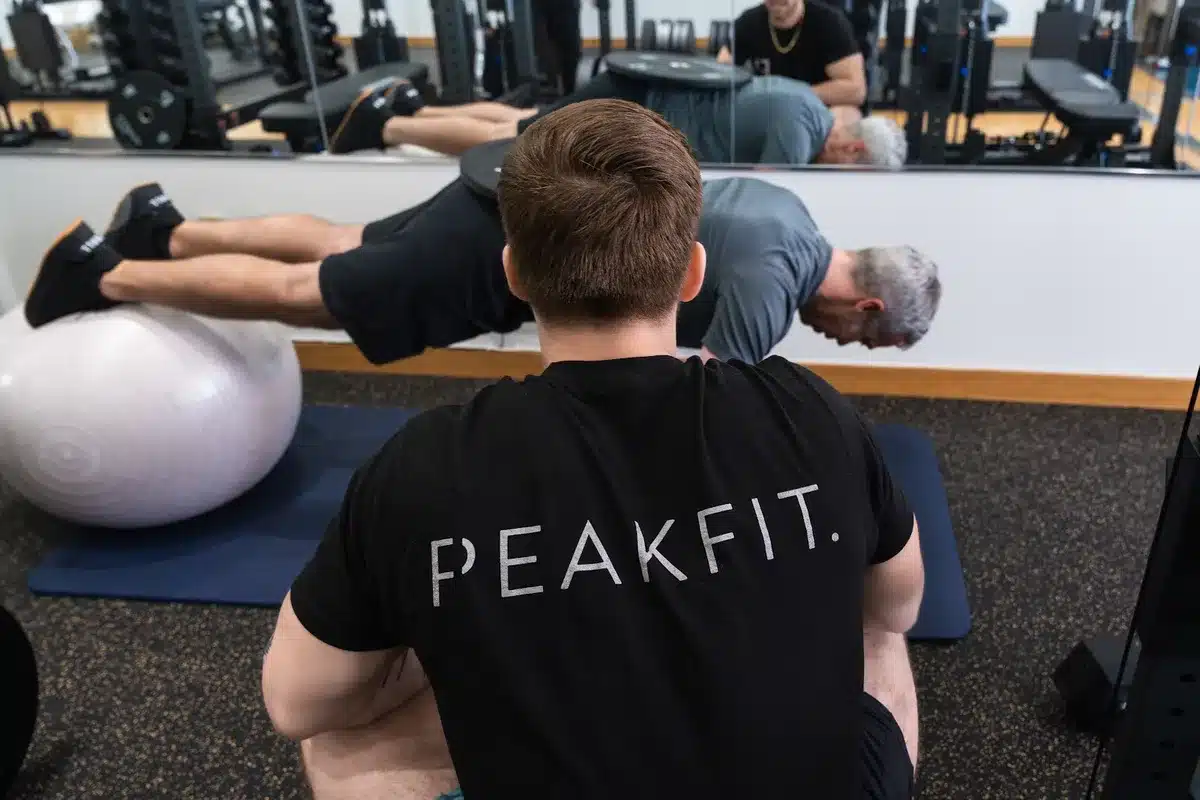

Walk into most gyms and you will see machines designed to isolate muscles. Leg extensions for quads. Bicep curls for biceps. Calf raises for calves. None of that is wrong, exactly. But after 50, isolating a single muscle is not what your life asks of you. Your life asks you to pick up a grandkid. Carry two bags of mulch from the car. Get off the floor without using the coffee table. Reach into the top cabinet without your shoulder complaining.
That is functional fitness. And after 50, it is not a fitness style — it is the difference between independence at 75 and not.
What functional fitness actually means
Strip away the marketing and functional fitness comes down to six movement patterns that show up in everything you do as a human: hinging, squatting, pushing, pulling, carrying, and rotating. Every meaningful real-life movement is one of these or a combination of them.
Train the patterns and you train the strength and stability your body needs in context. Train the muscles in isolation and you build pieces that may not coordinate when life demands they work together.
1. The hinge: protecting your back for the next 30 years
The hinge is what happens when you bend at the hips with a flat back. It is how you pick up anything from the floor — a laundry basket, a bag of dog food, a fallen pen — without putting your lumbar spine at risk.
The trained version is the deadlift, the kettlebell swing, or the Romanian deadlift. The untrained version is the rounded-back lift that ends in a phone call to your chiropractor. After 50, the hinge is arguably the single most important pattern you can own.
2. The squat: getting off the floor and out of chairs
The squat is the movement that determines whether you can lower yourself onto a toilet, into a low car seat, or down to play with a grandkid — and whether you can get back up unassisted. Loss of squat capability is one of the strongest predictors of declining independence in older adults.
You do not need to back-squat 200 pounds. You need to be able to load a goblet squat with 30 to 50 pounds for a clean ten reps. That is the functional minimum, and it pays dividends in mobility, knee health, and bone density.
3. The push: keeping your shoulders alive
Push patterns — overhead pressing, push-ups, bench pressing — do more than build a chest. They preserve shoulder stability and the ability to reach overhead pain-free, which is the first capability most people lose with age.
If you can press a moderate weight overhead with control and reach the top shelf without a winged scapula or shoulder hike, you are protecting decades of independence. If you cannot, that is the first patterns to rebuild.
4. The pull: the antidote to modern posture
Modern life pulls everyone into a forward-rounded posture — phones, computers, steering wheels, kitchen counters. Pull patterns are the only thing that counteracts it. Rows, pull-downs, face pulls, deadlifts. Without them, your shoulders round forward, your neck juts ahead, and your thoracic spine stiffens.
Pull volume should match or exceed push volume in any program for someone over 50. Two-to-one is even better. This is non-negotiable for posture, breathing, and shoulder longevity.
5. The carry: the most underrated exercise in fitness
Carries — loaded walks with kettlebells, dumbbells, or a single farmer’s handle — train grip strength, core stability, posture, and gait in a single movement. They also map almost perfectly onto real life: groceries, suitcases, kids, kitty litter.
Grip strength, by the way, is one of the strongest single predictors of all-cause mortality in adults over 50. Carries train it directly.
6. The rotation: protecting your spine in motion
Most low-back injuries do not happen from heavy lifts. They happen from rotational loads — reaching across the body, turning to grab the seatbelt, twisting to load the dishwasher. Anti-rotation work (Pallof presses, suitcase carries, side planks) trains your trunk to resist torque, which is what your spine actually needs to stay healthy.
How to program these into a real week
You do not need six separate workouts. A sensible week looks like this:
- Day 1: Squat + Push + Carry
- Day 2: Hinge + Pull + Anti-rotation
- Day 3: Optional — mixed full-body or zone two cardio
Two full-body sessions per week covering all six patterns is enough to materially change how your body feels in everyday life within twelve weeks. Three is better. More is not necessarily better.
The Asheville advantage: training that maps to the terrain you live on
If you live in Arden, Asheville, or anywhere in this corner of the Blue Ridge, your terrain is hilly, your trails are uneven, and your weekend probably involves carrying gear. Functional training is not abstract here — it directly trains the capacity you need to enjoy where you live.
That is the way we program at PEAKFIT. Our small group training and personal training sessions are built around these six patterns because they are what makes 60, 70, and 80 look completely different than they used to. Come in, get assessed, and we will build it around the body you have right now.




Luxury Personal Trainer Asheville NC: High-Touch Fitness Coaching
Key Takeaways A luxury personal trainer in Asheville NC delivers a fundamentally different experience from a standard gym membership: individualized
Functional Movement Training Asheville NC: Move Better, Live Longer
Key Takeaways Functional movement training focuses on the patterns your body uses every day, such as bending, reaching, carrying, and
Senior Fitness Training Asheville NC for Adults 60 and Up
Key Takeaways Senior fitness training in Asheville NC addresses the specific physical changes that come with aging, including muscle loss,