

Key Takeaways
- Adults lose 3–8% of muscle mass per decade after 30, accelerating significantly after 40 — strength training is the most effective way to stop it.
- Research published in the Journal of Strength and Conditioning Research shows adults over 40 who lift consistently retain more lean muscle, better bone density, and higher metabolic rates than those who rely on cardio alone.
- Training over 40 requires longer warm-ups, more emphasis on recovery, and smarter programming — not less effort.
- Two to three strength sessions per week produces measurable results; three produces the best outcomes for body composition and long-term health.
- Starting with a professional assessment saves months of guesswork and significantly reduces injury risk.
Training over 40 isn’t about working around your age. It’s about working with your body as it actually is right now — and building it into something stronger than it’s been in years. That’s not wishful thinking. The science is clear, and so is what we see every week with clients at PEAKFIT Studio in Arden.
Why Strength Training Matters More After 40
Most people start thinking seriously about strength training around the time their body starts sending signals they can’t ignore. The mornings get stiffer. Recovering from a hard weekend takes longer. Pants fit differently even though the scale hasn’t moved. These aren’t signs of inevitable decline — they’re signs that your training approach needs to evolve.
Here’s what’s actually happening inside your body. After age 30, adults begin losing muscle tissue at a rate of 3–8% per decade, a process called sarcopenia (American College of Sports Medicine, 2019). That rate accelerates after 40. Alongside muscle loss, bone density drops, metabolic rate slows, and the hormonal environment shifts — lower testosterone in men, changing estrogen levels in women — making it harder to build lean mass and easier to gain fat.
The good news: resistance training directly addresses every one of these changes. A 2019 study in Medicine & Science in Sports & Exercise found that adults over 40 who participated in progressive strength training programs showed meaningful increases in muscle cross-sectional area, improved bone mineral density, and enhanced hormonal profiles compared to sedentary controls. You don’t just slow the process down. You can genuinely reverse some of it.
At PEAKFIT Studio, strength training for adults in Asheville and the surrounding areas is built around this exact science — not around what works for a 25-year-old trying to add mass for summer.
What Actually Changes About Your Body After 40
Understanding the biological shifts helps you train smarter instead of just training harder.
Recovery takes longer. After 40, the window between a quality session and genuine recovery extends. Growth hormone, which drives tissue repair, is released primarily during deep sleep — and sleep quality tends to decline with age (National Sleep Foundation, 2020). This means the time between sessions matters as much as the sessions themselves. Training three days a week with adequate rest between sessions typically outperforms five days a week with insufficient recovery.
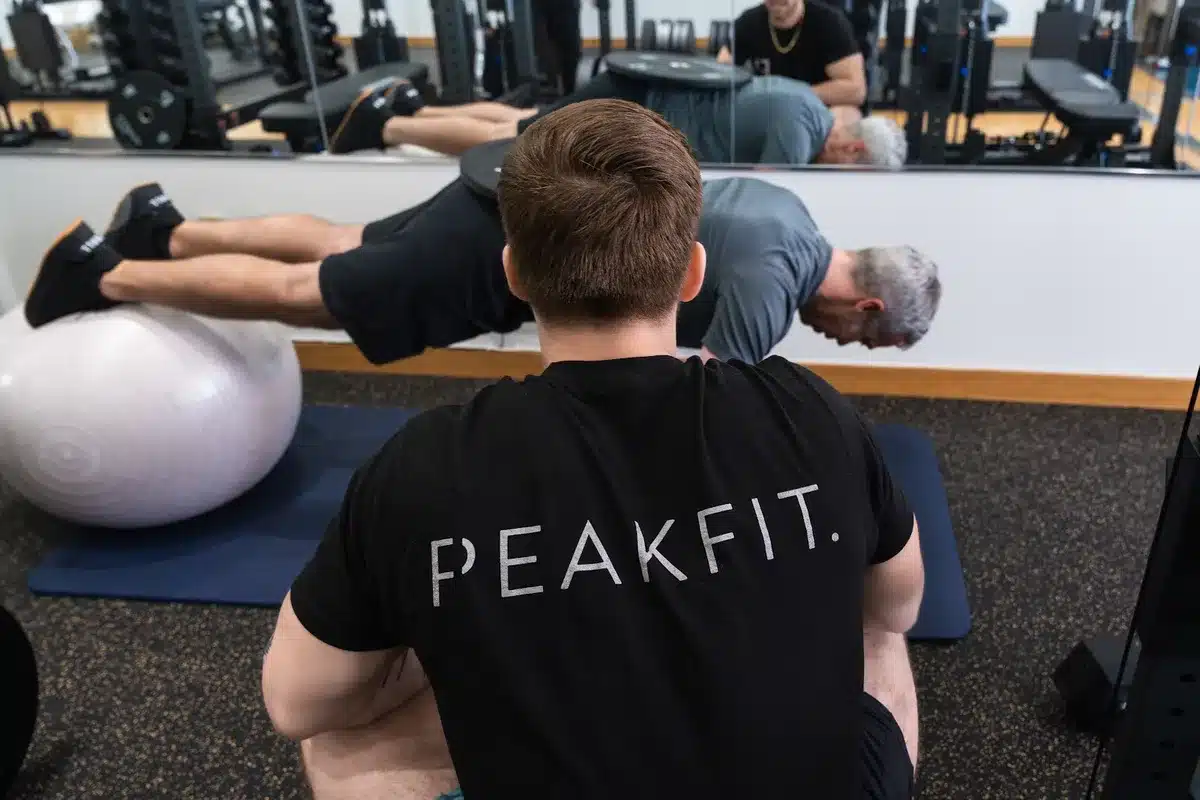
Your nervous system needs more warm-up time. Neuromuscular efficiency — how quickly your brain recruits muscle fibers — changes with age. A proper warm-up before lifting isn’t optional at 40+. It’s the difference between a productive session and a pulled muscle. At PEAKFIT, every session starts with a guided group warm-up that prepares your joints and activates the muscles you’ll actually be using.
Joint stress accumulates differently. Years of movement patterns, past injuries, and postural habits show up in the body over time. High-impact exercises that caused no issues at 28 can become problems at 45. This doesn’t mean avoiding challenge — it means selecting the right exercises and variations. Goblet squats instead of barbell back squats for new clients with hip mobility limitations. Trap bar deadlifts instead of conventional pulls for those with lower back history. Smart substitutions, same stimulus.
Protein utilization shifts. Research from the University of Arkansas (2020) found that older adults experience “anabolic resistance” — meaning the body is less efficient at converting dietary protein into muscle tissue. The practical implication: you likely need more protein per pound of bodyweight than you did in your 20s, and timing matters more. This is one of the reasons PEAKFIT’s nutrition counseling program is built directly into our coaching model rather than treated as an afterthought.
The Right Way to Build a Strength Program After 40
There’s no shortage of strength training advice online. The problem is most of it is written for younger athletes chasing aesthetics, not for adults over 40 managing real lives, real schedules, and real physical histories.
Here’s what an effective program actually looks like at this stage of life.
Train 2–3 days per week, consistently. Consistency beats intensity at every age, but especially after 40. A 2021 meta-analysis in the British Journal of Sports Medicine found that two to three weekly resistance training sessions produced comparable strength gains to four or more sessions per week in adults over 40, with significantly lower injury rates. More is not automatically better. Better is better.
Build around compound movements. Squats, hinges (deadlifts, Romanian deadlifts), presses (bench, overhead), rows, and carries are the foundation of any quality program. These movements train multiple muscle groups simultaneously, produce the greatest hormonal response, and build functional strength that carries over to daily life. An expert personal trainer in Arden, NC will select appropriate variations based on your mobility and history.
Progress with intention. Progressive overload — gradually increasing the challenge over time — is the mechanism behind all strength gains. But after 40, progression doesn’t always mean adding weight to the bar. It can mean adding reps, improving form quality, reducing rest time, or increasing range of motion. Tracking progress matters, which is why PEAKFIT clients train with structured programs through the Trainerize app, not random workouts.
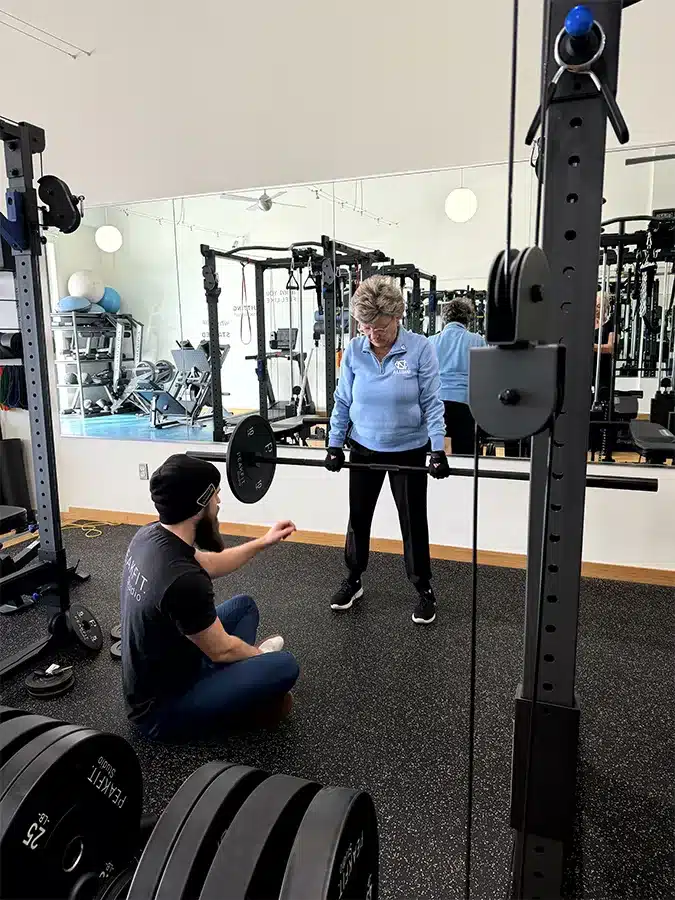
Prioritize mobility alongside strength. Tight hips, limited shoulder mobility, and restricted thoracic rotation are common in adults over 40 — and they become limiters in the gym if ignored. Assisted stretching sessions with a certified flexologist work directly on these restrictions. Dakota Hall, PEAKFIT’s certified flexologist and trainer, works with clients specifically to restore the range of motion that makes strength training both more effective and more comfortable.
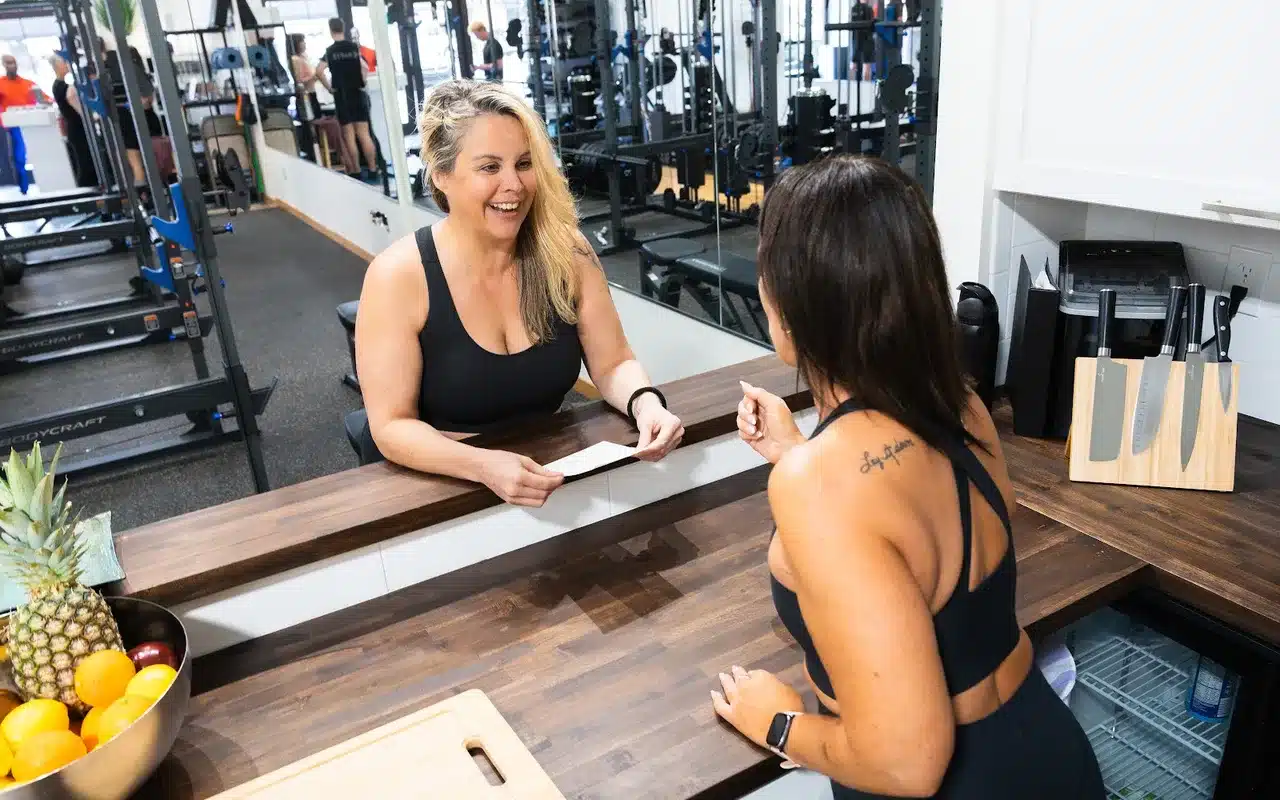
Know your numbers before you start. A body composition assessment using an InBody scan tells you your actual muscle mass, body fat percentage, and how weight is distributed across your body. This baseline matters enormously. Two people at the same scale weight can have completely different body compositions — and they need completely different programs. The free consultation at PEAKFIT includes an InBody scan precisely for this reason.
Small Group Personal Training vs. One-on-One: Which Is Right for You?
Most adults over 40 in Asheville, Hendersonville, and Fletcher are choosing between two training models: personalized one-on-one sessions or small group personal training. Both work. They work differently.
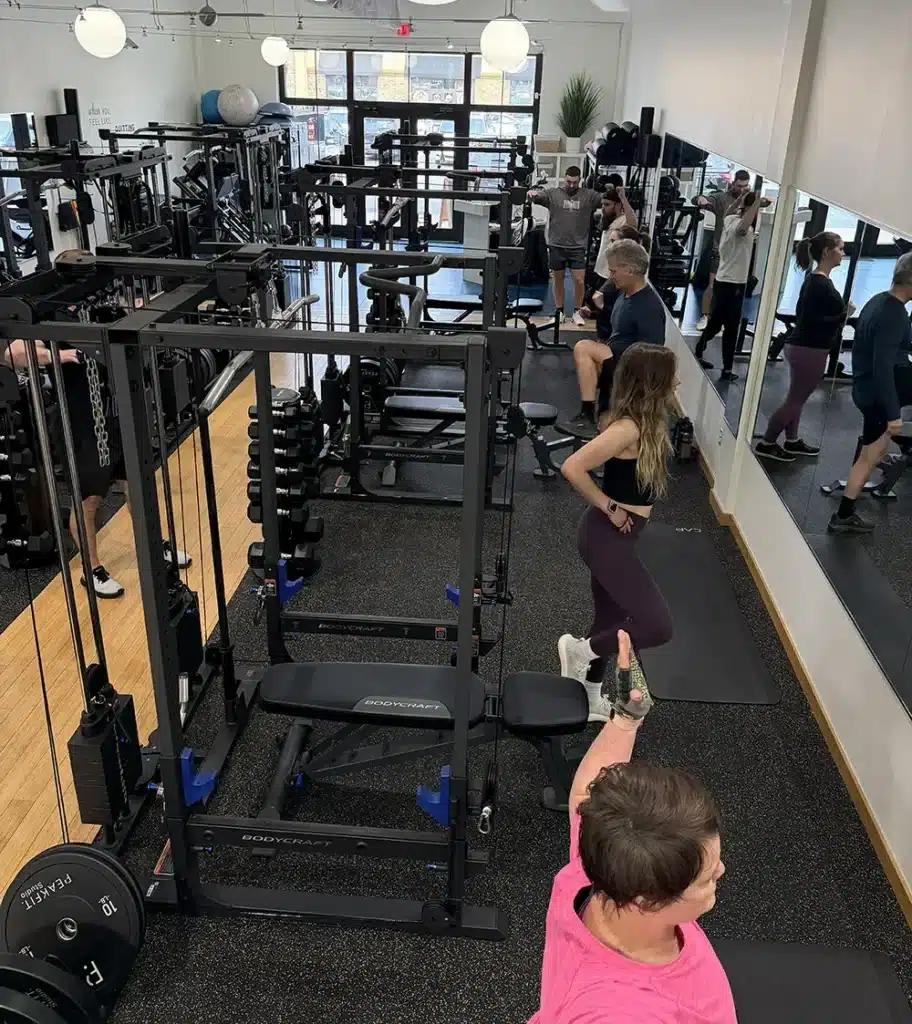
Small group personal training at PEAKFIT is capped at six members per class. Every session is coach-led, fully programmed, and built around the same principles as a one-on-one session — just with the added energy and accountability of a small community. For most adults starting out, this is the right entry point. The social dynamic is real. Clients push a little harder, show up more consistently, and enjoy the process more.
One-on-one training at PEAKFIT sits at the opposite end of the spectrum: 12 private sessions per month, your own training station, corrective exercise and mobility built in, weekly nutrition check-ins, and InBody scans every 30 days. It’s the right choice for clients with significant injury history, specific performance goals, or schedules that require maximum flexibility.
The personal training advantage isn’t in one format over another. It’s in the coaching, the programming, and the consistency that professional guidance produces over time.
When Physical Therapy Ends, Strength Training Begins
Physical therapy does something important: it gets you out of pain and restores basic function. But discharge from PT is often the moment people are most at risk of sliding backward.
You’ve worked hard to manage your pain, rebuild range of motion, and move without fear. Then your physical therapist releases you — with good reason. The clinical work is done. But the gap between “pain managed and functional” and “genuinely strong and resilient” is wide, and most people have no plan to cross it. They go home, life takes over, and six months later they’re back to where they started.
This is exactly where PEAKFIT comes in. We work in close coordination with physical therapists across the Asheville and Arden areas to make sure that transition doesn’t fall apart. When a PT determines their patient is ready to progress beyond clinical rehab, PEAKFIT is equipped to take it from there — building real, progressive strength on top of the foundation the PT created.
Your physical therapist focused on restoring function and eliminating pain. Our job is to build the muscle, bone density, and movement quality that makes sure that pain doesn’t come back. The two approaches are complementary, and the handoff matters. Research from the Journal of Orthopaedic & Sports Physical Therapy (2020) consistently shows that patients who transition into structured strength training following discharge maintain their gains far longer than those who return to unsupervised activity.
At PEAKFIT, both personal training and small group personal training are appropriate paths depending on where you are post-PT. Clients with more complex histories or multiple areas of concern often benefit from one-on-one sessions initially. Those with a clear movement baseline and a single area of focus frequently do well moving directly into small group personal training, where the community dynamic adds a layer of consistency that solo training rarely matches.
If you’ve recently been discharged from physical therapy in the Asheville, Hendersonville, or South Asheville area and you don’t yet have a strength plan in place, that’s the conversation to start. Reach out to PEAKFIT Studio and we’ll talk through where you are, what your PT recommended, and what the right next step looks like for you.
Recovery Is Part of the Program
This is where a lot of adults over 40 lose gains they’ve worked hard to earn. They train well, eat reasonably, and then neglect recovery entirely — no sleep focus, no mobility work, no intentional downwind time for the nervous system.
Recovery at PEAKFIT isn’t passive. The studio offers infrared sauna sessions, red light therapy, and assisted stretching — all designed to support the physical work you’re doing in the gym. Infrared sauna uses deeply penetrating heat that may support circulation and tissue relaxation after intense training sessions. Red light therapy sessions are designed to support recovery and skin cell health. These aren’t luxury add-ons. For adults over 40 training seriously, they’re tools that help you show up to the next session ready to work.
Explore all wellness and recovery services at PEAKFIT to see how each one fits into a complete training approach.
Common Mistakes Adults Over 40 Make in the Gym
Getting these wrong costs months of progress. Getting them right speeds everything up.
Skipping the assessment. Starting a program without knowing your body composition, mobility limitations, and movement patterns is like getting directions without knowing your starting point. PEAKFIT’s free consultation includes an InBody scan and an intro training session — there’s no good reason to skip it.
Training like you’re 25. High-volume, high-intensity programming built for younger bodies doesn’t translate well past 40. More soreness isn’t more progress. More isn’t more.
Neglecting protein. Aiming for 0.7–1.0 grams of protein per pound of bodyweight supports muscle retention and growth in adults over 40 (International Society of Sports Nutrition, 2017). Most people eating normal American diets fall short of this without tracking.
Treating cardio as the primary tool. Cardio supports heart health and recovery. It doesn’t build or preserve muscle tissue in any meaningful way. Strength training is the tool for body composition — cardio supports it.
Going it alone too long. The fitness industry has convinced people that you should figure it out yourself first and hire a trainer when you’ve already made progress. The opposite is true. Professional coaching from the start sets the foundation correctly, reduces injury risk, and gets results faster.
If you’re in the South Asheville, Arden, Hendersonville, or Fletcher area and you’re ready to train with a program designed for where you actually are right now, contact PEAKFIT Studio to get started.
What to Expect in Your First 90 Days

Results from strength training don’t happen overnight, but they happen faster than most people expect when the program is right.
Weeks 1–4 are about adaptation. Your nervous system is learning new movement patterns. You might not feel dramatically different in the mirror yet, but your strength is already increasing — sometimes significantly. This is when good form habits get established, which protects everything that follows.
Weeks 5–8 bring visible changes. Body composition starts shifting. Clients typically report better sleep, more energy, and reduced joint stiffness by this point. The program gets harder as your body adapts.
Weeks 9–12 are when the compound effect becomes obvious. The muscle you’ve been building starts showing. Your strength numbers are meaningfully higher than week one. The InBody scan at week 12 shows actual data to confirm what you’re feeling. This is the point where clients commit to the next phase.
For adults who’ve been out of structured training for years, personal training in Arden, NC designed specifically for this stage of life produces results that feel genuinely surprising. Not because it’s complicated — because it’s consistent and correct.
Frequently Asked Questions
Is strength training safe for adults over 40 with past injuries?
Yes, with appropriate modifications. A qualified trainer will assess your movement history and design a program around your limitations rather than ignoring them. Many clients at PEAKFIT come in with back issues, knee history, or shoulder limitations and train productively and safely. The key is working with a coach who understands corrective exercise and knows when to substitute movements rather than push through problems.
How many days per week should I lift weights after 40?
Two to three days per week is the research-supported sweet spot for most adults over 40. This frequency produces meaningful strength and body composition improvements while allowing adequate recovery between sessions. Training every day is rarely better — and often counterproductive for this demographic.
Will strength training make me bulky?
No. Building significant muscle mass requires years of dedicated training, very high caloric intake, and hormonal conditions that most adults over 40 don’t have in abundance. What strength training produces is a leaner, more defined physique with better posture and improved functional capacity. The “bulky” fear is one of the most persistent myths in fitness.
How does strength training affect bone density after 40?
Significantly. Resistance training places controlled mechanical stress on bones, which stimulates bone-building cells called osteoblasts. Research from the NIH shows regular strength training can meaningfully improve or maintain bone mineral density in adults over 40 — particularly important for women approaching or past menopause, who face accelerated bone density loss.
Do I need to eat differently when strength training after 40?
Yes. Protein needs increase with age and become especially important to support muscle protein synthesis. Most adults over 40 benefit from eating 0.7–1.0 grams of protein per pound of bodyweight per day, distributed across meals. Carbohydrate and fat needs vary by individual. PEAKFIT’s nutrition counseling program provides personalized guidance around your training schedule and goals.
What’s the difference between small group personal training and one-on-one at PEAKFIT?
Small group personal training at PEAKFIT is capped at six members, fully programmed, and coach-led — bringing the benefits of personalized attention in a community environment. One-on-one training offers maximum individualization with private sessions, corrective exercise focus, weekly nutrition check-ins, and monthly InBody scans. Both are built on the same strength-first philosophy. The right choice depends on your goals, history, and preferences.
I was recently discharged from physical therapy. Can I start training at PEAKFIT?
Yes, and this is one of the most common entry points for PEAKFIT clients. Physical therapy restores function and manages pain — strength training builds on that foundation to make sure the pain doesn’t return. PEAKFIT works with post-PT clients regularly and coordinates with physical therapists when appropriate. The free consultation is the right place to share your PT history and discuss what a safe, progressive program looks like for your specific situation.
I haven’t trained in years. Is PEAKFIT the right fit?
Absolutely. Most PEAKFIT clients are adults who’ve been inconsistent for years or who are starting fresh with fitness after 40. The studio was built specifically for this demographic — not converted CrossFit programming. The free consultation with InBody scan is the right first step regardless of your current fitness level.
Train Strong at Every Age
Strength training after 40 isn’t a concession to getting older. It’s one of the most powerful tools you have for living better — more energy, stronger bones, leaner body composition, sharper cognition, and greater resilience in everything else you do. The adults at PEAKFIT Studio in Arden who train consistently don’t just look better. They feel better in ways that reach into every corner of their lives.
The step inside PEAKFIT experience is worth seeing for yourself. A clean, private, fully equipped training environment in South Asheville built for serious adults who want real results.
Ready to get started? Schedule your free consultation today. You’ll get a free InBody body composition scan, an intro training session, and a clear picture of exactly what your program should look like. No pressure, no contracts — just a conversation about where you are and where you want to go.
PEAKFIT Studio 100 Julian Ln, Suite 120 | Arden, NC 28704 (828) 620-7020 | hello@peakfit.studio Monday–Friday: 6 AM–8 PM | Saturday: 8 AM–6 PM | Sunday: By Appointment





Luxury Personal Trainer Asheville NC: High-Touch Fitness Coaching
Key Takeaways A luxury personal trainer in Asheville NC delivers a fundamentally different experience from a standard gym membership: individualized
Functional Movement Training Asheville NC: Move Better, Live Longer
Key Takeaways Functional movement training focuses on the patterns your body uses every day, such as bending, reaching, carrying, and
Senior Fitness Training Asheville NC for Adults 60 and Up
Key Takeaways Senior fitness training in Asheville NC addresses the specific physical changes that come with aging, including muscle loss,