


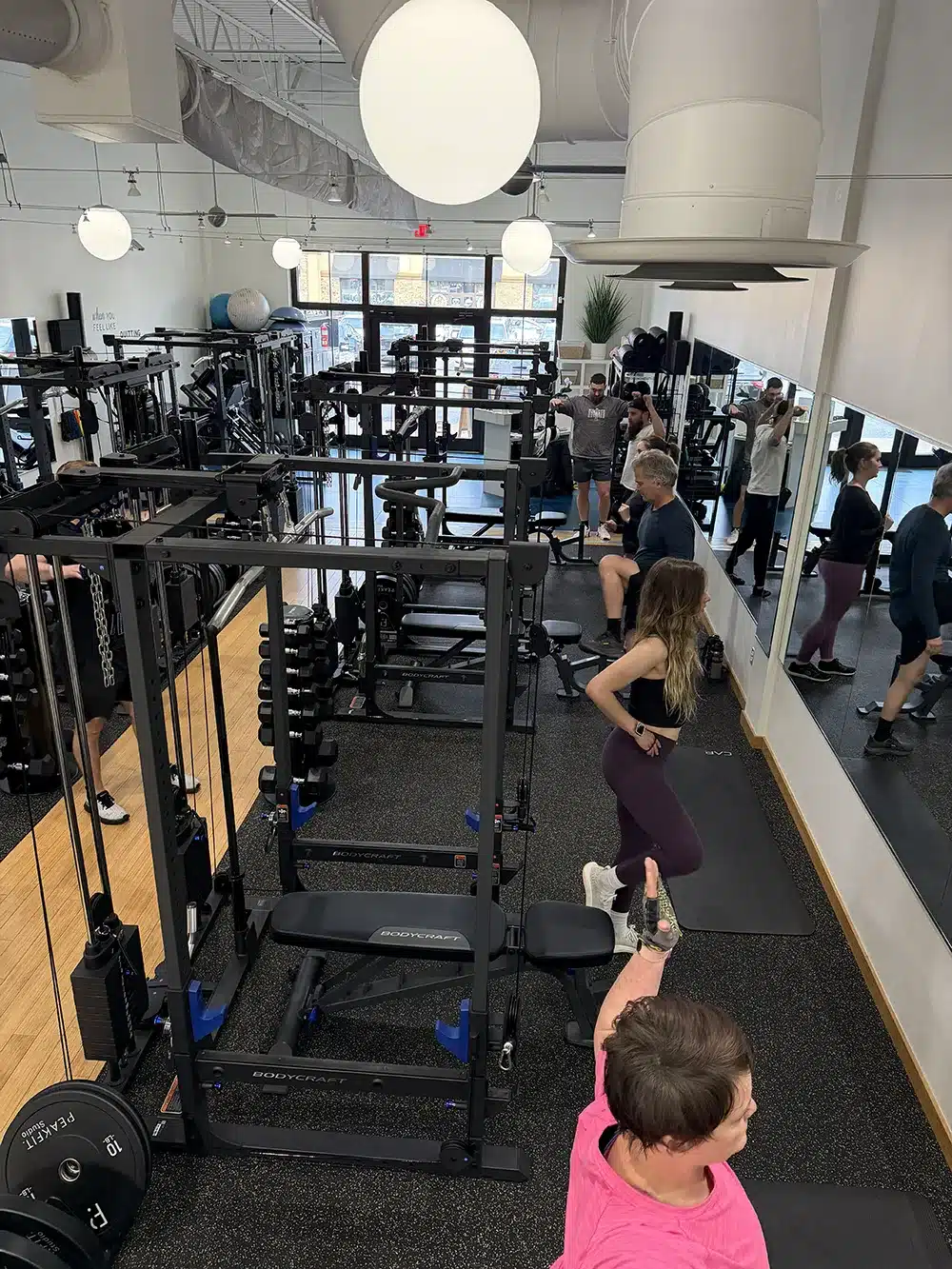
Solo training has its place. Big group fitness classes have their place. But small group training has been quietly eating market share from both formats for a specific reason — it solves problems neither one can. Here are eleven benefits that show up consistently for clients at PEAKFIT Studio in Arden, especially for adults over 40 who want real results without the cost or isolation of solo personal training.
1. Cost-per-session math that actually pencils out
Solo personal training in the Asheville area runs $75–$120 per hour. Small group personal training typically runs $30–$50 per session. For most adults training two to three times per week, that is the difference between a sustainable rhythm and a quarterly renegotiation with your budget. Same coach, same programming, same form correction — at a fraction of the cost.
2. Coaching density that solo workouts can’t match
Training alone, your only feedback is what you can see in a mirror and what your body tells you (often late, and often wrong). In a small group with an active coach, every set has eyes on it. With a 1:6 to 1:8 ratio, you still get individual cues — plus the meta-benefit of watching the coach work other people. You learn from corrections that are not even directed at you.
3. Built-in accountability from familiar faces
The hardest part of training is showing up. The single highest-leverage factor in adherence is not motivation. It is expectation. When the same five or six people are in the room with you every Tuesday at 6am, missing a session is no longer a private decision. The room expects you. Most clients show up on the days they would have skipped purely because of this dynamic.
4. Programming that is actually written
A boutique chase-the-burn class is programmed for entertainment — raise heart rate, generate chaos, leave sweaty. Small group personal training is programmed for adaptation: progressive overload, periodized intensity, planned deload weeks. The work is intentional. Twelve weeks in, you can measure progress. In a chase-the-burn class, you cannot.
5. You progress alongside peers
The person next to you bumped their deadlift up ten pounds this week. You notice. You bump yours too. The social pull is real, and it works on adults the way nothing else does. Solo training requires you to manufacture motivation from scratch every session. Small group training spreads that load across the room.
6. Coaches catch the patterns only weeks of observation reveal
A solo PT session is a snapshot. Small group training over time is a film. Your coach starts to notice the cues that actually matter: how your hip mobility tightens by Thursday, how your bench warmup looks different when you slept poorly, how your overhead press loses position when you skip your mobility work. Pattern recognition like that is impossible in a one-off session.
7. Higher adherence rates than almost any other format
Industry retention data and our own numbers both point the same direction. Small group training has the highest one-year retention of any group format — often two to three times higher than big-box gym classes. People stay because the format does what it is supposed to do: produce visible progress while feeling sustainable.
8. Reduces decision fatigue
You do not have to write the program. You do not have to design the warmup. You do not have to figure out which lift to do or how many sets. The program is on the board. You execute. For most adults — running businesses, raising kids, making 200 other decisions a day — this matters more than people admit.
9. A friendlier room than the open gym floor
The intimidation factor of a commercial gym is real, and it disproportionately affects beginners, women, and adults coming back to training after years away. A small group room of six to eight people you see every week is qualitatively different. Names get learned. Conversations happen. The vibe is closer to a workplace team than an arena.
10. Faster skill acquisition than typical classes
Standard group fitness classes do not teach. They lead. You follow. In a small group personal training format, the coach actually teaches you to deadlift, then teaches you to deadlift better, then progresses your deadlift. Six months in, you are a substantially better mover. In a typical class format, six months in, you are just six months older.
11. Long-term retention that compounds into actual fitness
This is the meta-benefit. Because adherence is higher, because programming is real, because the social structure pulls you back even on hard weeks, the total volume of training you accumulate over a year in small group is meaningfully higher than what you would accumulate solo or in big classes. Fitness is a long game won by total volume, not session intensity.
If you are in Arden, Asheville, or Hendersonville and want to feel what these eleven benefits look like in practice, book an intro at PEAKFIT. The first session is the hard one. Sessions two through twelve are where it all clicks.





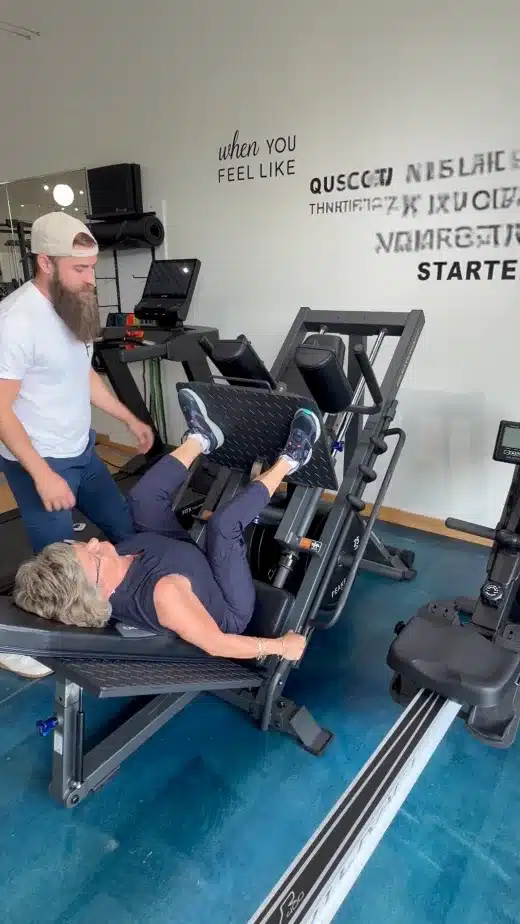


Marilyn’s Story: At 82, She Joined PEAKFIT to Lift Her Own Carry-On
Arden’s Only Private Personal Training Studio for Adults 40+ Marilyn had a very specific goal when she walked into PEAKFIT
Antioxidants and Exercise: Why Adults Over 40 Need More (and Where to Get Them)
Arden’s Only Private Personal Training Studio for Adults 40+ Every time you exercise, your body produces free radicals — unstable
Asheville Mountain Lifestyle Fitness That Supports Your Adventures
Key Takeaways Living an active mountain lifestyle in Asheville means your fitness needs to keep up with you, not the