
How to Start Working Out After 60: A Complete Beginner’s Guide
Key Takeaways
|

You’ve decided it’s time. Maybe your doctor recommended more activity. Maybe you want to keep up with grandchildren. Maybe you’re simply tired of feeling stiff when you get out of bed. Whatever brought you here, starting a fitness routine after 60 is one of the best decisions you can make for your health, independence, and quality of life.
Here’s what most beginner fitness programs get wrong: they assume everyone starts from the same place. At PEAKFIT Studio in Arden, we see clients in their 60s, 70s, and beyond with vastly different backgrounds as part of our comprehensive senior fitness training programs. Some were athletes decades ago. Others haven’t exercised since high school PE. The approach that works depends entirely on where you’re starting from.
This guide walks you through exactly how to begin safely, build momentum, and create lasting habits that serve you for years to come.
Why Starting After 60 Is Different (And Why That’s Okay)
Your body at 60 isn’t the same as it was at 30, but that doesn’t mean it’s worse. It’s different. Understanding these differences helps you train smarter, not harder.
Recovery takes longer. Research published in the Journal of Applied Physiology shows that muscle recovery time increases by approximately 20% per decade after age 30 (Lexell, 1995). A workout that would have you bouncing back in 24 hours at 35 might need 48-72 hours at 65. This isn’t a limitation. It’s information that shapes your training schedule.
Joints require more warmup. Synovial fluid, the natural lubricant in your joints, becomes less viscous with age. A proper warmup of 10-15 minutes increases fluid production and prepares your body for movement. Skipping this step is where many beginners run into trouble.
Muscle responds remarkably well to training. Research from the University of Birmingham shows that adults in their 70s and 80s who begin resistance training can build muscle at nearly the same rate as younger adults, provided they follow proper protocols (Distefano et al., 2017). Your muscles haven’t given up on you. They’re waiting for the signal to grow.
Before You Start: The Foundation Steps
Step 1: Get Medical Clearance
Schedule a conversation with your doctor. This isn’t about getting permission. It’s about understanding any specific considerations for your situation. Bring a list of your current medications, ask about any movement restrictions, and get clarity on warning signs to watch for during exercise.
The American College of Sports Medicine recommends that previously inactive adults over 65 consult with a healthcare provider before beginning moderate to vigorous exercise programs (ACSM, 2022).
Step 2: Establish Your Baseline
Know where you’re starting. Can you walk for 10 minutes without stopping? Can you stand up from a chair without using your hands? Can you reach your arms overhead? These simple assessments reveal your current capabilities and help track progress over time. At PEAKFIT, we use InBody composition analysis to establish precise baseline measurements, capturing muscle mass, body fat percentage, and hydration levels so your progress goes well beyond what the scale shows.
Step 3: Define Your “Why”
Generic fitness goals like “get in shape” rarely stick. Specific, meaningful goals do. Some examples from our clients:
- “I want to carry my own groceries without help”
- “I want to get on the floor and play with my grandchildren”
- “I want to travel without worrying about walking distances”
- “I want to reduce my blood pressure medication”
Your First Six Weeks: The Habit Phase
The biggest mistake beginners make is doing too much too soon. Your first six weeks shouldn’t be about pushing limits. They should be about building the habit and learning proper movement patterns.
Weeks 1-2: Movement Introduction
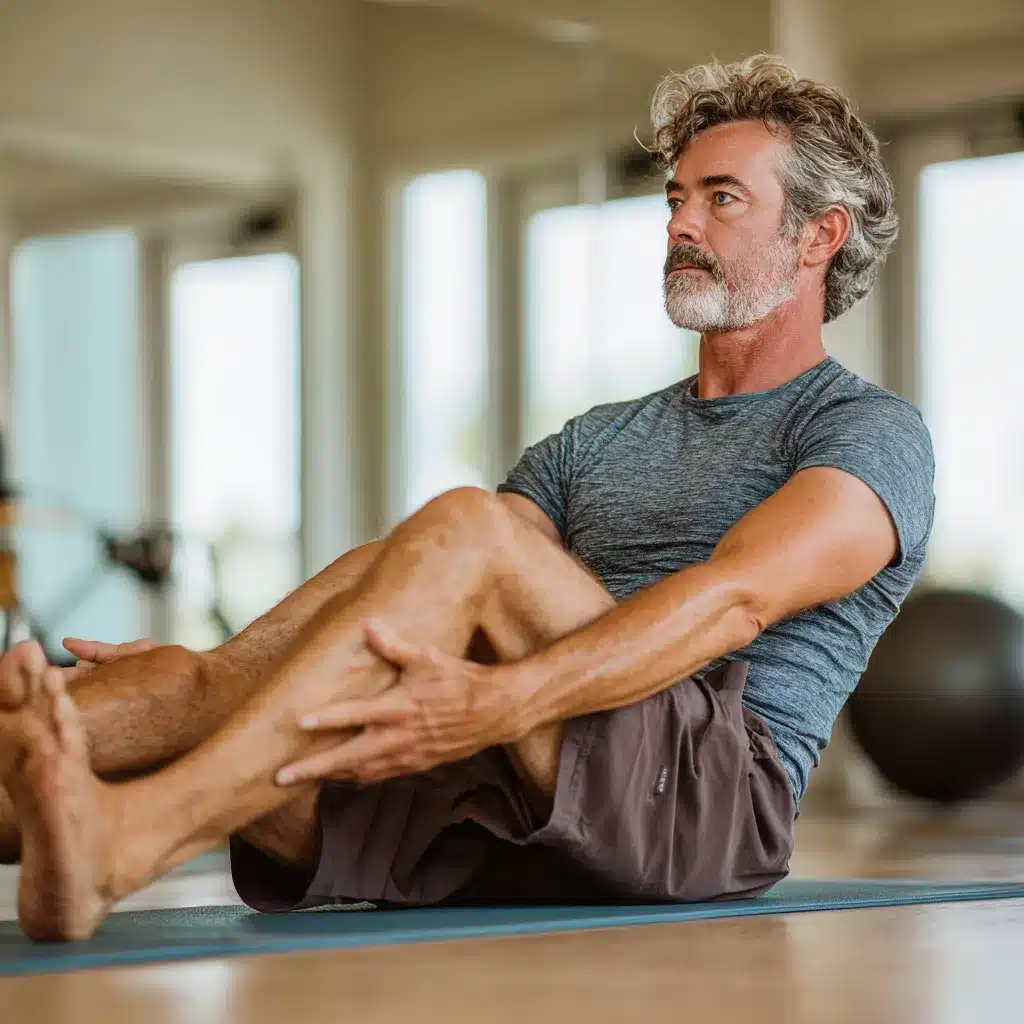
Frequency: 2-3 sessions per week, 20-30 minutes each.
During these first sessions, you’re not trying to break a sweat. You’re learning how your body moves. A qualified trainer will assess your posture, identify any muscle imbalances, and teach you fundamental movements like squatting to a chair, stepping up and down, and reaching safely.
Weeks 3-4: Building Consistency
Frequency: 3 sessions per week, 30-40 minutes each.
Now you start adding light resistance. This might mean bodyweight exercises, resistance bands, or light weights. The goal is still form over intensity. You should finish each session feeling energized, not exhausted.
This is also when recovery becomes part of the conversation. Clients in this phase often experience their first assisted stretching session or learn about how our infrared sauna and red light therapy for seniors supports muscle recovery between sessions.
Weeks 5-6: Progressive Loading
Frequency: 3 sessions per week, 40-45 minutes each.
With proper form established, you can now begin increasing demands gradually. Progressive overload might mean adding 2 pounds to an exercise, doing one extra repetition, or walking 30 seconds longer. Small increases compound into big results.
How to Start Working Out After 60 – A Complete Guide
The Four Pillars of Senior Beginner Fitness
A complete fitness program for adults over 60 addresses four distinct areas:
1. Strength Training
Resistance training isn’t optional after 60. It’s essential. According to research from the Harvard T.H. Chan School of Public Health, strength training twice weekly reduces the risk of premature death from all causes by 23% (Gorzelitz et al., 2022). Our strength training programs for older adults focus on fundamental movements: pushing, pulling, squatting, hinging, and carrying. These translate directly to daily activities like lifting grandchildren, opening heavy doors, or carrying luggage.
2. Balance and Stability
Falls are the leading cause of injury death among adults 65 and older, according to the CDC. But here’s what’s encouraging: balance is trainable at any age. Simple exercises like single-leg stands, heel-to-toe walking, and weight shifts dramatically improve stability. Our balance and fall prevention training combines these targeted exercises with strength work, since strong legs and core muscles are fundamental to staying upright.
3. Flexibility and Mobility
Stiffness isn’t inevitable. It’s a symptom of underuse. Regular stretching and mobility work keeps joints healthy and maintains your range of motion. Dakota Hall, our certified flexologist at PEAKFIT, specializes in PNF assisted stretching, a technique that produces greater flexibility gains than stretching alone. You can learn more about our full team’s specializations. Clients routinely report improved ability to reach overhead, turn their heads while driving, and bend without discomfort.
4. Cardiovascular Health
Your heart is a muscle. It needs training too. The American Heart Association recommends 150 minutes of moderate-intensity aerobic activity weekly for adults. For beginners, this might start as five 10-minute walks and build from there. Walking, swimming, cycling, and circuit-style resistance training all elevate heart rate effectively without pounding your joints.
Common Beginner Mistakes (And How to Avoid Them)
Comparing Yourself to Others
The person next to you lifting heavier weights might have been training for years. Your only competition is yesterday’s version of yourself. Progress is personal.
Ignoring Pain Signals
“No pain, no gain” is terrible advice at any age. Sharp pain, joint pain, or pain that persists after exercise are all signals to stop and reassess. Muscle fatigue is normal. Pain is not.
Skipping Warmup and Cooldown
These aren’t optional extras. A proper warmup prepares your body for work. A cooldown helps your nervous system return to baseline and supports recovery. Plan for 10 minutes of each.
Neglecting Nutrition
Exercise creates the stimulus for change. Nutrition provides the building blocks. Protein needs actually increase with age. The recommended daily allowance of 0.8 grams per kilogram of body weight is insufficient for older adults trying to build muscle. Research suggests 1.0-1.2 grams per kilogram is more appropriate (Traylor et al., 2018). Our nutrition counseling for seniors addresses these needs directly, helping you fuel your training properly.
The Case for Working With a Professional
Can you start exercising on your own? Technically, yes. Should you? That depends on your risk tolerance. A study published in the Journal of Aging and Physical Activity found that supervised exercise programs for older adults resulted in 60% fewer injuries than self-directed programs (Clemson et al., 2012). Working with a personal trainer for seniors in Asheville means trainers catch form errors before they become injuries, progression is managed appropriately, and accountability keeps you consistent.
At PEAKFIT Studio, our personal trainers understand how to modify exercises for joint issues, work around medical conditions, and progress at a pace that challenges without overwhelming.
What to Expect in Your First Month
Realistic expectations prevent discouragement. Here’s what typically happens:
- Week 1: You might feel sore. This is normal. It’s not injury. It’s your muscles adapting to new demands.
- Week 2: Soreness decreases. Energy levels often improve. Sleep quality frequently gets better.
- Week 3: Small improvements become noticeable. Standing up gets easier. Walking feels less effortful.
- Week 4: The habit starts forming. You might actually miss exercise on rest days. The mental benefits become real.
Starting Your Journey at PEAKFIT Studio
Our Arden facility was built with adults over 60 in mind. Private training rooms mean no intimidating gym crowds. Professional-grade equipment is accessible at every fitness level. Recovery amenities like our infrared sauna and red light therapy for seniors support the increased recovery needs of older adults, while our juice bar makes post-workout nutrition easy and genuinely delicious.
The process starts simply:
- Schedule your free consultation and InBody scan
- Meet with one of our fitness specialists to discuss your goals and concerns
- Experience an introductory training session designed for your current fitness level
- Receive a personalized plan that respects where you are while building toward where you want to be
Take a look at our full programs and pricing to see what fits your goals and schedule, or reach out directly through our contact page with any questions before you commit to anything.
Summary
| Starting exercise after 60 isn’t about turning back the clock. It’s about making the most of the time ahead. The research is clear: it’s never too late to benefit from physical activity. Adults who begin fitness programs in their 60s, 70s, and beyond routinely gain strength, improve balance, and enhance their quality of life. The key is starting at the right level, progressing sensibly, and staying consistent. At PEAKFIT Studio in Arden, we’ve helped hundreds of clients begin this process with confidence. Call (828) 620-7020 or schedule your free consultation at peakfit.studio to take the first step. |
Frequently Asked Questions
Is 60 too old to start working out?
No. Research from multiple institutions confirms that adults in their 60s, 70s, and 80s can build muscle, improve cardiovascular health, and increase functional capacity through appropriate exercise programs. The key is starting at the right level and progressing gradually.
How often should a 60-year-old exercise?
The CDC recommends at least 150 minutes of moderate-intensity aerobic activity weekly, plus muscle-strengthening activities on two or more days. For beginners, starting with two to three 20-30 minute sessions weekly and building from there is appropriate.
What is the best exercise for over-60 beginners?
A combination of resistance training, balance work, and cardiovascular activity provides the most complete benefit. Specific exercises should be chosen based on individual capabilities and goals. Walking, chair-assisted exercises, and resistance band work are common starting points.
Should I see a doctor before starting to exercise at 60?
The American College of Sports Medicine recommends that previously inactive adults over 65 consult with a healthcare provider before beginning moderate to vigorous exercise. This conversation helps identify any specific considerations for your situation.
How long before I see results from exercise after 60?
Many people notice improved energy and sleep quality within the first two weeks. Measurable strength gains typically appear within 6-8 weeks. Significant changes in body composition usually become visible around 12 weeks with consistent training.
Is personal training worth it for seniors?
Studies show supervised exercise programs for older adults result in 60% fewer injuries than self-directed programs. Personal training provides proper form instruction, appropriate progression, and accountability that significantly improve outcomes.
Where can I find senior fitness programs in Arden, NC?
PEAKFIT Studio at 100 Julian Lane, Suite 120 in Arden offers comprehensive senior fitness programs including personal training, nutrition counseling, and recovery services. We serve Arden, South Asheville, Hendersonville, and Fletcher with programs designed specifically for adults over 60. Contact us at (828) 620-7020 or schedule a free consultation to get started.
META DESCRIPTION:
Ready to start exercising after 60? Our Arden fitness experts share safe, proven steps to begin your fitness journey with confidence. Free consultation available.
META KEYWORDS:
how to start working out after 60, beginner fitness over 60, starting exercise at 60, senior fitness beginners Arden, getting fit after 60 Asheville, exercise program for seniors, beginning workout routine 60s, fitness for older adults NC