TL;DR: The best personal trainers in Asheville are not at big box gyms — they are in small, private studios where they can actually coach. Here is why the setting determines the quality of training, and what to look for when evaluating your options.
Table of Contents
- What a Commercial Gym Personal Trainer Actually Is
- The Attention Problem
- Equipment and Floor Access
- The Small Studio Difference
- How to Evaluate Your Options
- Frequently Asked Questions
What a Commercial Gym Personal Trainer Actually Is
At most commercial gyms in Asheville, personal trainers are employees with two jobs: selling training packages and delivering training sessions. The business model of large gym chains depends on high membership volume, which means trainers often have floor duties — greeting members, managing equipment, maintaining the space — on top of their coaching responsibilities.
This is not a criticism of the individual trainers. Many are skilled, knowledgeable coaches working within a system that does not always allow them to do their best work. The constraint is structural: when you train at a commercial gym, your coach’s attention is divided before the session even starts.
The Attention Problem
The most consequential difference between commercial gym training and private studio training is not equipment — it is attention. During a session at a large gym, a trainer is simultaneously coaching you, monitoring the floor, fielding questions from passing members, and competing with enough ambient noise to make detailed cueing difficult.
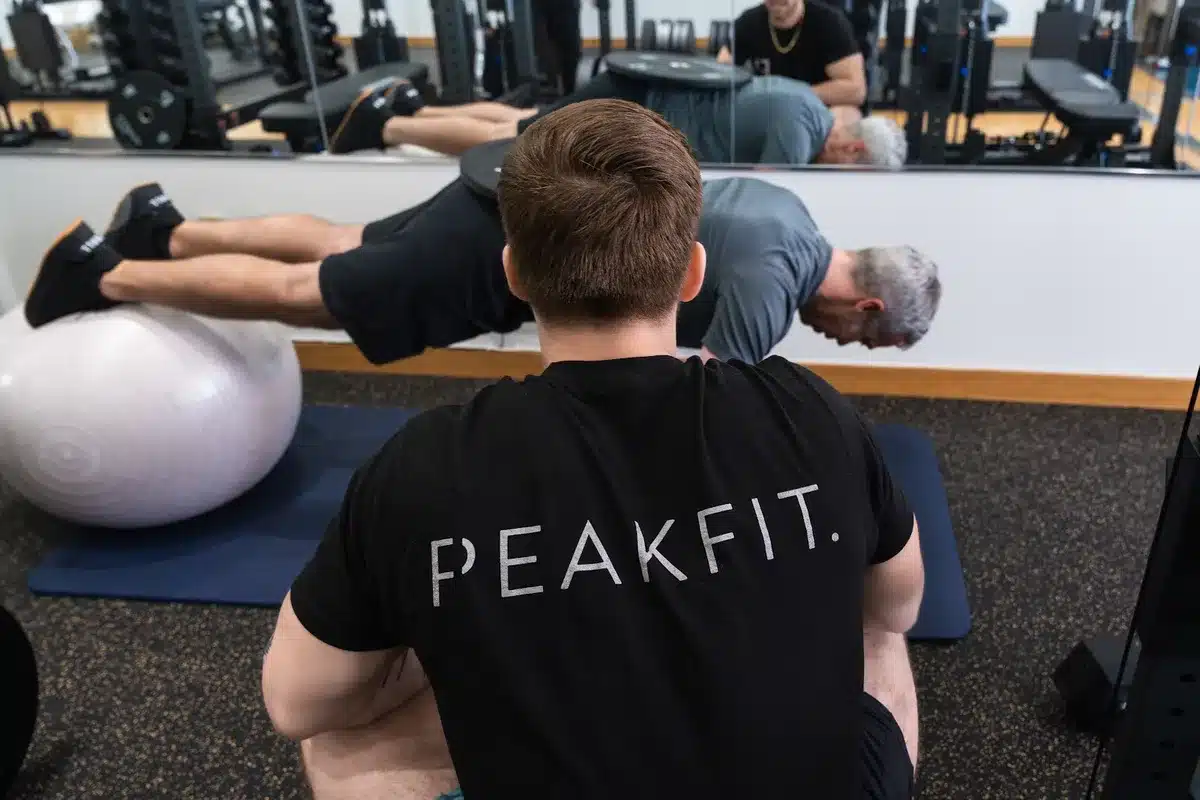
At a private studio, the coach’s entire cognitive bandwidth is directed at one thing: what is happening in front of them. They can watch your movement patterns, catch subtle compensation before it becomes an injury pattern, adjust load mid-set based on what they observe, and give you the kind of specific feedback that actually changes how you move over time.
For clients over 40 — where movement quality is the primary lever for both safety and results — this level of attention is not a luxury. It is the core of the service.

Equipment and Floor Access
Commercial gyms have a lot of equipment — but access to it during peak hours is another matter. Training at 6pm on a weeknight with a commercial gym trainer means your session gets redesigned around whatever is available, not around what your program calls for. This is not a minor inconvenience; it systematically degrades program quality.
Private training studios are designed for consistent access. The equipment in the room is the equipment your program uses, and it is there when you need it. Your coach does not spend five minutes of your session waiting for a cable machine to open up.
The Small Studio Difference
Private training studios attract coaches who want to coach — not manage a gym floor or sell memberships. The self-selection effect is real: trainers who build or join private studios have typically made a deliberate professional choice to prioritize the quality of their work over the volume of their client roster.
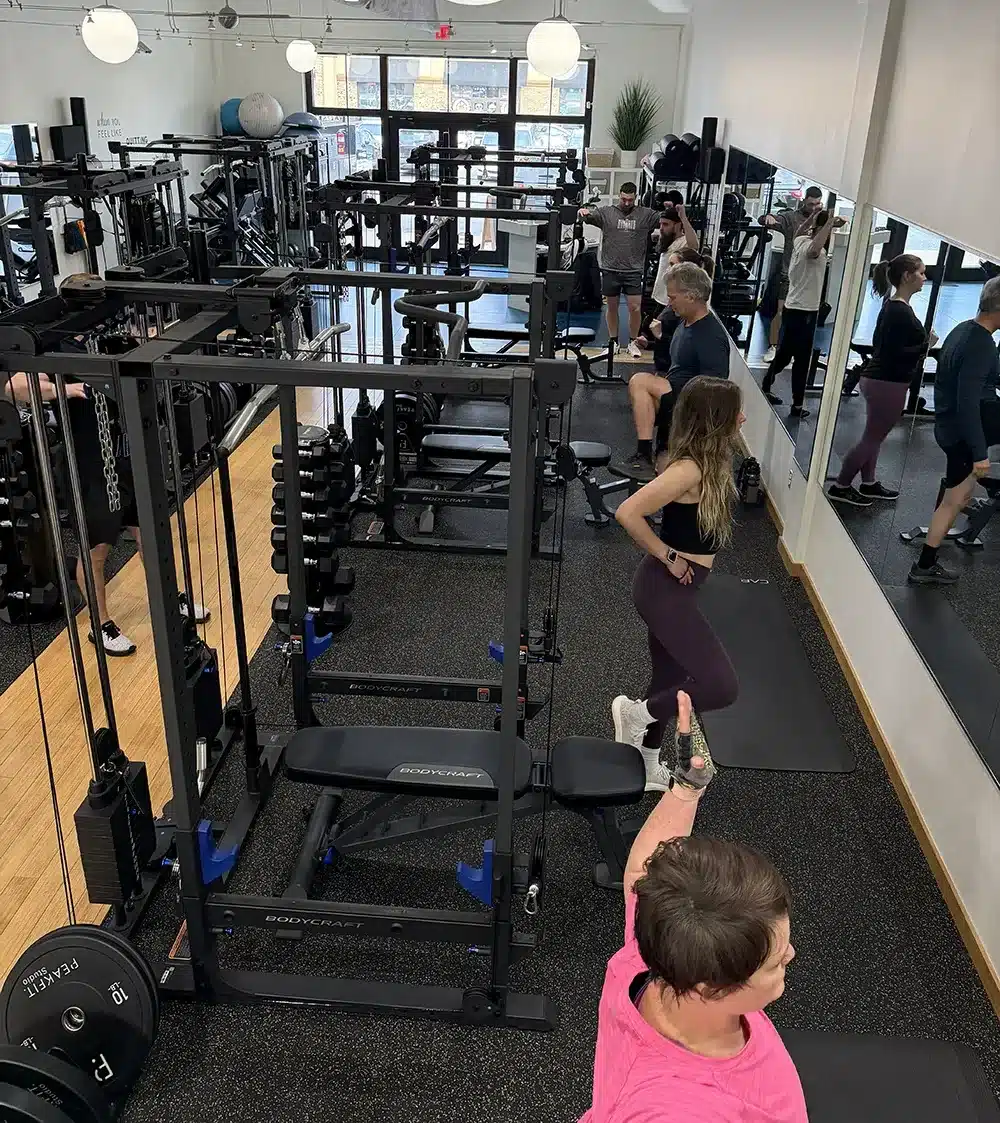
At PeakFit Studio in Arden, the entire facility exists for one purpose: focused, high-quality training for adults 40 and older. There are no spinning classes competing for space. No members wandering through your session. No floor staff. Every element of the environment is designed to support the coaching relationship.

How to Evaluate Your Options
When comparing personal training options in Asheville, ask these questions of any facility or trainer you are considering. How many clients does your trainer manage simultaneously during a session? What is the coach-to-client ratio in any group format? Does the trainer have floor duties on top of coaching your sessions? Is there dedicated training space, or do you share the general gym floor?
The answers will tell you more about the actual experience than any marketing material. A trainer managing four clients at once while covering a gym floor is delivering something categorically different from a coach whose only responsibility in that hour is you.
Small group training at a private studio — the model PeakFit uses — typically offers ratios of 4:1 or better, dedicated equipment, and coaches with no competing responsibilities. For most adults over 40, this is the highest-value option available: real coaching attention at a cost point below private one-on-one training.
Frequently Asked Questions
Why do the best personal trainers in Asheville work in small studios?
Small studios allow coaches to focus exclusively on clients without competing floor responsibilities, equipment sharing, or noise. The result is more attentive coaching and better program design.
What is the real difference between a gym trainer and a private studio trainer?
At a commercial gym, trainers often have floor duties and manage multiple clients simultaneously. At a private studio, the trainer’s only job is coaching the client in front of them — with dedicated space and full attention.
Are private studios more expensive than gym training?
Small group training at a private studio is often comparable in cost to commercial gym personal training, while delivering significantly more coaching attention. One-on-one private studio sessions cost more but offer the highest level of personalization available.
What coach-to-client ratio should I look for?
For small group training, look for 4:1 or better. Above that ratio, coaching quality degrades meaningfully — the trainer physically cannot watch all clients closely enough to catch form issues.
Is small group training as effective as one-on-one personal training?
For most clients at well-run studios with low ratios, yes. The combination of personalized programming, real coaching feedback, and group accountability produces results comparable to solo training at a fraction of the cost.
PeakFit Studio — Arden, NC. Private training, small group format, adults 40+. No floor staff, no distractions — just coaching. (828) 620-7020




Luxury Personal Trainer Asheville NC: High-Touch Fitness Coaching
Key Takeaways A luxury personal trainer in Asheville NC delivers a fundamentally different experience from a standard gym membership: individualized
Functional Movement Training Asheville NC: Move Better, Live Longer
Key Takeaways Functional movement training focuses on the patterns your body uses every day, such as bending, reaching, carrying, and
Senior Fitness Training Asheville NC for Adults 60 and Up
Key Takeaways Senior fitness training in Asheville NC addresses the specific physical changes that come with aging, including muscle loss,