
Burn Boot Camp, Orangetheory, F45, CrossFit, and small group personal training each serve a different goal. For adults over forty who want structured strength gains and individual coaching attention, small group personal training offers the best combination of personalization, progressive programming, and recovery-friendly intensity. Knowing which format truly fits your goal before you sign up saves you months of frustration.
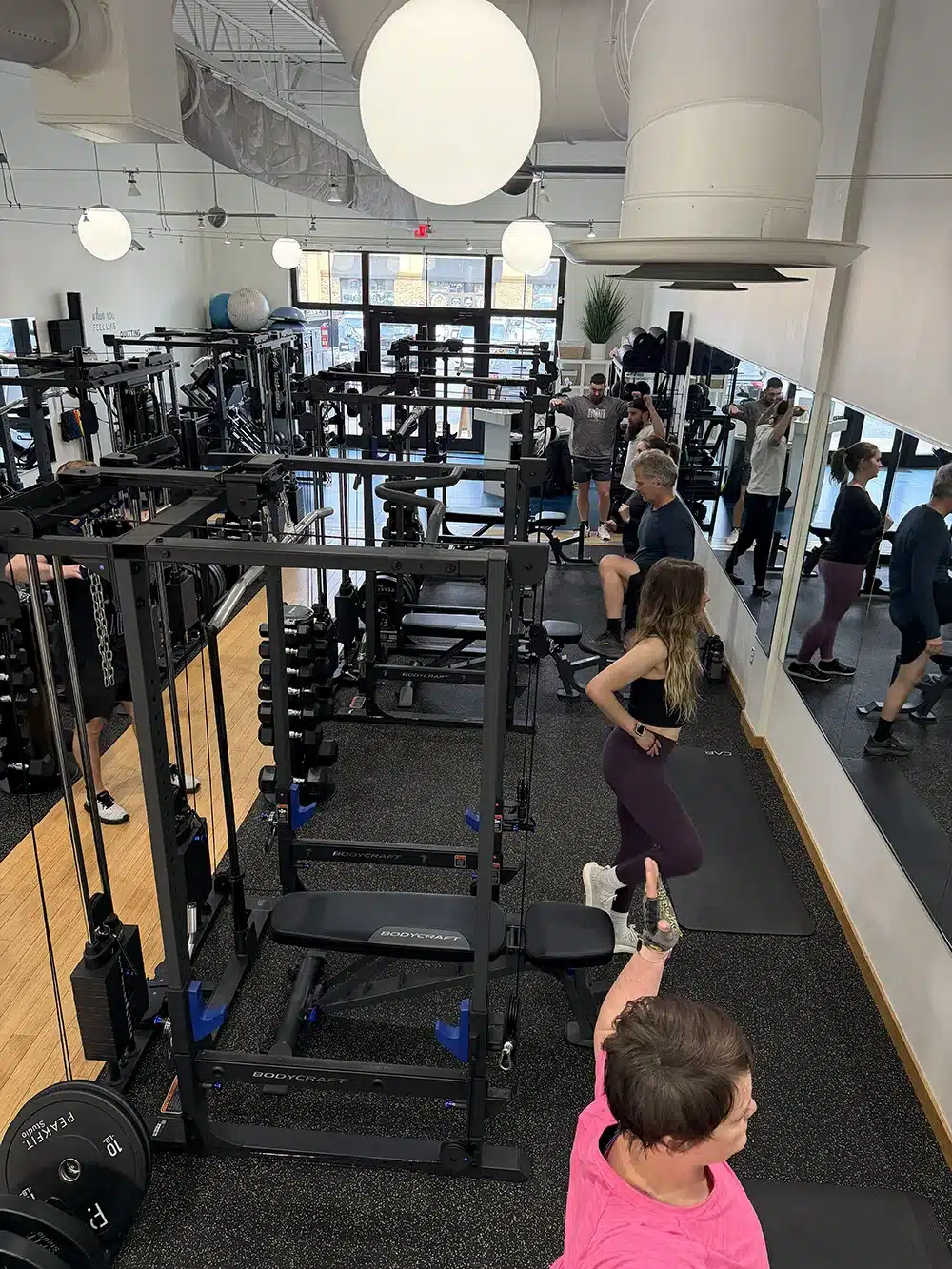
Arden, Asheville, and the surrounding WNC communities are full of boutique fitness options. CrossFit boxes. Orangetheory studios. F45 franchises. Burn Boot Camp locations. Barre and Pilates studios. Small group personal training studios like PEAKFIT. Each format has a real place in the market. None of them are equivalent. The marketing language overlaps enough that adults sign up for one format expecting another, then drift away when the experience does not match the goal. This page is a direct, honest, format-by-format comparison so you know which option actually fits where you are headed.
The 5 questions that separate every boutique format
Before the format-by-format breakdown, here are the five variables that actually distinguish one format from another:
- Coaching ratio. How many clients per coach are in the room? Lower means more personalized attention.
- Programming style. Is the session random (entertainment programming) or progressive (adaptation programming that builds on itself week over week)?
- Equipment depth. Does the format use limited tools or full strength equipment?
- Intensity model. Does the session chase a burn, or does it use controlled strength work with manageable recovery demand?
- Adult-over-40 fit. Was the format built around younger bodies, or does it scale across all ages and training histories?
Use those five filters to evaluate any format you are considering, including the ones below.
F45 Training vs CrossFit: which is better for high-intensity group workouts?
F45 and CrossFit are both high-intensity group formats, but CrossFit uses heavier barbell and gymnastics work with more skill-based movements, while F45 uses lighter rotating stations with a broader functional fitness focus that is generally more accessible to beginners.
CrossFit sessions, called WODs (workouts of the day), combine Olympic lifting, barbell strength work, gymnastics movements like pull-ups and handstand push-ups, and conditioning pieces. The intensity ceiling is high. So is the skill requirement. Adults who are new to strength training, returning after injury, or managing joint issues often find CrossFit movements difficult to modify safely without close one-on-one coaching attention, which large-class coaching ratios do not always provide.
F45 runs 45-minute sessions where stations rotate every 30 to 45 seconds. Movements are generally more accessible and do not require the same level of technical skill as Olympic lifting. However, like CrossFit, F45 programming changes daily. That daily variation limits the progressive overload that produces long-term strength adaptation.
For adults over 40 in Arden, Fletcher, or Hendersonville who want high-intensity group training with a lower injury risk profile, F45 is the more accessible of the two. For adults who want genuine strength development alongside conditioning, both formats have structural limitations worth understanding before you commit.
Read the full comparison: Small Group Training vs CrossFit for Adults Over 40
F45 Training vs Orangetheory: what is the real difference?
F45 and Orangetheory are both high-intensity group formats, but F45 includes real weights at rotating stations while Orangetheory focuses on heart-rate-zone cardio using treadmills, rowers, and light floor work.
Orangetheory is a heart-rate-zone-based format. You wear a monitor and chase time in the orange zone. Sessions blend treadmill intervals, rowing, and bodyweight or light-weight floor movements. It is genuinely effective for cardiovascular fitness and calorie burn. It is much less effective for building meaningful strength because the floor work uses light loads with minimal progressive overload.
F45 runs 45-minute sessions where stations rotate every 30 to 45 seconds and the workout changes daily. It sits between Orangetheory and CrossFit in terms of strength stimulus. It uses real weights, which gives it a modest strength edge over Orangetheory. But because the rotation format changes constantly, almost no progressive overload accumulates on any single movement pattern over time.
For conditioning and calorie burn, both formats deliver. For structured strength adaptation, neither format is designed to provide it. Adults over 40 in Arden, Asheville, or Hendersonville who want strength and body composition change will likely find both formats under-deliver on that specific goal.
| Factor | F45 | Orangetheory |
|---|---|---|
| Session length | 45 minutes | 60 minutes |
| Primary focus | Functional conditioning + weights | Cardio heart-rate zones |
| Strength stimulus | Moderate | Low |
| Progressive overload | Minimal (daily rotation) | Minimal (zone-based, not load-based) |
| Coaching ratio | Typically large-group (varies by location) | Typically large-group (varies by location) |
| Adult 40+ fit | Variable | Good for conditioning goals |
Read the head-to-head: Small Group Training vs Orangetheory | Compare in depth: Small Group Training vs F45
F45 vs Burn Boot Camp: which is the better fit?
F45 and Burn Boot Camp are both high-energy, high-intensity group formats, but F45 uses a station-rotation model with real weights while Burn Boot Camp uses conditioning circuits that lean more heavily on bodyweight movements and group energy.
Boot camps as a category, including Burn Boot Camp, typically run 45 to 60 minute sessions built around bodyweight movements, light weights, conditioning circuits, and high-output energy. The format is built for sweat and group momentum.
F45 offers a more structured station-based approach and uses heavier loads than most boot camp formats. That gives it a modest strength edge. Neither format is built around progressive overload or individual load scaling, which limits their effectiveness for adults over 40 whose primary goals are building strength, preserving muscle, or changing body composition over the long term.
For adults in South Asheville, Fletcher, or Mills River who are returning to fitness after a gap, post-surgery, or managing joint considerations, the repeated jumping and burpee-heavy circuits common in boot camp formats can add cumulative joint stress faster than recovery allows.
Read the full breakdown: Small Group Training vs Boot Camps and HIIT
Burn Boot Camp vs Orangetheory: how do they compare?
Burn Boot Camp and Orangetheory both deliver high-intensity conditioning, but Burn Boot Camp uses bodyweight circuits and light weights on a gym floor while Orangetheory uses heart-rate monitors, treadmills, and rowers to guide intensity through zone targets.
Orangetheory gives you real-time data on how hard you are working, which appeals to adults who like objective feedback. Burn Boot Camp leans on group energy and a community-driven atmosphere to push effort. Both formats are effective for burning calories and building general conditioning. Neither is structured around progressive strength development.
The practical difference for adults over 40 in WNC comes down to joint load. Orangetheory treadmill intervals can be demanding on knees and hips, particularly at higher inclines and speeds. Burn Boot Camp circuits often include jumping and impact movements that add similar stress. If joint health is a consideration, both formats benefit from careful modification that their coaching ratios may not always support.
CrossFit vs Orangetheory: which format is right for you?
CrossFit and Orangetheory are both group fitness formats with high-intensity reputations, but CrossFit is built around heavy barbell and gymnastics movements aimed at building strength and power, while Orangetheory is built around heart-rate-zone cardio intervals aimed at calorie burn and aerobic conditioning.
CrossFit has a genuine strength development component that Orangetheory does not. Barbell squats, deadlifts, and presses, when performed correctly, produce real strength adaptation. The challenge for adults over 40 is that CrossFit’s coaching ratio and the technical skill required for Olympic lifting create a real risk of poor movement quality under fatigue, which increases injury likelihood.
Orangetheory is lower skill and more immediately accessible. The tradeoff is that you get very little strength stimulus. If your primary goal is aerobic fitness and calorie burn and your joints tolerate treadmill intervals, Orangetheory can serve that goal. If you want strength, CrossFit is closer but still carries caveats around coaching attention and scaling for older adults.
See how small group training compares to CrossFit for adults over 40
Solidcore vs F45: which delivers more for adults over 40?
Solidcore and F45 target different fitness outcomes: Solidcore builds slow-twitch muscular endurance through controlled reformer-based movements, while F45 builds general conditioning and functional fitness through fast-rotating station circuits that include real weights.
Solidcore uses a reformer-based approach with slow, controlled movements intended to fatigue muscles through time under tension. It is a more demanding format than a standard Pilates class and builds genuine muscular endurance. However, like Pilates, it uses lighter resistance than progressive strength training and does not build the load-bearing strength that preserves bone density and muscle mass in adults over 40.
F45 offers more variety and a higher metabolic demand per session. It uses real weights, which gives it a modest advantage for general strength. But without progressive overload built into the programming, the strength gains from F45 plateau relatively quickly.
For adults in Biltmore Park, Skyland, or surrounding WNC communities who want one format to cover both strength and conditioning, both Solidcore and F45 come up short on opposite sides of that equation. A small group personal training program that includes structured strength and conditioning in a single progressive program is typically a more efficient use of limited workout time.
CrossFit vs barre: how do they actually compare?
CrossFit and barre are at opposite ends of the intensity and load spectrum: CrossFit uses heavy barbell work and high-intensity conditioning to build strength and power, while barre uses light weights, bodyweight, and ballet-inspired movements to build postural endurance and body awareness.
Barre classes focus on small-range isometric and isotonic movements, often at a ballet barre, using light dumbbells, resistance bands, and bodyweight. The format builds core stability, hip and glute endurance, and postural awareness. It is low-impact and generally accessible across fitness levels. It does not build meaningful load-bearing strength or produce the bone density benefits associated with progressive resistance training.
CrossFit, as described above, can build genuine strength when movements are performed correctly. The skill requirements and intensity create a different risk profile than barre entirely.
Adults over 40 who enjoy barre often find it pairs well with a structured strength program. Adults drawn to CrossFit for strength benefits often find small group personal training delivers similar strength outcomes with more individual coaching attention and a lower injury risk profile.
Compare in depth: Small Group Training vs Barre and Pilates
Which strength training classes are better for consistent workouts?
Small group personal training classes are better for consistent workouts because the programming is progressive, the coaching is individualized, and the format is designed to keep you training without accumulating excess fatigue or injury that forces breaks.
Consistency is the variable that produces results over time. Any format you can sustain for 12 months will outperform a format you burn out of or get injured by in three. High-intensity formats like CrossFit, F45, and boot camp generate high perceived effort, which can feel productive but also increases the likelihood of overuse injury and motivation drops when soreness becomes constant.
Small group personal training uses controlled intensity calibrated to each person’s recovery capacity. The sessions build on each other week over week instead of delivering random daily stimulation. That structure makes it easier to show up consistently because you are not dreading the workout or nursing your joints between sessions.
For adults over 40 in Arden, Asheville, and WNC communities who have been burned before by formats that were unsustainable, this structural difference matters more than any single session metric.
Which strength training classes deliver the most value?
Small group personal training delivers the most value for adults over 40 because you receive individualized coaching, progressive programming, and accountability at a price point well below one-on-one personal training, with results that high-volume group formats rarely match.
Value is a function of what you get relative to what you pay and what you risk. Large group formats at franchise studios charge monthly membership fees but deliver low coaching attention, random programming, and a one-size-fits-all intensity model. One-on-one personal training delivers maximum coaching attention but at a price most adults cannot sustain long term.
Small group personal training sits between those two extremes. Groups are kept small enough for the coach to observe and correct your movement on every set. Programming is designed to progress over time. And the cost is typically lower than one-on-one training while delivering a coaching experience that large group formats cannot match.
For adults in South Asheville, Hendersonville, and surrounding WNC communities who are managing a health history, recovering from surgery, or rebuilding after years away from structured exercise, that coaching attention is not a luxury. It is what makes the difference between results and repeated setbacks.
How do high-intensity training centers compare on price and instructor quality?
High-intensity training centers like CrossFit, Orangetheory, and F45 typically charge comparable monthly rates but vary significantly in instructor quality, coaching ratios, and how much individual attention you actually receive during a session.
Franchise formats like Orangetheory and F45 train instructors to deliver a scripted session to a large group. The instructor is managing music, timing, station transitions, and general energy for 15 to 30 people at once. Individual technique correction is limited by design. CrossFit coach quality varies more widely because it is not a franchise with standardized instruction protocols. Some CrossFit boxes have excellent coaches. Others do not.
The practical question for you is not what the format costs on paper. It is how much useful coaching you receive per session. A lower-cost format where your movement is never observed or corrected is a poor value if it leads to injury or stalled results. A slightly higher investment in a format where a coach knows your training history, watches your form, and adjusts your load accordingly produces better long-term outcomes and lower total cost when you factor in what you avoid spending on physical therapy.
What gyms balance independence and guidance effectively?
Small group personal training studios balance independence and guidance most effectively because you train alongside others at your own pace and load while a qualified coach monitors your movement, adjusts your programming, and holds you accountable without micromanaging every rep.
Large commercial gyms give you full independence but no guidance. You train alone, figure out programming on your own, and receive no feedback on whether what you are doing is working or safe. That setup works well for experienced athletes. It is a poor fit for adults over 40 who are navigating real health history, recovering from injury, or returning after a long break.
Large group fitness classes give you guidance but apply it at the group level. The coach is managing 20 or more people and cannot realistically observe your squat depth, your shoulder position, or whether today’s load is appropriate for where you are in recovery.
Small group personal training resolves both problems. You are not training alone, which means accountability and community are built in. And the group is small enough that the coach can and does correct your movement, adjust your weight, and scale your intensity based on how your body is actually responding. For adults in Arden, Fletcher, and the broader WNC area who have had frustrating experiences at both ends of that spectrum, this middle ground is where sustained progress tends to happen.
Learn more about PEAKFIT Studio in Arden, NC
Is Burn Boot Camp the same as CrossFit?
Burn Boot Camp is not CrossFit. Burn Boot Camp uses bodyweight circuits, light weights, and conditioning drills in a group camp format, while CrossFit uses barbell lifting, gymnastics movements, and high-intensity metabolic conditioning that requires significantly more technical skill.
Both formats are group-based and high-intensity. Both use the energy of a group to push effort. But the movements, equipment, and skill requirements are very different. CrossFit includes Olympic weightlifting movements such as cleans and snatches, heavy squats and deadlifts, and gymnastics skills. Burn Boot Camp uses movements that require much less technical proficiency and are more accessible to people who are new to structured exercise.
The practical implication is that the two formats carry different risk profiles for adults over 40. Burn Boot Camp’s impact-based circuits can stress joints cumulatively. CrossFit’s technical barbell work carries injury risk when performed under fatigue without close coaching. Neither is inherently wrong. Both require honest self-assessment before you commit.
All six formats compared honestly
Here is a direct comparison of how the six most common boutique formats stack up on the variables that matter most for adults over 40 in WNC.
| Format | Strength stimulus | Progressive overload | Coaching ratio | Impact level | Adult 40+ fit |
|---|---|---|---|---|---|
| Small group personal training | High | Structured week over week | 1:4 to 1:8 | Controlled | Excellent |
| CrossFit | High (when performed correctly) | Inconsistent | 1:10 to 1:20 | High | Variable |
| Orangetheory | Low | Minimal | Large-group (varies by location) | Moderate to high (treadmill) | Good for conditioning goals |
| F45 | Moderate | Minimal (daily rotation) | Large-group (varies by location) | Moderate to high | Variable |
| Boot camp / Burn Boot Camp | Low to moderate | Minimal | Large-group (varies by location) | High (jumping, burpees) | Limited for joint-sensitive adults |
| Barre / Pilates | Low | Minimal | 1:15 to 1:25 | Low | Good for mobility and postural goals |
How to choose the right format for you
Start with your actual goal, not the format everyone around you is trying. Then run that goal through the five questions at the top of this page.
If your goal is cardiovascular conditioning and calorie burn and your joints tolerate treadmill intervals, Orangetheory serves that goal. If your goal is community and general fitness and you have no significant joint considerations, F45 or boot camp can work. If your goal is mobility and postural health, barre or Pilates belongs in your routine. If your goal is building strength, preserving muscle mass, improving body composition, and sustaining those results past 40, small group personal training is the format most directly designed for that outcome.
The adults who get the best results in WNC are typically the ones who stop chasing the format with the best marketing and start asking which format was actually built for where they are right now, including their health history, their schedule, their joints, and their real long-term goals.
Quick Recap
- F45 and Orangetheory are both conditioning-focused formats. Neither is designed for progressive strength development.
- CrossFit can build real strength but requires technical skill and close coaching attention that high coaching ratios often do not provide.
- Burn Boot Camp is not CrossFit. It uses lighter, more accessible movements but relies heavily on impact and volume that can stress joints over time.
- Barre and Pilates build mobility, postural endurance, and core stability. They do not replace strength training for adults over 40.
- Solidcore is more demanding than standard Pilates but still lacks the progressive load-bearing stimulus that preserves bone density and muscle mass.
- Small group personal training is the format most directly designed for adults over 40 who want structured strength gains, individual coaching attention, and sustainable intensity.
- Consistency is the most important variable. The format you can sustain without burning out or getting injured will always outperform the format with the most intense reputation.
- Value is not just price. It includes coaching quality, programming structure, and what you avoid spending on injury recovery.
Frequently Asked Questions
Is F45 better than CrossFit for adults over 40?
F45 is generally more accessible than CrossFit for adults over 40 because it does not require the technical skill of Olympic lifting and its movements are easier to modify. However, neither format is built around the progressive overload that produces long-term strength adaptation, which is the primary fitness need for most adults over 40.
What is the difference between Burn Boot Camp and Orangetheory?
Burn Boot Camp uses bodyweight circuits and light weights in a gym-floor group format driven by group energy. Orangetheory uses heart-rate monitors, treadmills, and rowers to guide intensity through zone targets. Both are conditioning-focused formats with minimal strength development built in.
Is Solidcore harder than F45?
Solidcore and F45 are hard in different ways. Solidcore creates muscular fatigue through slow, controlled time under tension on a reformer. F45 creates cardiovascular and muscular fatigue through fast station rotations with real weights. Which feels harder depends on your training background and which fitness quality you find more challenging.
How does barre compare to CrossFit for strength?
Barre does not build meaningful load-bearing strength the way CrossFit does. Barre uses light resistance and small-range movements to build postural endurance and body awareness. CrossFit uses heavy barbell work that, when performed correctly, produces genuine strength gains. They serve very different goals and are not direct alternatives to each other.
Which boutique fitness format has the best instructor quality?
Instructor quality varies by location in every format. Franchise formats like Orangetheory and F45 train coaches to deliver a scripted group session, which standardizes delivery but limits individual attention. CrossFit coach quality varies widely. Small group personal training studios typically employ coaches who deliver individualized attention to each person in the session, which is the most meaningful measure of instruction quality for adults over 40.
Are high-intensity group fitness classes safe for adults over 40 post-surgery?
High-intensity group classes can be appropriate post-surgery depending on your recovery stage, the specific movements involved, and how well the format accommodates modifications. Formats with high coaching ratios and daily-changing programming are less equipped to manage your individual needs. A small group personal training format where the coach knows your history and monitors your movement every session is a safer starting point for post-surgery return to exercise.
Where can I find small group personal training near Arden and South Asheville?
PEAKFIT Studio offers small group personal training in Arden, NC, serving adults throughout South Asheville, Fletcher, Hendersonville, Mills River, Skyland, Biltmore Park, and surrounding WNC communities. You can learn more at peakfit.studio.
If you are ready to find out whether small group personal training is the right fit for where you are right now, the next step is a free consultation. No sales pressure. Just an honest conversation about your goals, your history, and whether this format makes sense for you.
Book Your Free Consultation at peakfit.studio/free-consultation/ or call (828) 620-7020.
Want a coach to build this around your body?
PEAKFIT. Studio offers private personal training in Asheville from our appointment-only studio in Arden. Start with a free Discovery Session with Alex: a conversation and studio tour, not a workout, and no pressure.