Strength Training for Older Adults: The Most Important Exercise You’re Not Doing
Key Takeaways
- After age 30, adults lose 3-8% of muscle mass per decade, accelerating significantly after 60. Resistance training is the only intervention proven to reverse this loss.
- Studies show adults in their 70s, 80s, and even 90s can build measurable muscle and strength with properly designed programs (American College of Sports Medicine)
- Functional strength exercises like squats, rows, and presses directly improve daily activities such as climbing stairs, carrying groceries, and getting up from chairs
- At PEAKFIT Studio in Arden, NC, we combine strength training with nutrition counseling and recovery services to maximize results for adults 60+
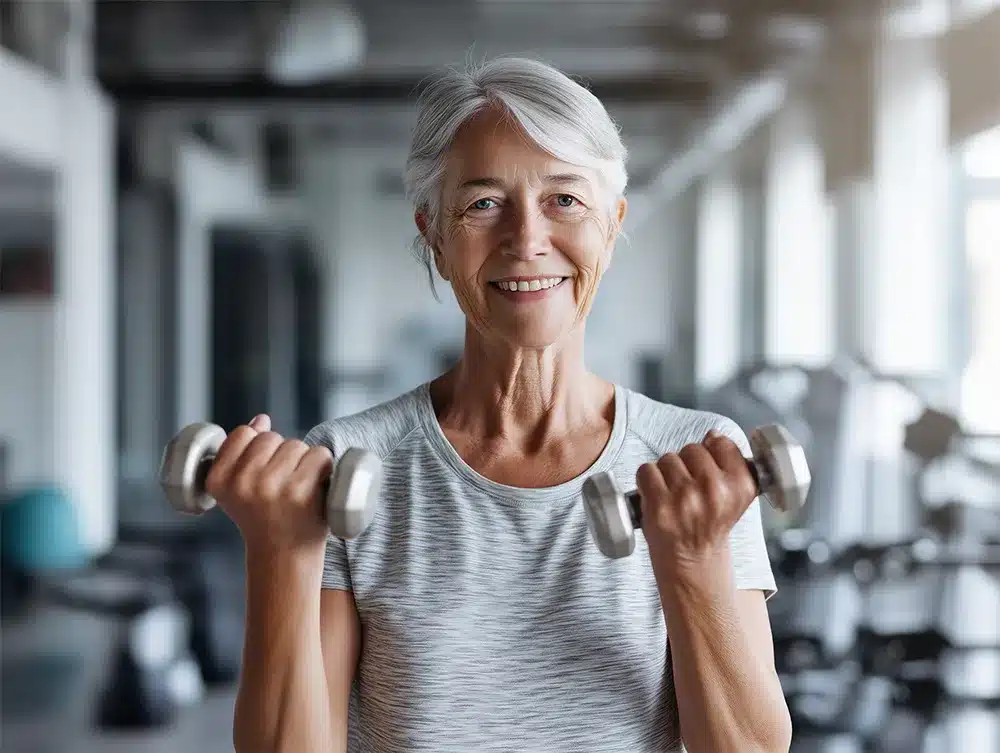
After age 30, your body loses 3-8% of its muscle mass every decade. By 60, that loss accelerates dramatically. The medical term for this is sarcopenia, and it drives falls, fractures, loss of independence, and declining quality of life. The solution is sitting in every gym, largely ignored by the people who need it most: the weight room. At PEAKFIT Studio, our senior fitness programs make strength training accessible, safe, and effective for adults of any age.
Strength training reverses this trajectory at any age. Studies consistently show that adults in their 70s, 80s, and even 90s can build measurable muscle and strength with properly designed resistance training programs. Yet fewer than 16% of older adults meet the CDC’s recommendation of strength training at least twice per week. This guide covers exactly what to do, how to start safely, and why waiting is the only real risk.
Sarcopenia Is Stealing Your Muscle. Here’s How to Fight Back
Sarcopenia isn’t just about looking different in the mirror. It’s a recognized medical condition with serious consequences. Understanding what you’re fighting is the first step to winning.
What Sarcopenia Is and Why It Accelerates After 60
The term comes from Greek: “sarx” (flesh) and “penia” (loss). Starting around age 30, muscle fibers begin to shrink and some are lost entirely. The process is gradual at first, with most people losing 3-8% of muscle mass per decade. After 60, the rate increases significantly. By 80, many adults have lost 30-50% of their peak muscle mass.
Several factors drive this acceleration. Hormonal changes reduce anabolic signaling. Protein synthesis becomes less efficient, meaning your body struggles to build new muscle even when you eat adequate protein. Physical activity typically decreases, creating a vicious cycle: less movement leads to more muscle loss, which makes movement harder, which leads to even less activity.
The consequences extend beyond appearance. Muscle tissue is metabolically active, burning calories even at rest. Losing muscle lowers your metabolic rate, making weight management harder. Muscle provides padding that protects joints. Less muscle means more stress on cartilage and bone. Muscle generates the force needed for movement. Losing it means everyday activities become harder, more tiring, and eventually impossible without assistance. This is why our 360 approach to fitness addresses strength alongside nutrition and recovery.
How Much Muscle You Can Realistically Rebuild
The research is encouraging. While you may not build muscle as quickly as a 25-year-old, you absolutely can build significant muscle at any age. A meta-analysis published in Sports Medicine examined 49 studies involving adults over 60 and found consistent evidence of muscle hypertrophy (growth) with resistance training.
In practical terms, expect to see measurable improvements within 8-12 weeks of consistent training. Initial gains come primarily from neuromuscular adaptations: your nervous system becomes more efficient at activating existing muscle fibers. This means you get stronger before you get visibly bigger. True muscle growth follows, typically becoming noticeable after 12-16 weeks.
Studies at Tufts University demonstrated that even frail nursing home residents in their 80s and 90s could increase muscle strength by over 100% and muscle size by 10-15% with just 8 weeks of resistance training. If they can do it, you can too.
The Essential Strength Exercises for Seniors
Not all exercises are created equal. For older adults, the best strength exercises are those that translate directly to daily life. We call these “functional” movements because they improve your ability to function independently.
Lower Body: Building a Foundation
Your legs and hips contain the largest muscles in your body and provide the foundation for nearly every daily activity. Prioritize these movements:
Squat variations: The ability to sit down and stand up independently is one of the key predictors of maintaining independence in later life. Squat patterns train this movement. Start with chair squats (sitting down to a chair and standing up), progress to bodyweight squats, then add resistance with dumbbells, kettlebells, or machines. For those with knee issues, box squats to a higher surface reduce range of motion while still building strength.
Leg press: Machine-based leg pressing allows you to train heavy while controlling the movement pattern. It’s particularly useful for those who find free-weight squats challenging due to balance or back issues.
Step-ups: Climbing stairs becomes difficult when leg strength declines. Step-ups train this exact movement pattern. Start with a low step and minimal assistance, progressing to higher steps and added weight as strength improves.
Hip hinges (deadlift patterns): Picking things up from the floor requires hip hinge strength. Romanian deadlifts, kettlebell deadlifts, and hip hinges with resistance bands all train this essential pattern.
Upper Body: Pushing and Pulling
Upper body strength matters for carrying groceries, lifting grandchildren, reaching overhead, and pushing yourself up from lying down. Include both pushing and pulling movements. At PEAKFIT, our one-on-one training sessions ensure proper form on every movement.
Chest press: Whether with dumbbells, machines, or resistance bands, pressing movements build the chest, shoulders, and triceps. These muscles help you push yourself up from a chair or bed and push open heavy doors.
Rows: Pulling movements balance out pressing and strengthen the back muscles that support posture. Cable rows, dumbbell rows, and resistance band rows all work well. Strong pulling muscles help you open car doors, carry bags, and pull yourself up.
Shoulder press: Overhead pressing builds the strength to reach high shelves and lift objects overhead. Seated versions are generally safer for those with balance or blood pressure concerns.
Core Stability: Protecting Your Spine
Core strength isn’t about visible abs. It’s about the deep stabilizing muscles that protect your spine and transfer force between your upper and lower body. For older adults, core training should emphasize stability over movement:
Planks and modified planks: Start with wall planks or incline planks on a bench, progressing to floor planks as strength improves. Ho

ld for time rather than repetitions.
Bird dogs: On hands and knees, extend opposite arm and leg while keeping your core stable. This trains the anti-rotation strength needed for walking and reaching.
Pallof press: Using a cable or resistance band, hold tension and press away from your body, resisting the pull. This trains core stability in a functional, standing position.
Grip Strength: The Overlooked Predictor of Longevity
Research consistently shows that grip strength is one of the strongest predictors of overall health and mortality in older adults. A 2015 study in The Lancet found that grip strength predicted cardiovascular death more accurately than blood pressure. This makes sense: grip strength correlates with total body muscle mass and functional capacity.
Train grip directly with farmer’s carries (walking while holding heavy weights), dead hangs from a bar, and crushing exercises like squeezing a stress ball or gripper. Grip work also happens naturally during pulling exercises if you avoid using straps.
How to Progress Safely Without Injury
The principle of progressive overload states that muscles grow stronger when challenged beyond their current capacity. But for older adults, progression must be gradual and intelligent. This is where working with a qualified personal trainer makes all the difference.
Starting Weights and Rep Ranges for Beginners
Begin lighter than you think you need to. The goal in your first few weeks isn’t to challenge your muscles maximally. It’s to learn proper movement patterns, build confidence, and allow your connective tissues (tendons, ligaments) to adapt. Muscle adapts to training faster than connective tissue, so rushing progression increases injury risk.
For most exercises, start with a weight you can lift for 12-15 repetitions with 2-3 reps “left in the tank.” That means at rep 12, you could do 2-3 more if you had to, but you stop there. This leaves room for technique focus and reduces injury risk.
Perform 2-3 sets of each exercise. Rest 60-90 seconds between sets for most exercises, longer (2-3 minutes) for more demanding compound movements like squats and deadlifts.
Progressive Overload Principles for Older Adults
Progressive overload means gradually increasing the challenge over time. For older adults, this doesn’t always mean adding more weight. You can progress by:
- Adding repetitions (from 10 to 12, then to 15)
- Adding sets (from 2 to 3)
- Reducing rest time between sets
- Improving range of motion (deeper squat, fuller press)
- Slowing the tempo (3 seconds down, pause, 2 seconds up)
- And yes, adding weight
The American College of Sports Medicine recommends increasing resistance by 2-10% when you can complete your current sets with good form and feel you have 2+ repetitions in reserve at the end.
When to Increase Weight vs. Increase Reps
A common progression model: Start at a weight you can do for 10 reps. Work up to 15 reps at that weight. Then increase the weight and drop back to 10 reps. Repeat the cycle. This approach builds both strength (heavier weights) and muscular endurance (higher reps).
For older adults, this rep range (10-15) hits a sweet spot. It’s heavy enough to stimulate muscle growth but light enough to allow focus on form and reduce joint stress. Heavier, lower-rep training (5-8 reps) can be appropriate for some, but requires more technical proficiency and carries higher injury risk.
Recovery Time Between Sessions: Why 48 Hours Matters
Muscle growth doesn’t happen during your workout. It happens during recovery, when your body repairs the microscopic damage caused by training. For older adults, this recovery process takes longer than for younger people. This is why our recovery services including infrared sauna and red light therapy are so valuable for senior clients.
Allow at least 48 hours between sessions that train the same muscle groups. This might mean training three times per week with full-body sessions (Monday/Wednesday/Friday), or four times per week with an upper/lower split (Monday: upper, Tuesday: lower, Thursday: upper, Friday: lower). The CDC recommends strength training each major muscle group at least twice per week.
Sleep and nutrition significantly affect recovery. Poor sleep impairs muscle protein synthesis. Inadequate protein intake limits the raw materials available for muscle repair. These factors are often more important than the specifics of your training program.
How PEAKFIT Programs Strength Training for Seniors
At PEAKFIT Studio, strength training is the foundation of every senior fitness program. But we approach it differently than typical gyms, integrating training with nutrition and recovery for optimal results. This is what our holistic wellness approach looks like in practice.
InBody Scans Track Your Muscle Gains Objectively
The scale is a liar. It tells you total weight but nothing about what that weight consists of. You could gain 3 pounds of muscle while losing 3 pounds of fat, see no change on the scale, and think your program isn’t working. InBody body composition analysis solves this problem. Using bioelectrical impedance, InBody measures your skeletal muscle mass, body fat percentage, and how muscle is distributed across your body. You can see exactly how much muscle is in your arms, legs, and trunk. You can track changes over time with objective data.
Every PEAKFIT client receives a complimentary InBody scan at their initial consultation. We repeat scans every 8-12 weeks to track progress. This data helps us adjust your program and keeps you motivated with concrete evidence of results.
Nutrition Support to Fuel Muscle Growth
You can’t build muscle without adequate protein. Research published in the American Journal of Clinical Nutrition shows that older adults need more protein than younger people: 1.0-1.2 grams per kilogram of body weight daily, compared to the standard 0.8 grams. For a 150-pound adult, that’s 68-82 grams of protein daily. Many older adults fall short of this target. Appetite decreases with age. Protein-rich foods can be harder to chew or digest. Some simply don’t realize how much they need. Read our complete guide on nutrition for seniors who exercise.
At PEAKFIT, nutrition counseling is part of our integrated approach. Alana Altland, our Advanced Nutrition Specialist, works with clients to develop realistic protein strategies that fit their preferences and lifestyles. Our juice bar offers protein-rich smoothies that make meeting your targets convenient and delicious.
Common Concerns About Lifting Weights After 60
If you’ve never done strength training, or haven’t in decades, you probably have questions and concerns. Here are the ones we hear most often:
“Will lifting weights hurt my joints?”
Properly performed strength training actually protects joints by building the muscles that support them. The key words are “properly performed.” Using appropriate weight, maintaining good form, and working within your current range of motion prevents joint problems, doesn’t cause them. Many people with arthritis find that strength training reduces their pain over time.
“Am I too old to build muscle?”
No. As discussed above, research clearly shows muscle building capacity persists into the 90s. You may not build muscle as quickly as you would have at 25, but you absolutely can build meaningful strength and muscle mass at any age. Our guide on getting started with fitness after 60 addresses this concern in detail.
“Will I bulk up too much?”
Extremely unlikely. Building significant muscle mass requires years of dedicated training, specific nutrition protocols, and often genetic advantages or pharmaceutical assistance. The strength training we recommend will make you stronger and more functional, not bulky. Most people are pleasantly surprised by how much better they look and feel without dramatic size changes.
“What if I’ve never lifted weights before?”
Everyone starts somewhere. At PEAKFIT, we specialize in working with beginners. We teach every movement from the ground up, starting with bodyweight or very light resistance and progressing at your pace. You’ll never be thrown into anything you’re not ready for. Our private studio environment means you can learn without feeling self-conscious.
“My doctor hasn’t mentioned strength training. Does that mean I shouldn’t do it?”
Unfortunately, many doctors don’t proactively recommend exercise even though the evidence overwhelmingly supports it. The American College of Sports Medicine, CDC, and virtually every major health organization recommend strength training for older adults. That said, if you have significant health conditions, getting medical clearance before starting is wise. A good trainer will ask about your health history and encourage you to consult your physician when appropriate.
Frequently Asked Questions
[Implement FAQPage Schema for this section]
How many times per week should seniors strength train?
The CDC recommends strength training all major muscle groups at least twice per week. This could be two full-body sessions, three alternating sessions, or four sessions using an upper/lower split. More isn’t necessarily better; recovery is essential for muscle growth, especially for older adults.
What’s the difference between strength training and resistance training?
These terms are often used interchangeably. Both refer to exercises that work muscles against external resistance. That resistance can come from free weights (dumbbells, barbells), machines, resistance bands, or even your own body weight. All count as strength/resistance training.
Should seniors use machines or free weights?
Both have benefits. Machines provide stability and controlled movement paths, making them excellent for beginners and those with balance concerns. Free weights require more stabilization, which can be beneficial for functional strength but demands better technique. Most effective programs use a combination of both.
How long does it take to see results from strength training?
You’ll feel stronger within 2-3 weeks as your nervous system adapts. Visible muscle changes typically take 8-12 weeks of consistent training. Functional improvements, like climbing stairs more easily, often happen even sooner. Patience and consistency matter more than intensity.
Can strength training help with bone density?
Yes. Weight-bearing exercise and resistance training are among the most effective non-pharmacological interventions for maintaining and improving bone density. Muscles pull on bones during exercise, stimulating bone remodeling. This is particularly important for preventing and managing osteoporosis.
Do I need to work with a trainer, or can I do this on my own?
While self-directed training is possible, working with a qualified trainer significantly reduces injury risk and improves results. This is especially true for beginners and those with health conditions. A trainer ensures proper form, appropriate progression, and program design that addresses your specific needs. At PEAKFIT, our trainers have specific experience with older clients. Browse our programs and pricing to see your options.
Your Next Step
Strength training is the single most important exercise you can do for healthy aging. It preserves muscle mass, maintains independence, protects bones, and improves quality of life. The research is clear. The only question is when you’ll start. At PEAKFIT Studio in Arden, we specialize in helping adults over 60 build strength safely and effectively. Our expert trainers understand the specific needs of older bodies. Our InBody technology tracks your progress objectively. Our integrated approach combines training with nutrition and recovery for maximum results.
Schedule your free consultation:
- Call: (828) 620-7020
- Email: hello@peakfit.studio
- Visit: 100 Julian Lane, Suite 120, Arden, NC 28704
- Online: peakfit.studio/free-consultation
Train strong. Live long. Thrive always.