
Key Takeaways
Hiking fitness training in Asheville NC means building the specific leg strength, cardiovascular endurance, and joint mobility that Western North Carolina trails actually demand. Generic gym work rarely transfers to steep elevation gain, uneven terrain, or multi-hour outings. A structured program targeting the glutes, quads, hip flexors, and posterior chain, combined with zone-based cardio and recovery protocols, produces measurable improvements in trail performance within 8 to 12 weeks.
- Trail-specific training targets the posterior chain, single-leg stability, and eccentric quad strength that downhill hiking demands most.
- InBody scanning tracks lean muscle gain and cardiovascular adaptation so progress is measurable, not guesswork.
- Theragun recovery sessions and infrared sauna therapy reduce delayed-onset muscle soreness after long hikes and between training sessions.
- Small group and semi-private personal training formats keep instruction precise without the cost of a fully private session every day.
- A realistic pre-season training block runs 8 to 16 weeks depending on current fitness level and target trail difficulty.
- Local trails like Black Balsam Knob, Max Patch, and Lover’s Leap each present distinct physical demands that a good trainer will map to specific exercises.
Why Western NC Trails Demand More Than General Gym Work
Hiking fitness training in Asheville NC requires preparation that targets elevation gain, unstable footing, and sustained output over two to six hours, none of which a standard treadmill routine adequately addresses. The Blue Ridge Parkway corridor offers trails ranging from moderate 3-mile loops to exposed ridgeline routes exceeding 10 miles with 2,000-plus feet of cumulative vertical gain. Bodies that feel reasonably fit on flat ground can be completely underprepared for that kind of sustained demand on the knees, hips, and cardiovascular system.
The problem most adults over 40 face is not motivation. It is specificity. They may log time on an elliptical or attend a weekly group fitness class, but those activities do not train the eccentric quad contraction needed to absorb force on a steep descent, the single-leg balance required on root-covered switchbacks, or the hip extension power needed to push up sustained grades. Research from the National Institutes of Health confirms that trail hiking places significantly higher eccentric load on the quadriceps than walking on flat ground, particularly during downhill segments exceeding a 15-degree grade. Understanding the muscles worked walking hilly terrain is the first step toward training those systems deliberately.
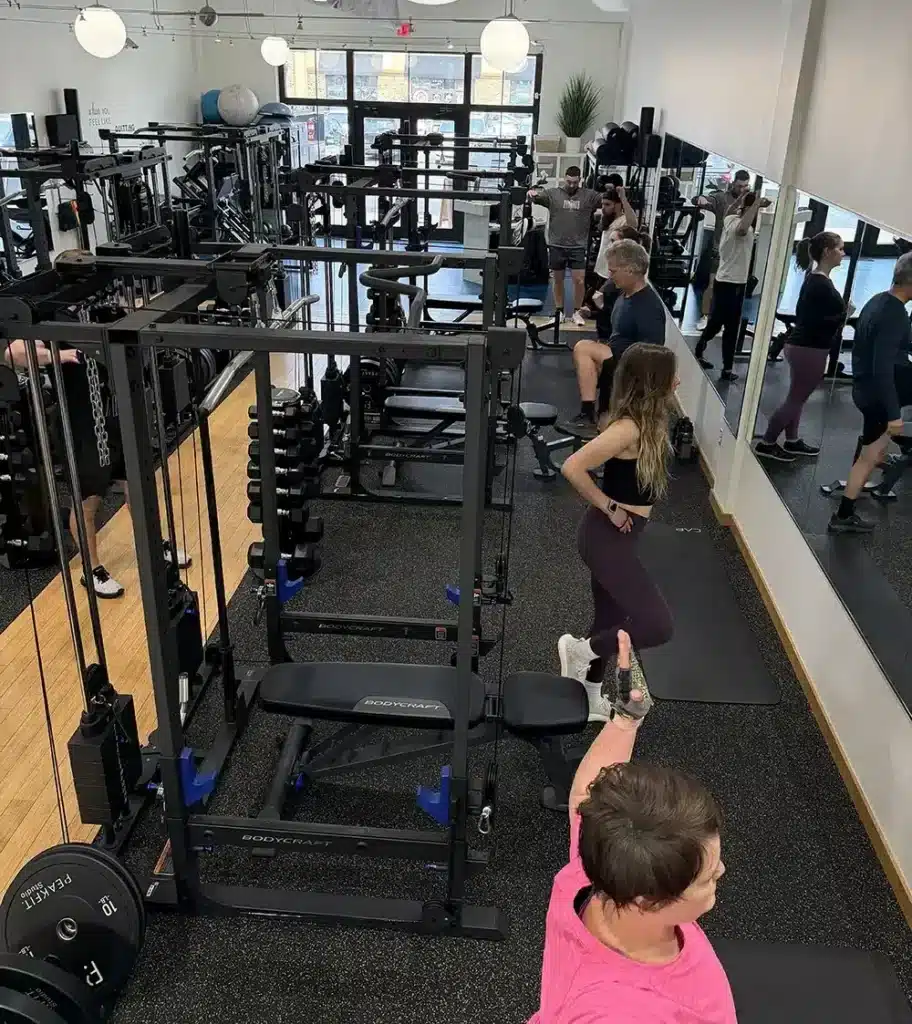
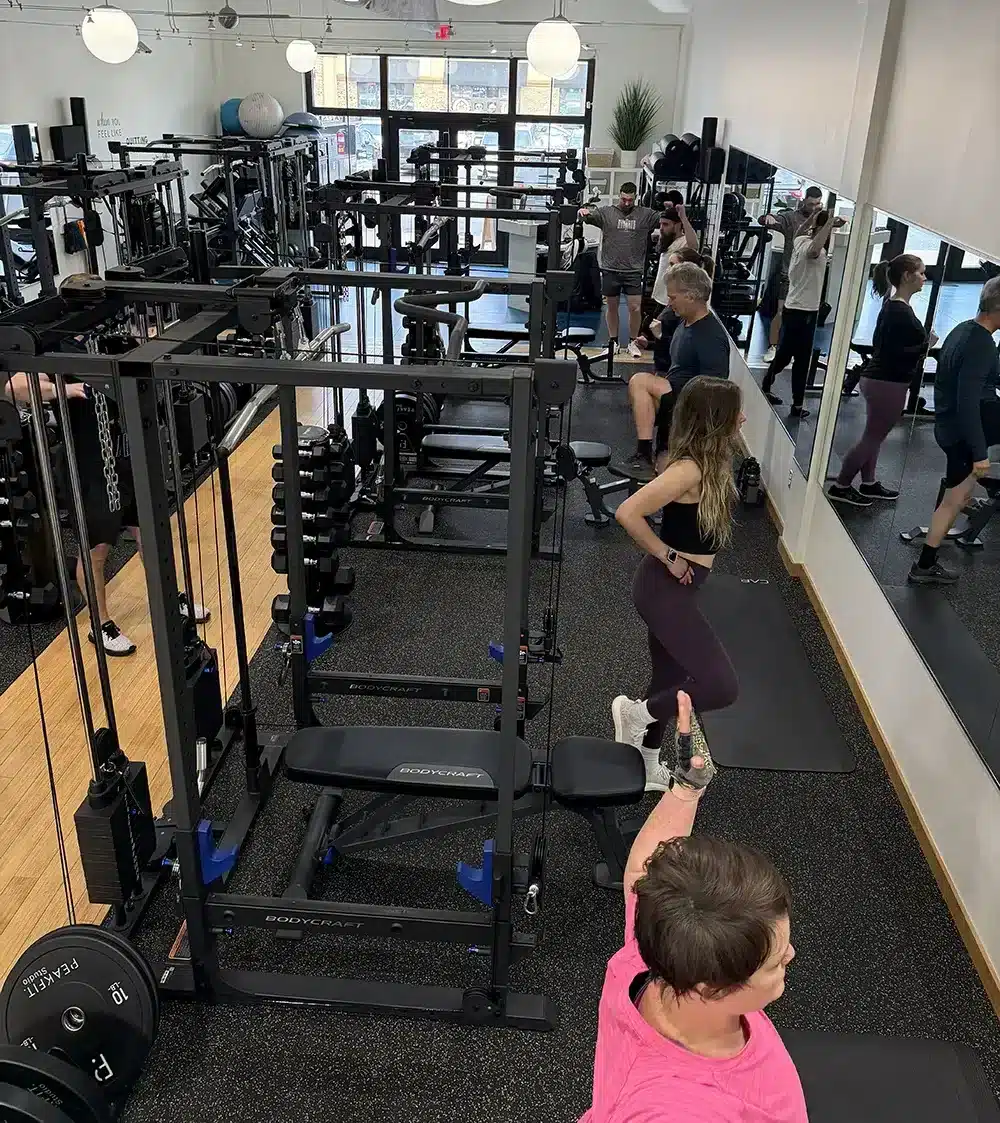
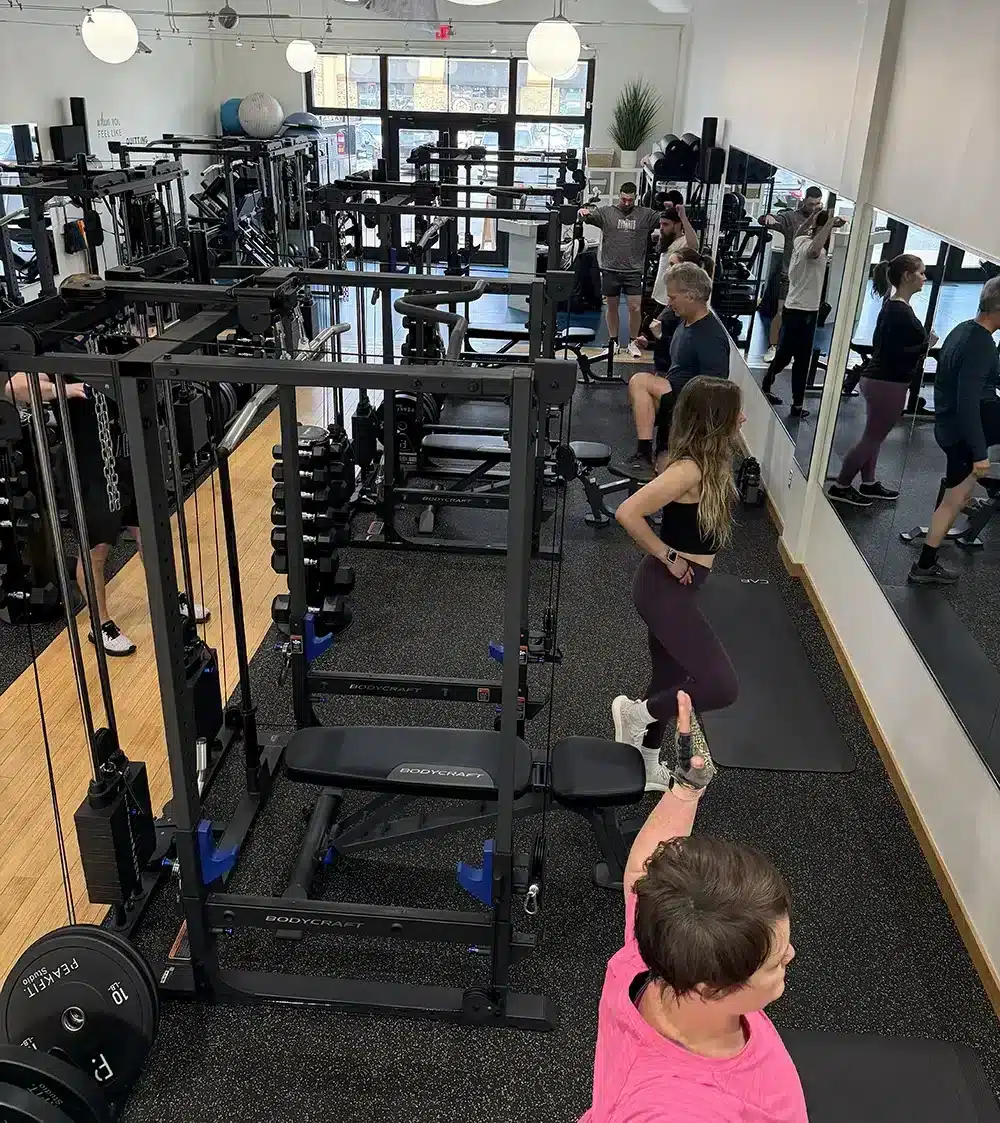
Peak Fit Studio, located in Arden and serving South Asheville, Fletcher, and the broader WNC region, builds hiking-specific programs around these real-world demands. The approach starts with a functional assessment to identify mobility limitations, strength asymmetries, and baseline cardiovascular capacity, then maps a progressive training block that makes trail days safer, more enjoyable, and physically rewarding rather than punishing.
Understanding the Specific Physical Demands of Local Trails
Black Balsam Knob, Max Patch, and Lover’s Leap each test the body in distinct ways that a good training plan accounts for before a hiker ever laces up on the trailhead. Knowing those demands allows a trainer to write a program that is precise rather than generic.
What makes Black Balsam Knob physically challenging for hikers?
Black Balsam Knob sits at 6,214 feet and is typically accessed via the Art Loeb Trail near milepost 420 on the Blue Ridge Parkway. The most common out-and-back route covers roughly 3.5 miles with approximately 700 feet of elevation gain, but the terrain is rocky and exposed. Wind resistance at that elevation adds cardiovascular demand even on calm days. The footing requires constant micro-adjustments from the ankle stabilizers, tibialis anterior, and peroneals. Training for this trail means prioritizing single-leg balance work, ankle stability drills, and sustained aerobic capacity in the 65 to 75 percent heart rate zone for 45 to 90 minutes.
What physical preparation does Max Patch specifically require?
Max Patch is famous for its bald summit and 360-degree views, but the access trail climbs roughly 400 feet over about 1.4 miles. That sounds modest until the grade is factored in. Short, steep climbs demand a higher proportion of anaerobic contribution and place acute stress on the hip flexors and anterior knee. Hikers who have not trained hip hinge mechanics or loaded glute activation often compensate with lumbar extension, which leads to low back fatigue and soreness that lingers for days. A trainer addressing Max Patch prep will include Romanian deadlifts, step-up progressions, and loaded carries at an incline.
Why does Lover’s Leap challenge hikers differently than open ridgeline routes?
Lover’s Leap at Hot Springs sits in a forested river gorge, meaning the footing is rooted, wet in many sections, and involves significant lateral movement through switchbacks. The trail is roughly 3.8 miles round trip with around 1,100 feet of gain. The enclosed canopy means less wind but more humidity, which raises perceived exertion and cardiovascular demand. Balance in lateral planes and rotational hip stability become critical here. Training should include lateral band walks, lateral step-downs, and rotational medicine ball work alongside the standard sagittal-plane strength exercises.
Building Leg Strength That Actually Transfers to the Trail
Leg strength for hiking is not simply about how much weight a person can squat. Functional trail strength comes from the ability to produce force through a full range of motion, control that force eccentrically on the way down, and sustain repeated output across hundreds of steps per mile. A program targeting hiking performance will look meaningfully different from a bodybuilding or general strength routine. This is exactly the kind of functional strength training that adults in Asheville rely on after 40 to build capacity that holds up in real terrain.
Which lower body exercises produce the most trail-specific strength gains?
Single-leg exercises consistently outperform bilateral movements for hiking preparation because hiking is entirely a single-leg activity from a biomechanical standpoint. Bulgarian split squats, step-up variations from 8 to 18 inches, single-leg Romanian deadlifts, and reverse lunges all develop the unilateral strength and hip stability that steep terrain demands. A 12-week program typically progresses from bodyweight single-leg work in weeks one through three, to loaded variations at 50 to 70 percent of one-rep max in weeks four through eight, to more explosive step-up and deceleration work in the final four weeks.
How does eccentric training reduce knee pain on descents?
Eccentric quad strength is the primary factor in protecting the knee joint during downhill hiking. When a muscle contracts eccentrically, it lengthens under load, absorbing force rather than producing it. Slow eccentric step-downs, Nordic curls, and tempo squats with a three to five second lowering phase train this capacity directly. Research from the National Institutes of Health indicates that eight weeks of eccentric-focused training reduces anterior knee pain during downhill activity by 40 to 60 percent in adults with patellar tendinopathy. For adults over 40 who already manage knee discomfort, low impact strength training for joint health is often the single most impactful training focus before graduating to heavier eccentric loading.
How much weight should a hiker carry in training to prepare for pack weight?
For day hikes, a loaded pack typically weighs 10 to 25 pounds. Training with a weighted vest or backpack during step-ups and stair climbs 2 to 3 times per week during the final 4 weeks of a preparation block helps the body adapt to the added compressive load on the joints and the increased metabolic demand. Starting with 10 percent of bodyweight and progressing by 5 pounds every 7 to 10 days is a reasonable and safe protocol. Moving too fast on load progression is a common cause of hip flexor and knee irritation. For comprehensive guidance on injury prevention, refer to workplace safety and health resources or consult exercise physiology principles on Wikipedia.
Cardiovascular Training Strategies for Sustained Trail Output
Cardiovascular conditioning for hiking is distinct from conditioning for running or cycling because the intensity is sustained but moderate, lasting well beyond the 20 to 40 minute windows that most gym-based cardio sessions cover. Training the aerobic base, learning to regulate effort on variable terrain, and managing heat and humidity are all factors a hiking-specific cardio plan addresses.
What heart rate zones are most relevant for hiking fitness?
The majority of hiking occurs in Zone 2 and low Zone 3, which corresponds to roughly 60 to 75 percent of maximum heart rate. Zone 2 is the aerobic base zone where fat is the primary fuel source and fatigue accumulates slowly. Most adults