Small Group Personal Training vs Barre and Pilates Classes
Barre and Pilates studios are everywhere in Asheville. The formats are excellent at what they do, and there is a reason the customer base skews adult, particularly women over 35. The question is not whether Barre and Pilates have value — they do. The question is whether they replace strength training or supplement it. The honest answer is that they supplement, and most adults need a strength-focused format alongside them.
What Barre is
Barre fuses ballet barre work, isometric holds, small-range muscular endurance, and bodyweight or light-weight movements. Classes emphasize precision, posture, and high-rep low-load training. The format is highly accessible, low-impact, and produces muscular endurance, postural strength, and improved body awareness.
What Pilates is
Pilates focuses on core strength, mobility, postural stability, and controlled movement. Mat Pilates uses bodyweight; reformer Pilates uses a specialized piece of equipment with springs for resistance. The format produces excellent core integration, mobility, and movement quality.
What small group personal training is
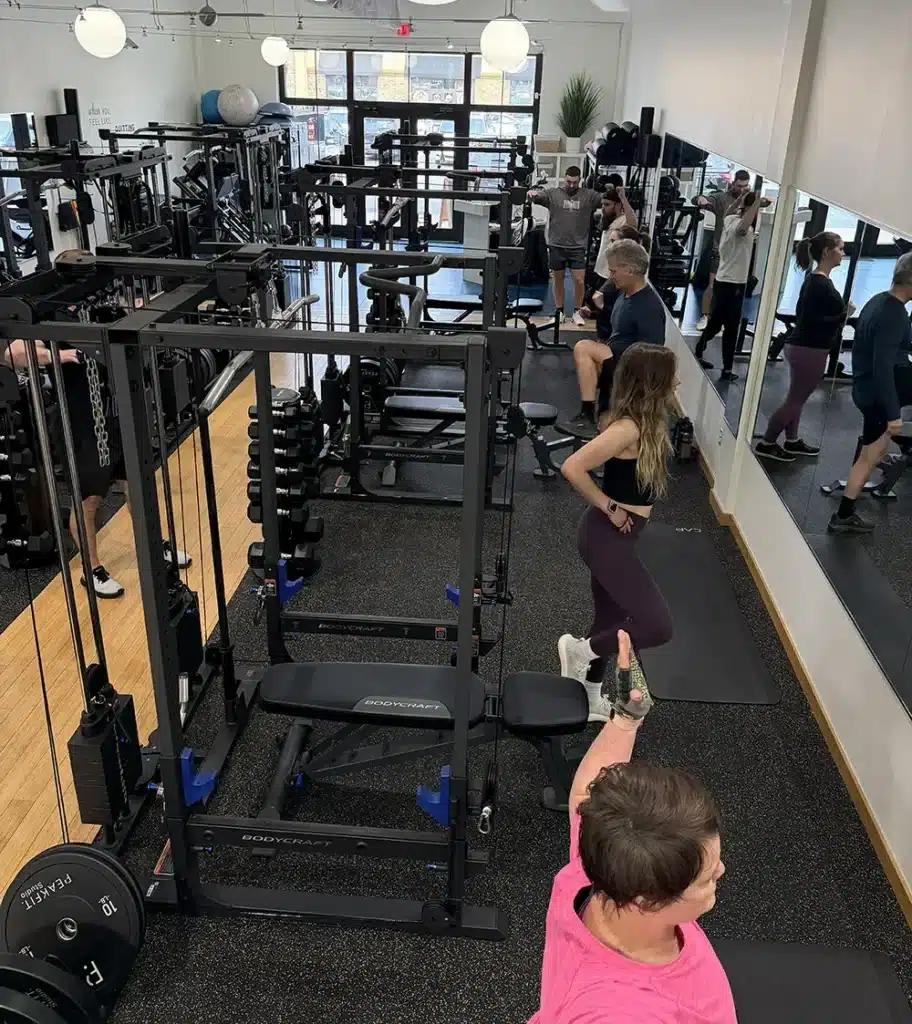
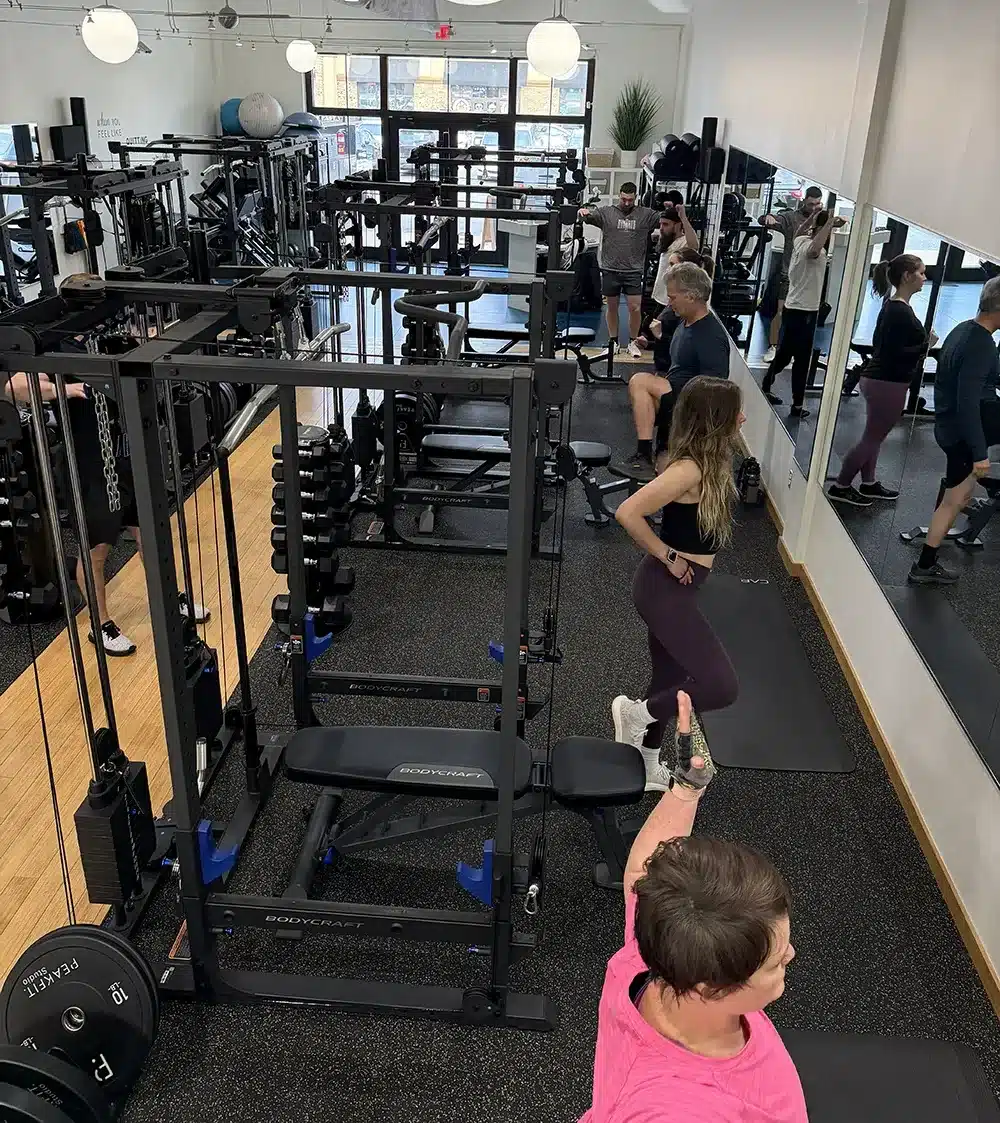
Small group personal training is strength training in a small group setting. Compound lifts — squat, hinge, push, pull, carry. Progressive loading. The primary stimulus is muscular, neural, and skeletal adaptation to increasing load.
The strength delta
Barre and Pilates use light loads or bodyweight, with movements designed for muscular endurance and mobility rather than maximum strength. They do build strength in absolute beginners — from zero to something is a real change. They do not produce the loaded strength stimulus required to drive ongoing muscle growth, bone density preservation, or substantial body composition change in already-active adults.
Small group personal training uses real loads with progressive overload, which is the only reliable stimulus for ongoing strength, muscle, and bone adaptations.
The mobility and posture delta
This is where Barre and Pilates have advantages. The slow, controlled movements and emphasis on alignment produce excellent mobility, postural integrity, and core integration. These outcomes are harder to develop in a strength-focused format that prioritizes load over movement quality.
The best programs integrate both, which is why many of our long-term PEAKFIT clients pair small group personal training with a Barre or Pilates class once or twice a week.
The over-40 adult’s need
Sarcopenia, bone density loss, and metabolic decline are the three major fitness concerns for adults over 40. The intervention for all three is progressive resistance training. Barre and Pilates do not provide enough load to meaningfully address these.
Mobility, postural decline, and core weakness are also real concerns. Pilates and Barre directly address these.
Conclusion: most adults over 40 need both, not one. Strength training as the primary intervention, mobility/postural work as the supplement.
Cost comparison
Barre and Pilates packages typically run $150–$250 per month for unlimited classes. Small group personal training runs $300–$500 per month. A hybrid program (two strength sessions + one Barre or Pilates class per week) lands around $400–$550 per month, which produces the most complete fitness profile of any combination.
The verdict
Barre and Pilates are not replacements for strength training. They are excellent complements. If you have time and budget for only one format, small group personal training is the more complete answer for an adult over 40. If you can run both, you are building a fitness profile that addresses every major over-40 concern.
Back to the boutique format comparison. Or book an intro at PEAKFIT — we will happily help you build a hybrid program that includes whatever Barre or Pilates studio you already love.