Small Group Training vs CrossFit, Orangetheory and F45
TL;DR: Small group personal training, CrossFit, Orangetheory, F45, boot camp, barre, and Pilates each serve a different goal. For adults 40 and older who want structured strength gains and individual coaching attention, small group personal training offers the best combination of personalization, progressive programming, and recovery-friendly intensity. Knowing which format fits your goal before you sign up saves you months of frustration.
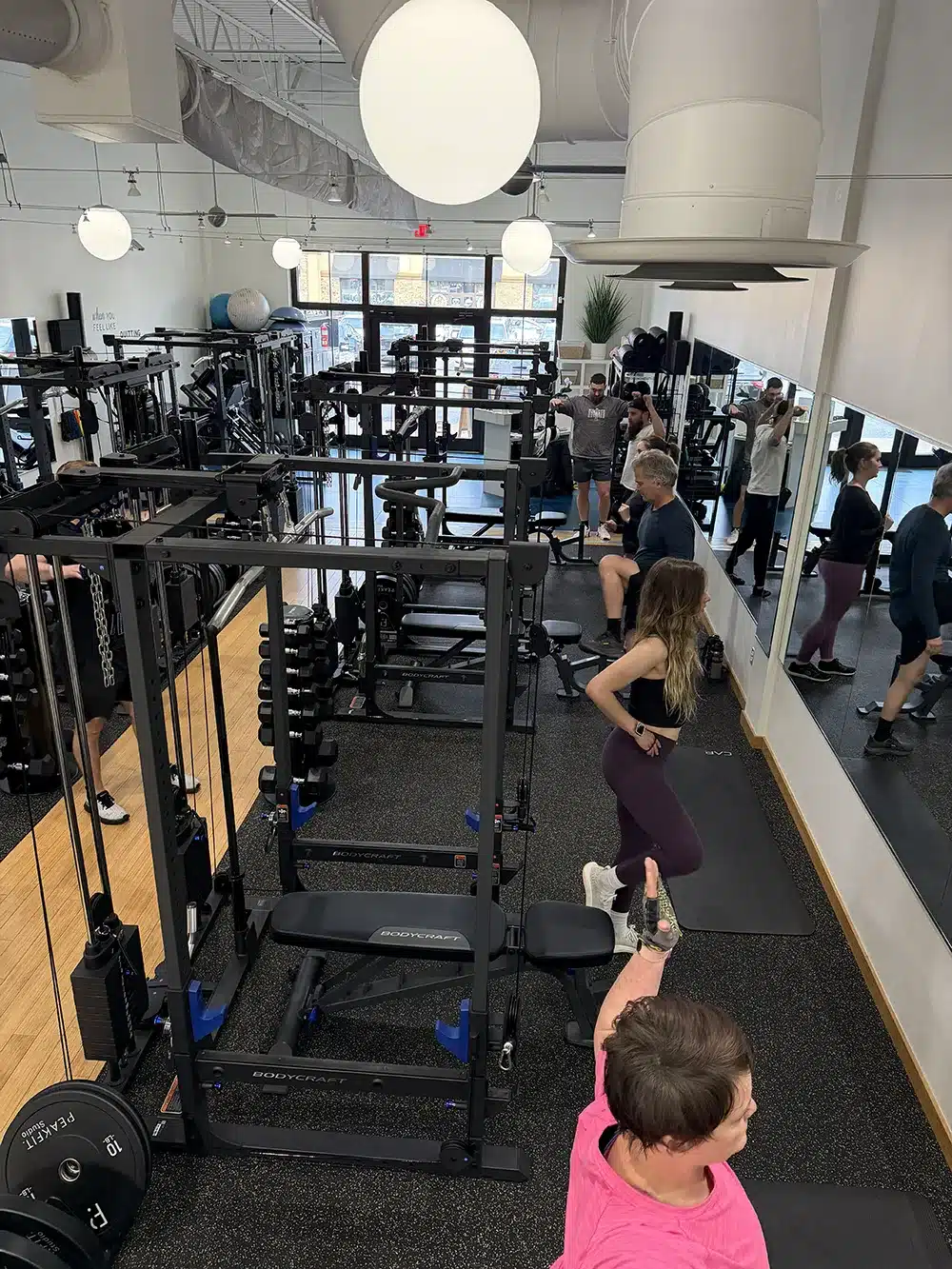
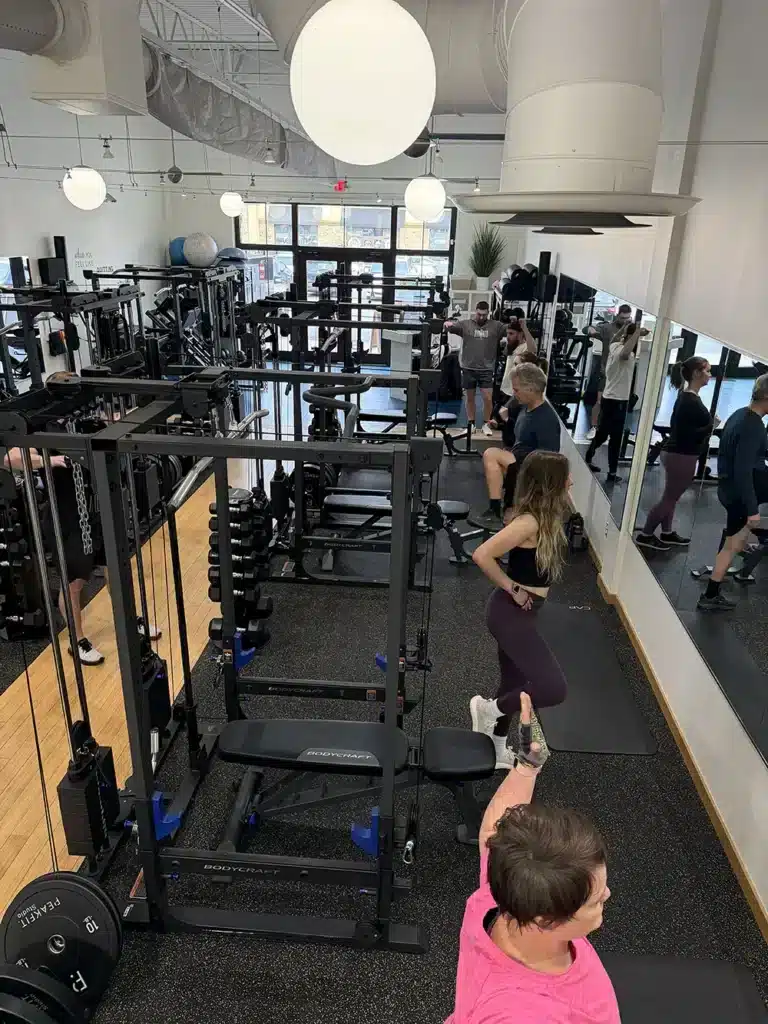
Arden, Asheville, and the surrounding WNC communities are full of boutique fitness options. CrossFit boxes. Orangetheory studios. F45 franchises. Burn Boot Camp locations. Barre and Pilates studios. Small group personal training studios like PEAKFIT. Each format has a real place in the market. None of them are equivalent. The marketing language overlaps enough that adults sign up for one format expecting another, then drift away when the experience does not match the goal. This page is a direct, honest, format-by-format comparison so you know which option actually fits where you are headed.
The 5 questions that separate every boutique format
Before the format-by-format breakdown, here are the five variables that actually distinguish one format from another:
- Coaching ratio. How many clients per coach are in the room? Lower means more personalized attention.
- Programming style. Is the session random (entertainment programming) or progressive (adaptation programming that builds on itself week over week)?
- Equipment depth. Does the format use limited tools or full strength equipment?
- Intensity model. Does the session chase a burn, or does it use controlled strength work with manageable recovery demand?
- Adult-over-40 fit. Was the format built around younger bodies, or does it scale across all ages and training histories?
Use those five filters to evaluate any format you are considering, including the ones below.
F45 Training vs Orangetheory: What is the real difference?
F45 and Orangetheory are both high-intensity group formats, but F45 includes real weights at rotating stations while Orangetheory focuses on heart-rate-zone cardio using treadmills, rowers, and light floor work.
Orangetheory is a heart-rate-zone-based format. You wear a monitor and chase time in the orange zone. Sessions blend treadmill intervals, rowing, and bodyweight or light-weight floor movements. It is genuinely effective for cardiovascular fitness and calorie burn. It is much less effective for building meaningful strength because the floor work uses light loads with minimal progressive overload.
F45 runs 45-minute sessions where stations rotate every 30 to 45 seconds and the workout changes daily. It sits between Orangetheory and CrossFit in terms of strength stimulus. It uses real weights, which gives it a modest strength edge over OTF. But because the rotation format changes constantly, almost no progressive overload accumulates on any single movement pattern over time.
For conditioning and calorie burn, both formats deliver. For structured strength adaptation, neither format is designed to provide it. Adults over 40 in Arden, Asheville, or Hendersonville who want strength and body composition change will likely find both formats under-deliver on that specific goal.
Read the head-to-head: Small Group Training vs Orangetheory | Compare in depth: Small Group Training vs F45
| Factor | F45 | Orangetheory |
|---|---|---|
| Session length | 45 minutes | 60 minutes |
| Primary focus | Functional conditioning + weights | Cardio heart-rate zones |
| Strength stimulus | Moderate | Low |
| Progressive overload | Minimal (daily rotation) | Minimal (zone-based, not load-based) |
| Coaching ratio | 1:15 to 1:30 | 1:20 to 1:30 |
| Adult 40+ fit | Variable | Good for conditioning goals |
F45 vs Burn Boot Camp: Which is the better fit?
F45 and Burn Boot Camp are both high-energy, high-intensity group formats, but F45 uses a station-rotation model with real weights while Burn Boot Camp uses conditioning circuits that lean more heavily on bodyweight movements and group energy.
Boot camps as a category, including Burn Boot Camp, typically run 45 to 60 minute sessions built around bodyweight movements, light weights, conditioning circuits, and high-output energy. The format is built for sweat and group momentum.
F45 offers a more structured station-based approach and uses heavier loads than most boot camp formats. That gives it a modest strength edge. Neither format is built around progressive overload or individual load scaling, which limits their effectiveness for adults over 40 whose primary goals are building strength, preserving muscle, or changing body composition over the long term.
For adults in South Asheville, Fletcher, or Mills River who are returning to fitness after a gap, post-surgery, or managing joint considerations, the repeated jumping and burpee-heavy circuits common in boot camp formats can add cumulative joint stress faster than recovery allows.
Read the full breakdown: Small Group Training vs Boot Camps and HIIT
Pilates vs Orangetheory: Which builds more lasting fitness?
Pilates and Orangetheory target almost completely different fitness qualities: Pilates builds core stability, mobility, and postural strength, while Orangetheory builds cardiovascular conditioning and calorie burn. Neither one replaces what the other does.
Pilates uses bodyweight, light dumbbells, or specialty equipment such as reformers and sliders. It is a technique-focused format that emphasizes core control, spinal alignment, small-range muscular endurance, and mobility. For postural integrity and injury prevention, Pilates is excellent. For building meaningful strength, bone density, or substantial body composition change, it is insufficient on its own.
Orangetheory, by contrast, is a pure conditioning format. It drives heart rate up and keeps it there. It does very little for strength or structural fitness qualities that Pilates addresses.
If you are an adult over 40 in Biltmore Forest, Fairview, or Skyland trying to build a complete fitness picture, Pilates and Orangetheory together still leave a strength training gap. Both pair well with a structured strength program but neither replaces it.
Compare side-by-side: Small Group Training vs Barre and Pilates
Solidcore vs Orangetheory: Which format delivers more?
Solidcore and Orangetheory each deliver in a narrow lane: Solidcore focuses on slow, controlled muscular endurance using a Pilates-style reformer, while Orangetheory focuses on cardiovascular conditioning through heart-rate-zone intervals. They are not direct competitors because they target different fitness outcomes.
Solidcore uses a reformer-based approach with slow, controlled movements intended to fatigue muscles through time under tension. It is a more demanding format than a standard Pilates class and builds genuine muscular endurance. However, like Pilates, it uses lighter resistance than progressive strength training and does not build the kind of load-bearing strength that preserves bone density and muscle mass in adults over 40.
Orangetheory, as described above, is conditioning-first. Strong cardiovascular benefits. Limited strength stimulus.
Adults who want one format to cover both strength and conditioning will find both Solidcore and Orangetheory come up short on the opposite half of that equation. A small group personal training program that includes strength and conditioning components in a single progressive program is typically a more efficient use of limited workout time for adults in this age range.
What gyms balance independence and guidance effectively?
Small group personal training studios balance independence and guidance most effectively because a coach actively programs and adjusts your session while you train alongside a small group of peers, giving you more autonomy than a one-on-one session and more individualized attention than any large class format.
Most big-box gyms offer independence but very little guidance once the initial orientation ends. Most large group formats like Orangetheory, F45, or boot camps offer group energy but limited individual attention at ratios of 1:20 or higher. True solo personal training offers maximum guidance but no independence and comes at a significantly higher cost.
Small group personal training at a ratio of 1:4 to 1:8 sits at the practical sweet spot. Your coach knows your load, your history, and your goals. The program is written and progresses. You are training with others who keep you accountable. But you are not lost in a crowd, and you are not locked into someone else’s pace.
For adults in Arden, Asheville, Hendersonville, and surrounding WNC communities who have been burned by big-box gyms where nobody noticed if they showed up or not, this structure makes a practical difference in results and retention.
See how PEAKFIT structures small group training
CrossFit vs barre: How do they actually compare?
CrossFit and barre are at opposite ends of the boutique fitness spectrum: CrossFit is high-intensity, heavy-load functional training with Olympic lifts and metabolic conditioning, while barre is low-impact, technique-focused work using bodyweight and light weights to build postural strength and muscular endurance.
CrossFit’s strengths are real. Community is strong, fitness gains are fast for younger or conditioned adults, and the format builds genuine strength when programmed well. The weaknesses are equally real for adults over 40: programming intensity is generally calibrated for younger bodies, Olympic lift volume creates injury risk for inexperienced lifters, and coaching ratios in a busy box often reach 1:15 or higher.
Barre is excellent for mobility, postural integrity, and core control. It is insufficient for building meaningful strength, bone density, or substantial body composition change on its own. It pairs beautifully with strength training but does not replace it.
For most adults over 40 in the Asheville and Arden area, CrossFit’s injury risk and recovery demand is too high, and barre’s strength stimulus is too low. The gap between those two formats is exactly where small group personal training sits.
See our full comparison: Small Group vs CrossFit for Adults Over 40 | Compare side-by-side: Small Group Training vs Barre and Pilates
All six formats compared honestly
| Format | Coach Ratio | Strength | Conditioning | Adult 40+ Fit |
|---|---|---|---|---|
| Small Group Personal Training | 1:4 to 1:8 | High | Moderate | Excellent |
| CrossFit | 1:10 to 1:20 | High | High | Variable |
| Orangetheory | 1:20 to 1:30 | Low | High | Good for conditioning goals |
| F45 | 1:15 to 1:30 | Moderate | High | Variable |
| Boot Camp | 1:15 to 1:40 | Low | Very High | Weak |
| Barre and Pilates | 1:10 to 1:20 | Low | Low | Good as a supplement |
How to choose the right format for you
Three honest questions narrow it down fast:
- What is your primary outcome? Strength and body composition? Cardiovascular conditioning? Mobility? Community? Different formats serve different outcomes, and most do not serve all of them equally.
- What is your recovery capacity? High-intensity formats demand high recovery. Adults over 40 who are managing sleep, stress, or prior injuries often cannot sustain three or four high-intensity sessions per week without accumulating setbacks.
- What is your training history? The format that worked at 28 may not be the format that works at 48 or 58. That is not a limitation. It is information worth using.
For most adults over 40 in Arden, Asheville, South Asheville, Fletcher, Hendersonville, Mills River, Fairview, Skyland, Biltmore Forest, and surrounding WNC communities with strength or body composition goals, small group personal training is the most efficient match across all five comparison variables.
Quick Recap
- Small group personal training (1:4 to 1:8 ratio) offers the best combination of coaching attention, progressive programming, and adult-over-40 scalability.
- Orangetheory and F45 are strong conditioning formats but provide minimal progressive strength stimulus. Adults who want strength gains will find them under-delivering on that goal.
- F45 has a modest strength edge over Orangetheory because it uses real weights, but neither format is built around progressive overload.
- Boot camps are high-output and low-strength, with joint stress that can accumulate faster than recovery allows for adults over 40.
- Barre and Pilates are excellent for mobility, posture, and core control. They do not replace strength training and work best as a complement to it.
- CrossFit builds real strength but carries higher injury risk for inexperienced lifters and is generally calibrated for younger bodies.
- The gym that balances independence and guidance best is one with a low coach-to-client ratio and a written progressive program, which describes small group personal training.
- The right format depends on your primary outcome, your recovery capacity, and your training history at your current age.
Frequently Asked Questions
Is F45 or Orangetheory better for weight loss?
Both formats support calorie burn and general conditioning, which can contribute to weight loss. F45 includes heavier loads than Orangetheory, which gives it a slight edge for preserving muscle while losing fat. Neither format provides the progressive strength training that is most effective for long-term body composition change in adults over 40.
Can I do Orangetheory if I am over 50?
Yes, adults over 50 attend Orangetheory regularly. The format is cardiovascular-focused and can be modified in intensity. The primary limitation for adults in this age group is that Orangetheory does not provide meaningful strength training, which becomes increasingly important for muscle preservation and bone density after 50.
What is the safest boutique fitness format for post-surgery recovery?
Small group personal training with a low coach-to-client ratio is generally the safest option for adults in post-surgery recovery because load, range of motion, and exercise selection are adjusted individually by a coach who knows your history. Large group formats cannot reliably provide that level of individual adjustment.
Is CrossFit appropriate for adults over 60?
CrossFit can work for adults over 60 in well-coached boxes that genuinely scale programming for older or less-conditioned clients. The risk is that many CrossFit boxes calibrate their intensity and Olympic lift volume for younger adults, and the coaching ratio in busy sessions limits individual attention. Adults over 60 considering CrossFit should assess the coach-to-client ratio and how seriously individual scaling is practiced at that specific location.
Does barre count as strength training?
Barre builds muscular endurance and postural strength using bodyweight and very light loads. It does not qualify as progressive strength training in the sense of driving muscle growth or bone density increases over time. It is a valuable complement to a strength program but does not replace one.
What is the difference between small group personal training and a regular group fitness class?
In a regular group fitness class, one instructor leads a fixed workout for everyone in the room, often at ratios of 1:20 or higher, with little or no individual load adjustment. In small group personal training, a coach works with 4 to 8 clients through a written progressive program, adjusting loads and movements individually each session.
How do I know if small group training is right for me in the Asheville area?
If your primary goals are building strength, improving body composition, recovering from a period of inactivity or surgery, or getting structured coaching without the cost of solo personal training, small group personal training is worth a closer look. A free consultation at PEAKFIT is a practical first step, and the team will give you an honest answer even if the best fit for your goals turns out to be a different format.
Ready to find out which format actually fits your goals? Book your free consultation with PEAKFIT and get a direct, no-pressure conversation about where you are starting and what will actually move you forward. No hard sell. No guessing.
Book Your Free Consultation: peakfit.studio/free-consultation/ or call (828) 620-7020
Serving Arden, Asheville, South Asheville, Fletcher, Hendersonville, Mills River, Fairview, Skyland, Biltmore Forest, and surrounding WNC communities.